
On tour
Every date the ticketer lists, worldwide · venue time
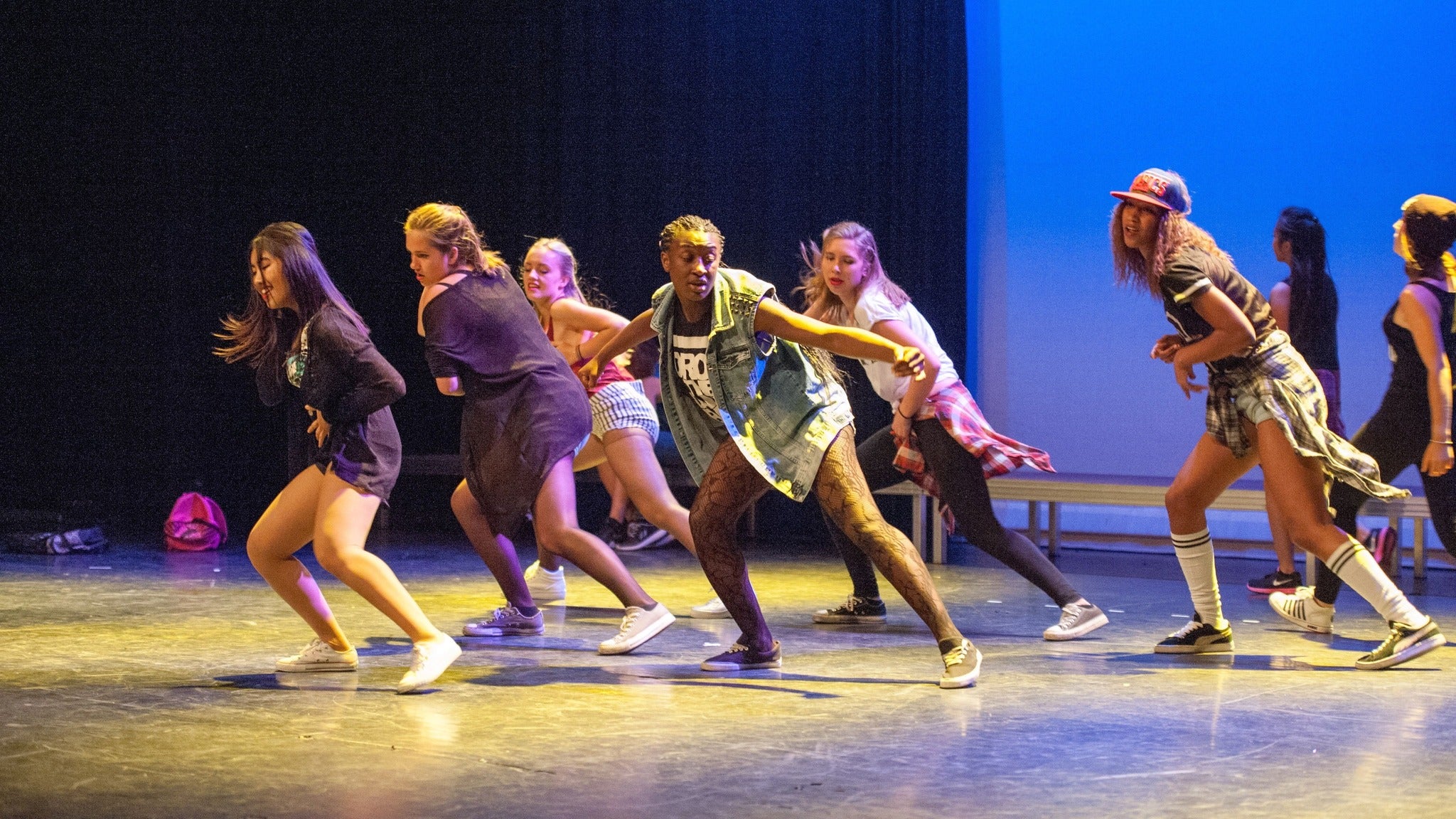 TicketsArts & Theatre · TRAnadolu Ateşi - Fire of AnatoliaAspendos Antik Tiyatro · AntalyaTicketsArts & Theatre · TRAnadolu AteşiCongresium Ankara · AnkaraTicketsArts & Theatre · TRAnadolu Ateşiİzmir Kültürpark Open Air Theatre · İzmirTicketsArts & Theatre · TRAnadolu AteşiSelçuklu Kongre Merkezi Anadolu Sahne · KonyaTicketsArts & Theatre · TRAnadolu AteşiÇomü İçdaş Kongre Merkezi · ÇanakkaleTicketsArts & Theatre · TRAnadolu AteşiMerinos AKKM Osmangazi Hall · BursaTickets
The profile · researched 20 September 2026
Ninety dancers, a Roman theatre and a season that runs to November: inside Anadolu Ateşi at twenty-five
Mustafa Erdoğan's Turkish dance company has been drilling folk steps into stadium-scale spectacle since 2001, and in 2026 it is still doing it twice a week in a second-century Roman theatre outside Antalya.
Ninety dancers and a newspaper advert
Mustafa Erdoğan came to the project after years of running prize-winning folk-dance groups at Turkish universities, and the company itself began as work at Bilkent University in 1999 under the name Sultans of the Dance. Recruitment was done in the open: an advert in the press, mass auditions, and ninety dancers chosen from the applicants. Training was not limited to regional steps. The intake was put through ballet, modern dance and theory classes on Anatolian rhythm before anything was staged, which is the reason the company's vocabulary has never been purely folkloric.
The first public performance came on 3 May 2001. Erdoğan's calculation, as he described it to Hürriyet in an interview published on 31 March 2024, was that the work would be liked at home but would land far harder abroad. The debut run at Mydonose Show Land in Istanbul drew more than 500,000 spectators inside three months. He has said he stood among the audience rather than backstage to watch the reaction, and what stayed with him was the sound of people crying.
International touring started the following year, by which point the group had taken the name it still carries: Anadolu Ateşi in Turkish, Fire of Anatolia in English. Erdoğan also credits the company with shifting the domestic status of Turkish folk dance, pulling audiences back into traditional performance and prompting a run of television productions built on the same material.
Two titles, two Guinness certificates
The repertoire has stayed deliberately narrow. The flagship piece carries the company's own name and works as a tour of Anatolia by region, with the choreographic labour split between Erdoğan, who handles halay and the southern dances, Alper Aksoy on the Aegean material, and Oktay Keresteci on the modern-dance and ballet passages. The score is credited to Yücel Arzen, Fuat Saka and Erdoğan. A second, narrative production called Dawool is built on percussion and draws on the religious and cultural mix of Istanbul.
The piece that has travelled hardest alongside the flagship is Troy. Erdoğan has presented it since 2008, with Yılmaz Erdoğan as artistic supervisor, constructing it from the Iliad and the Odyssey rather than from a loose idea of antiquity. Erdoğan has been explicit that the company tries to keep the staging defensible archaeologically and historically, which is an unusual thing for a dance spectacular to claim and an unusual thing to be held to.
Two Guinness World Records sit on the company's record: one for the fastest dance performance, measured at 241 steps per minute in a Black Sea routine, and one for the largest audience at a performance, 400,000 people at Ereğli. The group also appeared at CCTV's New Year Gala in China on 9 February 2013. Reach figures depend on who is counting. Erdoğan's own tally in 2024 was 109 countries and roughly 50 million people; the English-language reference entry is considerably more conservative, at more than 85 countries and around 20 million.
The Aspendos machine
What turned Anadolu Ateşi from a touring show into a permanent institution was the decision to take a residency at Aspendos, the Roman theatre near Serik in Antalya province, and to run it on a fixed timetable from April to November. Two performances a week, every week, for most of the year, is an industrial rhythm for a dance company, and it dictates the company's structure. The touring cast is usually given as 120. The Antalya season runs on a pool of about 300 professional dancers rotating through the slots, because no single cast could sustain the schedule.
The volume has also produced a supply chain. Anadolu Ateşi runs training academies, and at the Troy performance reported on 5 August 2026 young dancers from those academies appeared on stage alongside their own parents. One of them, Figen Baygın, described performing with her children as both thrilling and an honour. Erdoğan has put the number of people who have passed through the wider organisation at around 2,000.
Where the company stands in 2026
The 2026 Antalya season has followed the established split: Troy on Tuesdays, the flagship Anadolu Ateşi on Fridays, through the summer and into autumn. The Troy performance covered on 5 August 2026 was billed at more than 3,000 separate dance figures across the evening, drawing on folk dance, ballet and contemporary choreography, with Erdoğan describing the staging as two legends meeting — the Homeric story and the second-century theatre it is being told in. A further Aspendos run was announced on 6 June 2026, with tickets sold through Bubilet.
Winter has become the Istanbul half of the year. The company's own tour listing carried a 3 December 2025 date at Bostancı Show Center in Istanbul and 27 December 2025 at ATO Congresium in Ankara, followed by Troy at the Atatürk Culture Center on 13 January 2026 and a second AKM date on 26 January. Erdoğan has been clear that the summer at Aspendos is not allowed to leave Istanbul empty. The company also marked its twenty-fifth year with a stadium-scale production planned for Beşiktaş's ground on 2 June, built for 500 dancers and pitched as an accumulation of the full twenty-five years rather than another touring date.
The one piece of the current picture that remains unresolved is North America. The official site has been carrying a banner for a United States tour in 2026 with tickets promised shortly, but no dates or venues have been published on it, and the company's own tour page does not list any.
What two hours at Aspendos looks like
The evening is a single company piece with no support act and no interval-length gap in the storytelling — a run of roughly two hours, starting after dark, which at the November Culture Road Festival dates in 2025 meant 20:30 to 22:30. The Roman theatre does the scenic work that a touring set normally has to: the back wall is used as a projection surface, carrying regional landscapes and flags, and one sequence stages the construction of the ancient city itself on the stone the audience is sitting in.
The audience is overwhelmingly a holiday audience. At the performance on 22 May 2025, the third of that season, roughly 80 per cent of those in the theatre were foreign visitors, with the heaviest flows arriving from northern Europe and Russia at the peaks of the tourist calendar. Erdoğan's stated target is close to a million spectators a season, and he said that season was tracking towards the company's highest attendance figures to date. The stone seating is unpadded, which is worth knowing before committing to two hours of it.
The show, now
A current show runs about two hours and is performed after dark — the free Culture Road Festival dates at Aspendos in November 2025 were timed 20:30 to 22:30. There is no support act: it is one company piece, either the region-by-region flagship on Fridays or the Homeric Troy on Tuesdays, the latter billed in August 2026 at more than 3,000 separate dance figures across the evening and drawing on folk dance, ballet and contemporary choreography in the same programme. Staging leans on the Roman theatre itself, with projections of regional landscapes and flags thrown onto the back wall and a sequence depicting the building of the ancient city; roughly 300 professional dancers rotate through the season's slots, and dancers from the company's own academies now appear alongside their parents. The crowd is mostly a holiday crowd — about 80 per cent foreign at the 22 May 2025 performance, with northern European and Russian visitors dominating the peaks — and Mustafa Erdoğan has said the company aims for close to a million spectators a season. The seating is ancient stone and unpadded, which matters over two hours.
Researched from en.wikipedia.org · tr.wikipedia.org · hurriyet.com.tr · haberler.com · benguturk.com · antalyahurses.com · kulturyolufestivali.com · fireofanatolia.com
Pictures
Photographs from Wikimedia Commons, credited
 Teemeah · CC BY-SA 3.0
