
Music · Pop
Burhan Şeşen
5 dates on sale
On tour
Every date the ticketer lists, worldwide · venue time
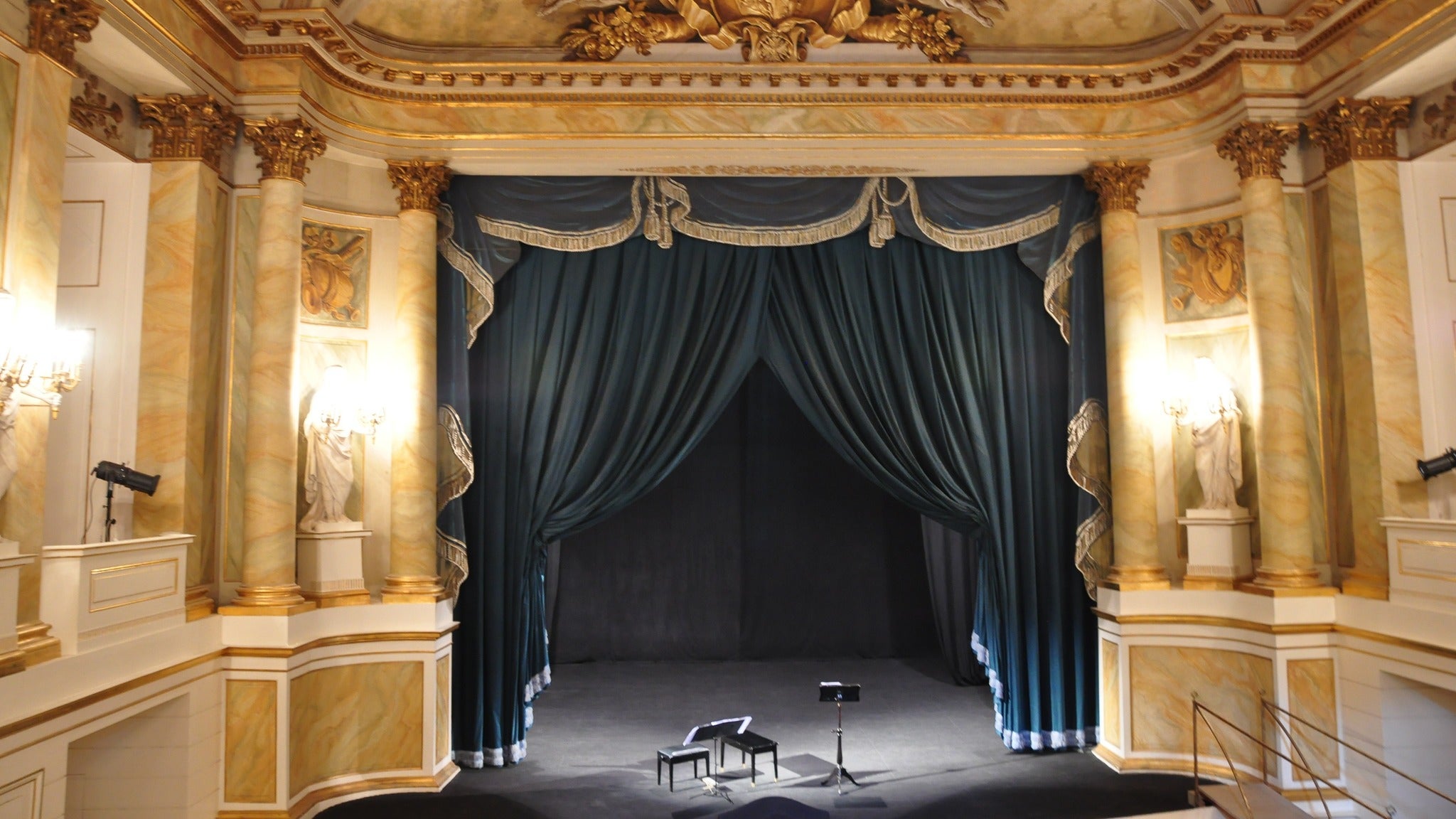 TicketsArts & Theatre · TRŞahları Da VururlarSes 1885 - Ortaoyuncular Tiyatrosu · İstanbulTicketsArts & Theatre · TRŞahları Da VururlarSes 1885 - Ortaoyuncular Tiyatrosu · İstanbulTicketsMusic · TRŞahları Da VururlarSes 1885 - Ortaoyuncular Tiyatrosu · İstanbul
 TicketsArts & Theatre · TRŞahları Da VururlarSes 1885 - Ortaoyuncular Tiyatrosu · İstanbulTickets
The profile · researched 9 October 2026
The Şeşen brother who turned a concert ban into a stage play
Burhan Şeşen co-founded Grup Gündoğarken in 1983 and has spent the past few years touring Turkey with its autobiographical stage show "Hal ve Gidiş", which reached its 100th performance in April 2026; he also chairs MÜYORBİR, which hosted the global performers' rights network in Istanbul in September 2026.
A pilot's son, schooled in four cities
Burhan Şeşen was born on 27 March 1959 in Eskişehir, the son of a military pilot, Turhan Şeşen. His father's postings decided his education: primary school in Diyarbakır, then Ankara, where he attended Ankara Cumhuriyet Lisesi, and finally Istanbul, finishing at 50. Yıl Yeşilköy Lisesi in 1976. He enrolled to study cinema and television at Anadolu University, did not stay, and switched to mechanical engineering. Neither course turned into a career.
Music ran in the family instead. His uncle İlhan Şeşen and his elder brother Gökhan were both working musicians, and in the early 1980s the three began playing as a unit. That arrangement — an uncle and two nephews, all sharing a surname — became the group Burhan Şeşen is still identified with more than forty years later.
Grup Gündoğarken, 1983 to 1994
Grup Gündoğarken was founded in 1983 by İlhan Şeşen with his nephews Gökhan and Burhan. The group's first public performance came that year at the Hodri Meydan cultural centre, and its early work sat closer to the theatre than to the pop charts: incidental music for stage productions, collaborations with the comedian Levent Kırca and the playwright Ferhan Şensoy, a 1985 production involving Şensoy and the singer Hümeyra, and the theme music for a Turkish television comedy programme.
The debut album, Bir Yaz Daha Bitiyor, arrived in 1986, and from that point the group toured at home and abroad, including dates in Malaysia and Egypt. In 1988 it entered Turkey's Eurovision selection with "Resimler Resimler" and was not chosen. Yaz Bulutları followed in 1988, Bir Günlük Aşk in 1990 and Ankara'dan Abim Geldi in 1993 — the last two supplying the songs that still get the loudest recognition in a hall. The sound was acoustic and harmony-led, with lyrics about love, break-ups and city life.
İlhan Şeşen left in 1994 and the group stopped. Between 1986 and 2017 its catalogue reached nine studio and compilation releases, among them Mest Of Gündoğarken (1998), Gündoğarken 1999 and İstanbul-Atina-İstanbul (2000).
Solo records, television and a reunion as a duo
Şeşen released his first solo album, Bir Düş Gördüm, in 1996, and a second, 1, 2, 3... Tıp, in 2005. Alongside the records he worked in radio, advertising, and film and series music, produced and presented the music programme Yorumsuz on TV8 and TRT, and took acting parts in the series Bütün Çocuklarım (2004), Adını Sen Koy (2009) and Kalbim Seni Seçti (2011).
Gündoğarken resumed in 2008, now as a duo of the two brothers, with the album Hayat Bu. The ninth and most recent album, Özlemişim, came in 2017. The same year the group restarted, 2008, Şeşen's elder son Serhan, himself a musician, died at 26 — a loss the brothers now address directly on stage.
The third founder died in May 2025. İlhan Şeşen was 77 and had been treated for lung cancer since 2023; his funeral was held at the Caddebostan Cultural Centre, with prayers at the Şakirin Mosque and burial at Karacaahmet Cemetery. His death turned the group's current stage show, already a retrospective, into something closer to a memorial.
"Hal ve Gidiş": a show built around a ban
The production that now occupies most of Şeşen's performing year began as a workaround. During the pandemic, concerts in Turkey were prohibited while theatres were allowed to open, so the brothers built their material into a piece registered as theatre and played it anyway. They have described it as a form of civil disobedience, and the classification stuck: "Hal ve Gidiş" is still sold as a play rather than a gig.
It is billed as an autobiographical musical narration, produced by Kuzguncuk Sanat, with dramaturgy by Gizem Duman Şeşen — the actress Burhan Şeşen married in 2018 — video design by Mahmut Uğur and sound and effects by Burak Yalçın. Gökhan and Burhan Şeşen narrate and play. The sequence runs from childhood in Eskişehir and Diyarbakır through schooling in Ankara to the records and the tours, with projections that track four decades of Turkish political history behind the songs. It makes room for the dead: among the pieces performed is a setting of Metin Altıok's poem "Geriye Kalan", for the poet killed in the 1993 Madımak attack in Sivas.
Gökhan Şeşen has put the show's pull simply — "İzlediklerinde bir şeyler hatırlıyorlar insanlar" — people remember things while watching it, their own things rather than the brothers'. Asked how the group lasted, he credited never having lost hope. The 100th performance was staged on 28 April 2026 at 8pm at the Ses 1885 – Ortaoyuncular theatre in Istanbul, with tickets sold through Biletinial and Bubilet.
The other job: chairing MÜYORBİR
Since 2014 Şeşen has chaired the board of MÜYORBİR, the Turkish professional union for music performers, and he has been re-elected three times, in 2019, 2021 and 2025. The role has made him one of the more visible voices on Turkish performers' royalties, and his public appearances in 2026 have been about rights rather than records.
On 23–25 September 2026 MÜYORBİR hosted the 2026 Working Group Meeting of SCAPR, the international network of performers' collecting societies, in Istanbul, bringing together performer unions from roughly 60 countries and about 200 specialists. The agenda covered digital rights management, licensing, data-sharing between societies, and artificial intelligence. Two of the attending unions signed a cooperation agreement on protecting performers' voices and recordings in AI applications.
Şeşen's position, stated at the meeting, is that AI systems using performers' voices and recordings have to be identified, that past use has to be paid for, and that future use needs a mechanism paying the performer's share directly to the rights holder rather than routing it elsewhere. He set that against the numbers: global digital music streaming of around 40 billion dollars a year, a private-copying levy that raised about one billion euros worldwide in 2024 — of which Turkey, he said, is the only country not to have passed anything to rights holders in 26 years — and a domestic copyright economy of roughly three billion lira annually, of which MÜYORBİR collects around 200 million. SCAPR's chair, José Luis Sevillano, made the matching argument from the platform side: AI-generated music competes with human work on the same services, so the payment systems have to match too.
Where the show has played in 2026
The touring pattern is a regional circuit of cultural centres and small theatres rather than an arena run. On 13 May 2026 the brothers played the Ahmet Hamdi Tanpınar Cultural Centre cinema hall in Artvin as part of the "Hal ve Gidiş" run, drawing a mixed-age house that included the city's mayor, Bilgehan Erdem, who noted afterwards that people from different generations had sat together and sung the same songs. On 4 September 2026 the show went to Fabrika Ayvalık in Balıkesir, a 9pm start with tickets from 600 lira.
Istanbul remains the base. The Ses 1885 – Ortaoyuncular theatre has carried the longest run, with tickets from 900 lira, no admission for under-12s and no entry once the performance has begun; the Avcılar Barış Manço cultural centre and Acıbadem University's ACU stage are also listed as venues. Dates continue to go on sale through the Turkish ticketing platforms, and the listing pages for the show carry audience ratings at the top of the scale, though from small numbers of reviews.
The show, now
A current date is almost always "Hal ve Gidiş" rather than a straight concert: Burhan and Gökhan Şeşen alone on stage for about two hours, narrating the group's half-century in order — childhood in Eskişehir and Diyarbakır, school in Ankara, the first performance in 1983, the records, the tours — and playing their own songs between the stories, with video projections behind them tracking four decades of Turkish political history. There is no support act and no band to hide behind; the staging is a seated theatre set-up with video and sound design by Mahmut Uğur and Burak Yalçın, dramaturgy by Gizem Duman Şeşen, and the piece is sold as theatre because it was built during the pandemic when concerts were banned and theatres were not. It makes room for the dead — colleagues and mentors, including a setting of Metin Altıok's "Geriye Kalan" — which gives the second half a weight a hits set would not have. Audiences sing the older material back: at the Artvin date on 13 May 2026 the hall sang along through the two hours and held the applause at the end, and the city's mayor remarked on how wide the age range in the room was. Venues are cultural centres and small theatres, not arenas — Fabrika Ayvalık in Balıkesir on 4 September 2026 at 9pm from 600 lira, the Ses 1885 – Ortaoyuncular theatre in Istanbul from 900 lira, with under-12s refused and no admission after the start.
Researched from biyografiler.com · en.wikipedia.org · birgun.net · birgun.net · tiyatrolar.com.tr · haberler.com · haberturk.com · aa.com.tr