On tour
Every date the ticketer lists, worldwide · venue time
Listen
Top tracks on Spotify · SoundCloud
The profile · researched 17 October 2026
The ballad singer who put on a charro suit — and then had to stop singing
Carlos Rivera turned a 2004 talent-show win into two decades of ballads and a thousand nights in musical theatre. In 2026 he swapped the pop record for a mariachi one, filled the Plaza México, and in October announced vocal-cord surgery that has shut most of the tour down until 2027.
Huamantla, then a television contract
Carlos Augusto Rivera Guerra was born on 15 March 1986 in Huamantla, a town in Tlaxcala, the smallest state in Mexico. He was 18 when he entered the third series of TV Azteca's La Academia in 2004 and won it, taking a prize of three million pesos and the sort of national recognition that a weekly prime-time public vote confers. Sony Music signed him the following year.
What came next moved more slowly than the format usually promises. A self-titled debut arrived in 2007 and Mexicano in 2010, records that gave him a domestic audience without making him a headliner elsewhere. The rest of his twenties went somewhere few graduates of singing competitions choose to go.
A decade in musicals
Rivera spent those years on stage rather than in a studio. He appeared in Bésame mucho in 2006, Beauty and the Beast in 2008 and Mamma Mia! in 2009, then took the part of Simba in El Rey León in Madrid from 2011 and again in the Mexico City staging from 2015 — more than a thousand performances across the two runs, and the distinction of having led two separate original-cast Disney productions of the same show in two countries. Spain gave him its World Broadway award for best breakthrough actor in 2012.
Those years explain a great deal about the concerts he gives now: the three-hour running time, the costume changes, the habit of building a night into acts with a shape rather than running a hits list end to end.
The records, and a song from a cartoon
El hubiera no existe followed in 2013 and Yo creo in 2016. The break outside Mexico came in 2017, when Disney had him record the Spanish-language version of "Recuérdame" for Coco — the film's Academy Award-winning song — which he later cut again as a duet with Natalia Lafourcade. The track has since attached itself to Día de Muertos and remains the single most reliable moment in his live set.
Guerra came in 2018, a covers project, Leyendas, in 2021, Sincerándome in 2023 and ¿Qué significa el amor? in 2025. He won a Premio Lo Nuestro in 2022 for "100 años". In 2024 he marked twenty years in the business with a concert at the Arena Ciudad de México that brought back winners and tutors from his series of La Academia, and picked up his first Latin Grammy nomination — best pop song, for "Ahora", a duet with David Bisbal. "What better way to celebrate 20 years of my music career than with a nomination like this," he said at the time, adding that the point had been "to always keep doing things that represent who I am as an artist".
¡Vida México!
The turn towards Mexican traditional music began with an EP, ¡Vida!, in October 2025, and was completed by the album ¡Vida México!, released in the first week of March 2026. It runs to fifteen tracks plus a bonus, with mariachi as the organising idea rather than a decorative touch, and reads as a deliberate return to the music he grew up around.
The guest list is drawn from the genre's own establishment: Alejandro Fernández on "Sin despedida", Marisela on "Donde estés donde estoy", along with Pepe Aguilar and Ana Bárbara. The Lafourcade version of "Recuérdame" closes it as the bonus track, which ties the new record back to the song that carried his name furthest.
Forty thousand in a bullring
Rivera announced the ¡Vida México! tour on 5 January 2026 with thirteen Mexican dates between January and May — León, San Luis Potosí, Veracruz, Puebla, Querétaro, Pachuca, Saltillo, Torreón, Guadalajara, Cancún and Mérida among them — and said more countries were still to come.
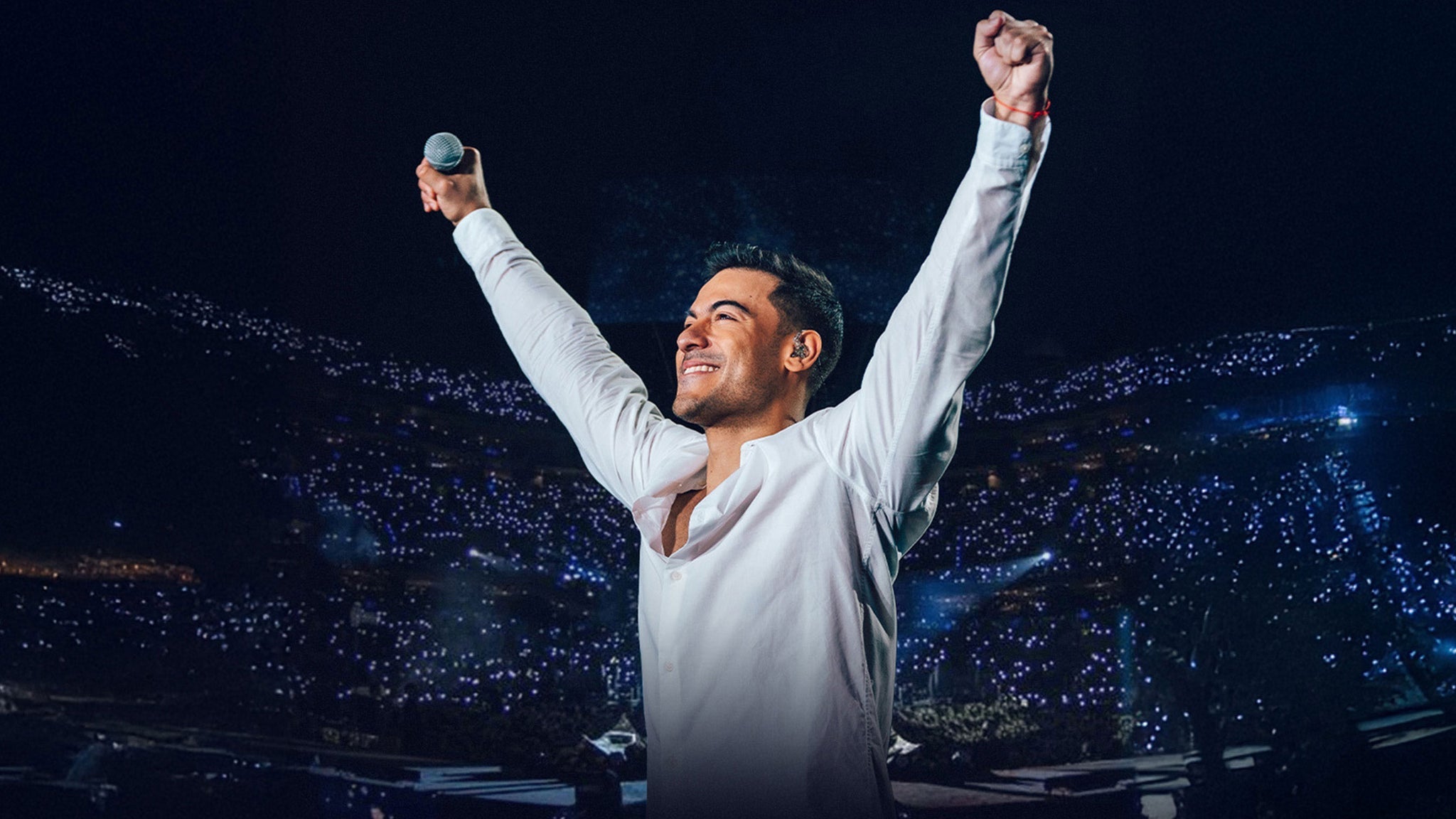
The one that mattered was Mexico City on 9 May 2026 at the Monumental Plaza de Toros México, a venue holding more than 40,000 and his first solo show there. It sold out, the staging was built in the round so the ring worked from all sides, and it rained. Ha*Ash joined him for "Te dejo en libertad" and Yuri for "Ya no vives en mí"; he performed "Lo digo" and "Me muero" among the older material and thanked the crowd for turning out to a first night in the plaza.
Europe followed over the summer. The Spanish leg took in the Plaza de Toros de Castellón on 26 June and Valencia on 27 June, the Coliseum in A Coruña on 10 July, the Sant Jordi Club in Barcelona on 12 July and the Concert Music Festival at Chiclana de la Frontera on 24 July — billed as the same production he had mounted at the Plaza México rather than a scaled-down touring version.
A voice on pause
The hoarseness started during those Spanish dates in July. Specialists put him on two weeks of complete vocal silence; when that produced nothing, the diagnosis settled on an injury to the left vocal cord, and he has since been undergoing therapy in Boston. On 14 October 2026 he posted a video confirming he will have microsurgery in mid-November. He compared it to a broken or sprained wrist and said it was "nada grave, pero sí es algo necesario" — nothing serious, but necessary.
Two shows survive ahead of the operation: the Palenque de la Feria in his home state of Tlaxcala on 23 October and Zapopan, on the edge of Guadalajara, on 2 November. Everything after that has moved. Quito and Guayaquil shift from early November to late May 2027, the Estadio Nacional date in San José, Costa Rica, from 14 November to April 2027, and Arena Monterrey from 28 November to May 2027. The palenque show at the Querétaro fair on 26 November has been cancelled outright, with no new date. Listings for spring 2027 in Guatemala City and Santa Tecla, El Salvador, remain in place, which suggests the plan is to resume the tour rather than abandon it.
The show, now
A ¡Vida México! night runs to roughly three hours — at the Coliseo Centenario in Torreón on 29 March 2026 he was on stage from 9.46pm to 12.55am — and is built in three thematic acts on life, death and gratitude rather than as a straight run of hits. He opens in a dark suit with a full band and two violinists in front of large video screens, then changes into a charro suit for the mariachi section, where the screens carry Día de Muertos imagery and the band plays rancheras including "El rey". Ballads such as "Gracias a ti" and "Para ti" sit against faster material like "Lo digo" and "Me muero", and "Recuérdame" and "Almas" anchor the memorial passage, during which the crowd holds up photographs of dead relatives; Rivera, whose own father has died, has said those songs have become harder to sing since. He talks to the audience a lot between numbers — the Torreón review noted a marriage proposal during the romantic stretch, banners from out-of-state fans and balloons in the colours of the flag — and his stock line that night was "la vida es sólo un ratito, así que un día a la vez". Big-city dates upgrade the production: the Plaza de Toros México on 9 May 2026 was staged in the round for a sold-out 40,000 and ran through rain, with Ha*Ash appearing for "Te dejo en libertad" and Yuri for "Ya no vives en mí" rather than a conventional support act.
Researched from en.wikipedia.org · es.wikipedia.org · grammy.com · los40.com.mx · infobae.com · milenio.com · infobae.com · hola.com
Pictures
The ticketer's photographs