
Not on sale
We check the ticketer every hour
Listen
Top tracks on Spotify · SoundCloud
The profile · researched 7 September 2026
Colin Stetson: breath, metal and the one‑man engine room
Ann Arbor–raised and Montreal‑based, the saxophonist has redefined what a solo reed player can do. After a 2024 Juno‑winning studio return, 2026 finds him on festival bills, unveiling a new trio and lining up a collaborative release with Brìghde Chaimbeul.
Origins: from Michigan practice rooms to a Montreal laboratory
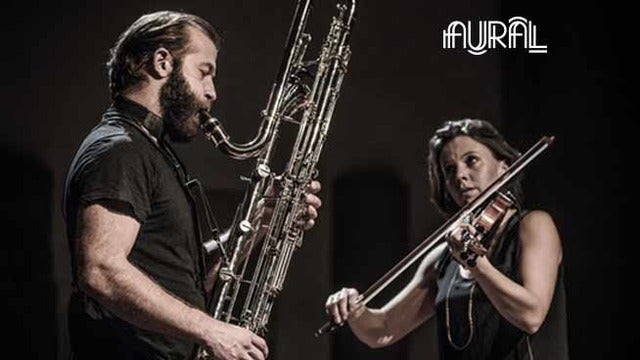
Colin Stetson was born in 1975 in Ann Arbor, Michigan, and came up through formal study and the working bands of the American Midwest and West Coast before relocating to Montreal in 2007. In those early years he played in the Transmission Trio and earned sideman credits with high‑profile artists, but the decisive turn was methodological: Stetson developed a physically exacting solo approach built on circular breathing, multiphonics and a close‑miked instrument that effectively turns his body and saxophone into a small orchestra. Accounts have noted the contact microphones around his horn and a mic at his throat, capturing the percussive key‑clacks and subharmonic growls that become rhythm and harmony in the room. Apple Music’s biography places his move to Montreal and the surge in collaborative work with Arcade Fire and Bon Iver on that timeline, while a DownBeat profile from the previous decade describes the mic’d‑throat setup that still underpins the sound today.
Those foundations led to work across scenes: with indie rock bands on tour, with contemporary classical players in the studio, and increasingly as a composer for the screen. By the end of the 2000s Stetson had settled on an all‑in performance ethic: the music would be captured in single takes, with no loops or overdubs, and the same principles would define the live show.
The records that set the terms
Stetson’s breakthrough came with New History Warfare, Vol. 2: Judges, issued by Constellation Records on 22 February 2011. The record’s attack, lyricism and engineering drew across jazz, post‑minimalism and noise, and it reached a national audience in Canada: Judges made the ten‑album shortlist for the 2011 Polaris Music Prize. Two years later he completed the trilogy with New History Warfare, Vol. 3: To See More Light (April 2013), returning to the Polaris shortlist in July 2013.
His collaborative streak has been just as central. With violinist Sarah Neufeld he wrote and performed Never Were the Way She Was (April 2015), recorded live to tape without overdubs. In 2016 he led a 12‑piece ensemble to re‑imagine Henryk Górecki’s Symphony No. 3 as Sorrow (released 8 April 2016), an immersive project that folded guitars, percussion and winds into a post‑classical haze. The next solo statement, All This I Do for Glory (28 April 2017), sharpened the language again, with pieces such as Spindrift becoming mainstays of later sets.
After the pandemic’s disruptions he returned to long‑form studio work with When We Were That What Wept for the Sea (12 May 2023), and then The Love It Took to Leave You, released on 13 September 2024 (Envision in North America; Invada in the UK/ROW). Reviews at the time emphasised its scale and continuity with the single‑take method; Envision’s announcement set it explicitly as a return to solo form and an origin story of sorts. At the 2024 Juno Opening Night Awards in Halifax (24 March 2024), Stetson won Instrumental Album of the Year for When We Were That What Wept for the Sea; the win was reported by national and industry outlets that night.
Scores on the board: the screen work
In parallel with the solo recordings, Stetson has become an in‑demand screen composer. Hereditary (Ari Aster) arrived in June 2018 with a score built from contrabass clarinets and hidden voices; the music’s unnerving weight was widely profiled that summer. He followed with scores including Color Out of Space (2019), The Menu (2022) and Texas Chainsaw Massacre (2022) for Netflix. In 2024 there was a run of releases: Uzumaki (Anime Original Series Soundtrack) appeared on 27 September, while Hold Your Breath (Milan Records) and Martha (for Netflix Music) both landed in October 2024. The film and TV work doesn’t change his live language so much as extend it; the same tactile palette and through‑composed logic show up in concert.
Right now: 2026 in view
Two strands frame Stetson’s present. First is a collaborative release with Scottish smallpipes innovator Brìghde Chaimbeul: All the light in the world is listed as a pre‑release for 11 September 2026. The pair are also billed together in North America this month, including a Toronto date on 9 September 2026, with Ticketmaster listing the show at The Opera House; other local pages have flagged venue changes, but the date and co‑bill are consistent across listings at the time of writing.
The second strand is a new power‑trio, 10¹⁷, with Norwegian guitarist Stian Westerhus and drummer/percussionist Erland Dahlen. The trio made a Norwegian debut at Oslo’s MUNCH as part of Oslo Jazzfestival on 15 August 2026, presented by the museum’s Jazz på MUNCH series and the festival; the Oslo Jazz site billed it as a "high‑voltage" meeting of three improvisers. Regional listings show 10¹⁷ playing Warsaw’s Pardon, To Tu on 18 August 2026, with local sites marking it sold out. And on 19 September 2026 Stetson returns to New York State for Plantasia New York at Seed Song Farm in Kingston, a two‑day ambient/experimental weekender whose bill features Mary Lattimore, Laraaji, Alabaster DePlume and others alongside Stetson and Chaimbeul.
Club and festival dates earlier this year included a short UK run in April 2026 — Leeds (Belgrave Music Hall, 11 April), Manchester and London — captured on listings and fan archives; Songkick and Concert Archives record those nights, and setlist databases show broadly similar programme shapes across spring 2025–spring 2026.
How the 2025–26 show plays
Documentation from the past 18 months suggests two complementary formats. The core is the solo set: one person, one horn (often bass saxophone), and a ring of microphones. At Rewire in The Hague on 4 April 2025, the set opened with material from All This I Do for Glory and the then‑new 2024 album, with Spindrift and The Six among the first pieces, and The Love It Took to Leave You and Strike Your Forge and Grin towards the close. A Texas run the following month (Austin on 2 May 2025; Dallas on 3 May) followed the same contours, according to fan‑submitted setlists. Timings vary with the slot and room, but the solo performance usually runs about an hour: a Prague church show on 22 October 2024 was billed 20:00–21:00, and Bristol Beacon’s Lantern Hall published a 21:00–22:00 performance window for Stetson’s appearance on 15 April 2026. A blog review of the London stop at the Clapham Grand that week described roughly 70 minutes on stage and paid close attention to the technique: the throat microphone and the sense of unbroken line.
Presentationally, little is left to chance. The stage picture tends to be stark — a single spotlight, the horn and a forest of mic stands — because the drama is in the playing: the deep pedal points, the rapid cycling patterns that function like drum ostinati, the sung tones bleeding through the metal body of the instrument. Dutch coverage around Rewire 2025 emphasised how much of the sound is achieved live with contact mics and breath control rather than electronics, and noted the use of moody video projections where the room allows. In Bristol, the bill listed local producer Kayla Painter as support, underscoring how promoters often frame the night across experimental electronics and Stetson’s physical acoustic set.
The other format is collaborative: on the 10¹⁷ dates, Stetson’s low‑frequency engine is set against Westerhus’s heavily processed guitar and Dahlen’s drums and percussion. Oslo Jazzfestival and the MUNCH listing introduced the trio as a premiere on Norwegian soil on 15 August 2026, and Warsaw cultural diaries picked up the follow‑up. At festival scale — for example Plantasia New York on 19 September — Stetson appears as part of a broader ambient/experimental ecology, and organisers trail workshops and sound‑and‑nature activations alongside the concerts; it’s a context in which the solo set’s long arcs and sub‑bass carry particularly well outdoors.
Audience response remains consistent: fan posts from the UK in April 2026 called the Bristol night "incredible", and reviewers at MUTEK 2024 in Montreal (ahead of the 2024 album) wrote about the intensity and the human fallibility at the heart of the machine‑like flow. The through‑line between those notes and the setlist evidence is plain. Even as screen work and collaborations multiply, the solo concert — an hour of breath, metal and physical control — is the thing that keeps pulling people back.
Standing in September 2026
On record, Stetson’s last two years have been productive and visible: a pair of film/TV soundtracks and a widely praised studio album in 2024, with a Juno Award to mark it; a collaborative release with Brìghde Chaimbeul due 11 September 2026. On stage, the spring 2026 UK dates confirmed that the post‑pandemic touring rhythm is back, and August–September brings both the debut of his 10¹⁷ trio in Scandinavia and Central Europe and a North American week linking Toronto (9 September) and the Hudson Valley (19 September). That’s the arc: the committed soloist, now operating on multiple fronts at once.
The show, now
Current shows split between solo concerts and collaborative dates. The solo set typically runs 60–75 minutes: recent schedules show 20:00–21:00 (Prague, 22 Oct 2024) and 21:00–22:00 (Bristol, 15 Apr 2026), and a London review in April 2026 clocked about 70 minutes. Setlists in 2025–26 commonly include Spindrift (2017), The Six and the title piece from The Love It Took to Leave You (2024), with Strike Your Forge and Grin often closing; the flow is through‑composed, with no loops or overdubs. Staging is minimal — a single spotlight and a ring of microphones, including contact mics on the horn and at the throat — and, where the venue allows, shadowy video or light elements. Support varies: Bristol 2026 billed Kayla Painter, while autumn dates pair him with Brìghde Chaimbeul in Toronto and at Plantasia New York on 19 Sept 2026. Separate shows introduce his new trio 10¹⁷ (with Stian Westerhus and Erland Dahlen), premiered at Oslo’s MUNCH during Oslo Jazzfestival on 15 Aug 2026. Recent reviews and fan posts stress the physical intensity and immersion of the experience.
Researched from music.apple.com · music.apple.com · envisionrecords.ca · invada.co.uk · cstrecords.com · polarismusicprize.ca · polarismusicprize.ca · colinstetson.bandcamp.com
Pictures
Photographs from Wikimedia Commons, credited
 Tore Sætre · CC BY-SA 4.0
 etherbug · CC BY-SA 3.0
 Pippa95 · CC BY-SA 4.0
.jpg)

