
Not on sale
We check the ticketer every hour
Listen
SoundCloud
The profile · researched 27 October 2026
Cortex: the two-day session in Boulogne that keeps outliving the band
Alain Mion's Paris jazz-funk group cut three albums in the 1970s, split in 1981 and were rebuilt by hip-hop producers who treated their first record as raw material. Their sixteen-city Le Jazz Est Mort tour of North America finished in California on 22 October 2026.
A poster on a noticeboard in Paris
Alain Mion was born in Casablanca on 14 January 1947 and came up as a pianist, composer and singer whose reference points were Bobby Timmons, Ray Charles and Les McCann — soul jazz played with a hard left hand rather than anything avant-garde. He assembled Cortex in Paris in 1974 out of answers to a poster on a bulletin board at the Centre Américain, which is how the first line-up found each other: Mion on piano, vocals and arrangements, Alain Gandolfi on drums, percussion and vocals, Mireille Dalbray on vocals, Alain Labib on alto saxophone, and Jeff Huttner on bass, replaced early on by Jean Grevet.
The debut, Troupeau Bleu, was recorded in two days — 15 and 16 July 1975 — at Studio Damiens in Boulogne-Billancourt and put out by Disques Espérance, running just over 41 minutes. Dalbray sings on nearly every track; it was also issued under the title Mary & Jeff after one of its songs. The music sat between soul, funk, bossa nova and psychedelia, built around Fender Rhodes electric piano, with the French-language vocals doubling the melody lines rather than fronting them. The critic Gino Sorcinelli later singled out how clean the drum hits are and described Dalbray's voice as floating on top of the arrangements.
Three albums and a barn full of tape
Cortex followed with a single, Les Oiseaux Morts / Back to Life, on Espérance in 1976, then Vol. 2 on Sonodisc in 1977 and Pourquoi on Crypto/RCA in 1978. In 1977 Mion and Mireille bought an eighteenth-century farmhouse at Noisement in Seine-et-Marne and Gandolfi set up a console in the barn, under the exposed beams. Around twenty tracks were taped there with nobody waiting for them. None came out at the time.
The group separated in 1981 and Mion began releasing under his own name from 1982, later working with ensembles including his FunKey Combo. The Noisement tapes stayed in a drawer for more than two decades, which turned out to matter later: when the band was reassembled, those sessions became the second seam of the catalogue rather than a footnote to it.
Rebuilt by other people's records
The revival did not come from jazz. It came from producers digging for breaks. DJ Cam used Cortex on Bronx Theme in 1997, and from the early 2000s the samples multiplied: Madlib, J Dilla and MF DOOM, Tyler, the Creator, Kanye West, Flying Lotus, Lupe Fiasco, Wiz Khalifa, Suicideboys, and a Lil Yachty track simply titled Cortex. Huit octobre 1971, the slow Rhodes ballad on side two of the debut, became the most worked-over four minutes in the catalogue. WhoSampled's count for Troupeau Bleu stood at 142 uses as of October 2022; by the time the 2026 tour was announced the promoters were citing more than 220 documented samples and over 120 million streams. A Rolling Stone feature framed the record as hip-hop's favourite French jazz album, which is roughly how it now functions.
The barn material had its own second life. I Heard a Sigh, recorded at Noisement, was sampled by the Belgian rapper Damso on Amnésie, after which the track was picked up by producers including Blockhead and members of the Wu-Tang circle. Trad Vibe reissued those sessions as Inédit in 2025, catalogue TVLP31 — the first widely available pressing of recordings made close to fifty years earlier.
The reunion, and then Jazz Is Dead
Mion reassembled the group in 2009 as Alain Mion & The New Cortex, with Adeline de Lépinay on vocals and Hidehiko Kan on drums, and played European rooms including New Morning in Paris and the Jazz Cafe in London. A US run followed in 2022, taking in Music Hall of Williamsburg in New York, the Lodge Room in Los Angeles and the Desert Daze festival.
The decisive partnership has been with Jazz Is Dead and its presenting arm ArtDontSleep, which put Cortex on a North American tour in June 2024 that reached Lincoln Center and the Festival International de Jazz de Montréal. The Montreal show at Club Soda on 28 June 2024 has five songs logged by fans — La Rue, Go Round, Huit octobre 1971, Mary et Jeff and Sans toi, four of them from the 1975 debut and one from Pourquoi. That tour is what the 2026 run was built on.
Le Jazz Est Mort: September and October 2026
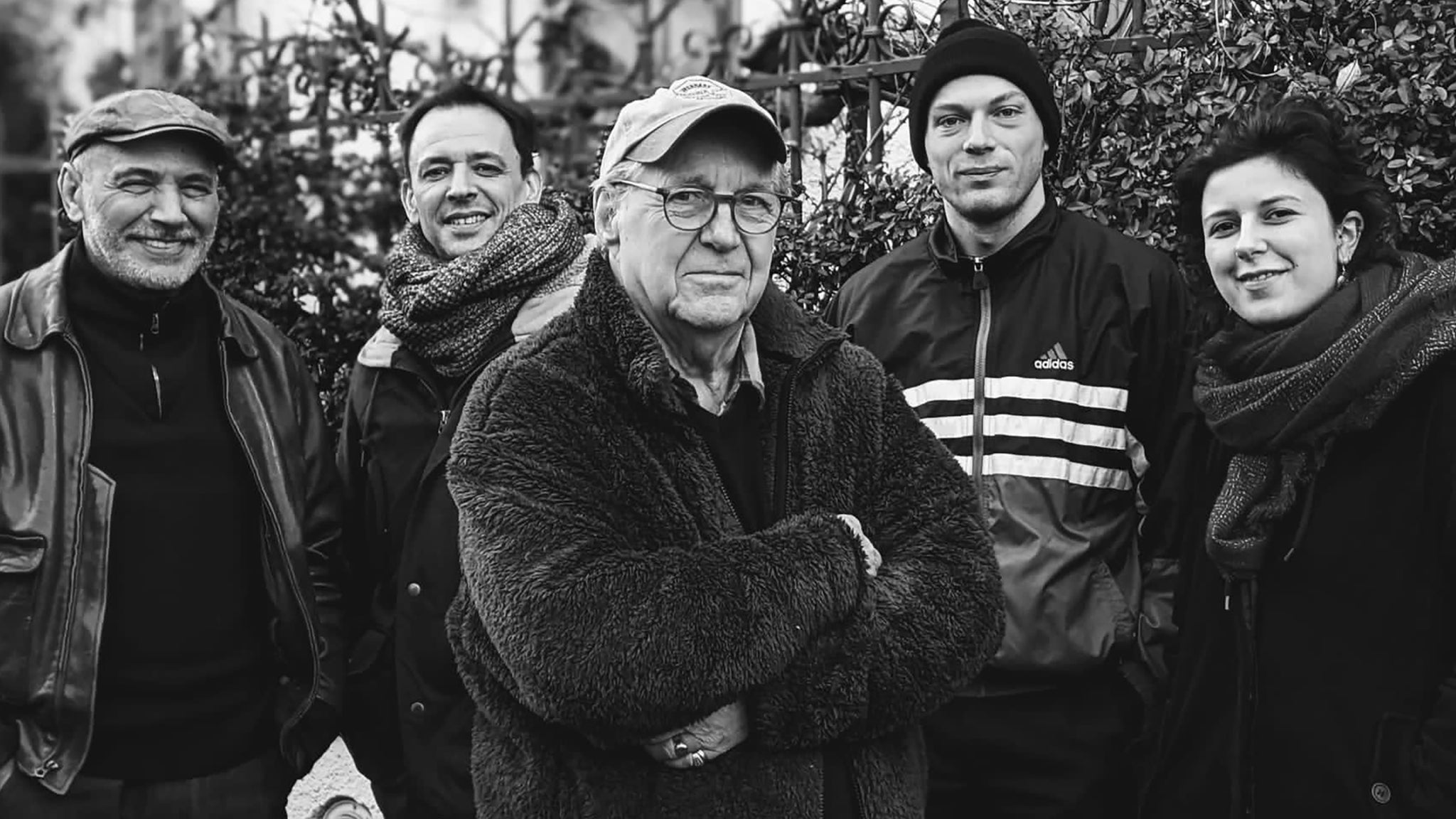
The 2026 tour was announced on 7 July 2026 under the title Le Jazz Est Mort: sixteen cities across the United States, Canada and Mexico, presented by ArtDontSleep and Jazz Is Dead, with tickets for the Canadian dates going on sale at 10am local time on 10 July via Modo Live. The touring band is Mion on piano, composition and vocals, Mohamed Ouaraz on bass, Victor Dubois on drums, Virginie Hombel on vocals and keys and Sandy Malonga on vocals and synth. Adrian Younge and J Rocc opened most nights; Younge missed the Toronto show because of a commitment to the first Second Summer festival.
It opened at the Hollywood Palladium on 9 September 2026 and worked east and back again: the Chan Centre for the Performing Arts in Vancouver on 22 September, First Avenue in Minneapolis on 24 September, the Vic Theatre in Chicago on 26 September, L'Olympia in Montreal on 28 September, Massey Hall in Toronto on 30 September, The Egg in Albany on 2 October, the Agora in Cleveland on 4 October, the Howard Theatre in Washington on 6 October, the Goat Farm in Atlanta on 8 October, Lincoln Factory in Detroit on 11 October, Knockdown Center in Queens on 12 October, Salón Los Ángeles in Mexico City, Radio East in Austin on 16 October, the Ogden Theatre in Denver on 18 October, the United Theater on Broadway in Los Angeles on 20 October and The Magnolia in El Cajon on 22 October. One date remains listed beyond it: Mercury Lounge in New York on 21 November 2026.
The Mexico City stop was the sore point. It had already been put back twice, the venue divided opinion before a note was played, and the show ran about an hour against a billed two, with sound and technical failures through it. Mion blamed the production from the stage — telling the room it was the organisation's fault and not to bother applauding louder — then closed by saying he would remember the night as a special one. Refund requests followed on social media, and the review that covered it put the fault on the promoters rather than the band.
The set as it stands
Fan-logged setlists from the 2026 run are consistent enough to read as a fixed shape. The fullest, from the Howard Theatre on 6 October, runs nine songs: Mary et Jeff, Chanson d'un jour d'hiver, La Rue, I Heard a Sigh, Levallois, Ode to Renée, Une histoire d'ami, Huit octobre 1971 and Sans toi. Mexico City logged seven of the same titles, Austin five, and Minneapolis on 24 September added the title track Troupeau bleu. Huit octobre 1971 sits at or near the end every time, which is the point — most of the audience arrives knowing it from a rap record rather than from 1975.
Roughly half the material is still the debut album, with the rediscovered barn track I Heard a Sigh now a fixture in the middle of the set and Sans toi from Pourquoi used as a closer. Mion fronts it from the piano and sings; the two vocalists carry the lines Dalbray originally sang. Nothing in the staging is elaborate — the draw is a seventy-nine-year-old bandleader playing the Rhodes parts that other people have been cutting up for thirty years.
The show, now
A Cortex show in 2026 is a five-piece band on a plain stage playing a tight nine-song set built mostly from a fifty-year-old debut album. The longest setlist logged on the Le Jazz Est Mort tour, at the Howard Theatre in Washington on 6 October 2026, ran Mary et Jeff, Chanson d'un jour d'hiver, La Rue, I Heard a Sigh, Levallois, Ode to Renée, Une histoire d'ami, Huit octobre 1971 and Sans toi; Mexico City logged seven of those, Austin five, and Minneapolis on 24 September also included the title track Troupeau bleu. Huit octobre 1971 — the track behind MF DOOM and Madlib's One Beer and Tyler, the Creator's Odd Toddlers — closes or encores every night. Alain Mion leads from the piano and sings, with Virginie Hombel and Sandy Malonga handling the vocal parts Mireille Dalbray cut in 1975, Mohamed Ouaraz on bass and Victor Dubois on drums. Adrian Younge and J Rocc supported most dates on the 2026 run, with Younge absent in Toronto because of a festival commitment; doors and start times were conventional theatre hours, 8pm at The Egg in Albany on 2 October. Reception has been mostly warm — audiences respond to the band's visible enthusiasm and the interplay on stage — but the Mexico City date at Salón Los Ángeles, twice postponed, went wrong: sound and technical failures, about an hour played against a billed two, Mion citing an early flight, pointed remarks from the stage blaming the production, and refund requests afterwards. One date remains listed, Mercury Lounge in New York on 21 November 2026.
Researched from en.wikipedia.org · en.wikipedia.org · en.wikipedia.org · jazzisdead.com · jazzisdead.com · exclaim.ca · mehaceruido.com · setlist.fm
Pictures
Photographs from Wikimedia Commons, credited
 Edija Rouseau · CC BY 4.0
 Edija Rouseau · CC BY-SA 4.0

