
Arts & Theatre · Theatre
Derya Şensoy
5 dates on sale
On tour
Every date the ticketer lists, worldwide · venue time
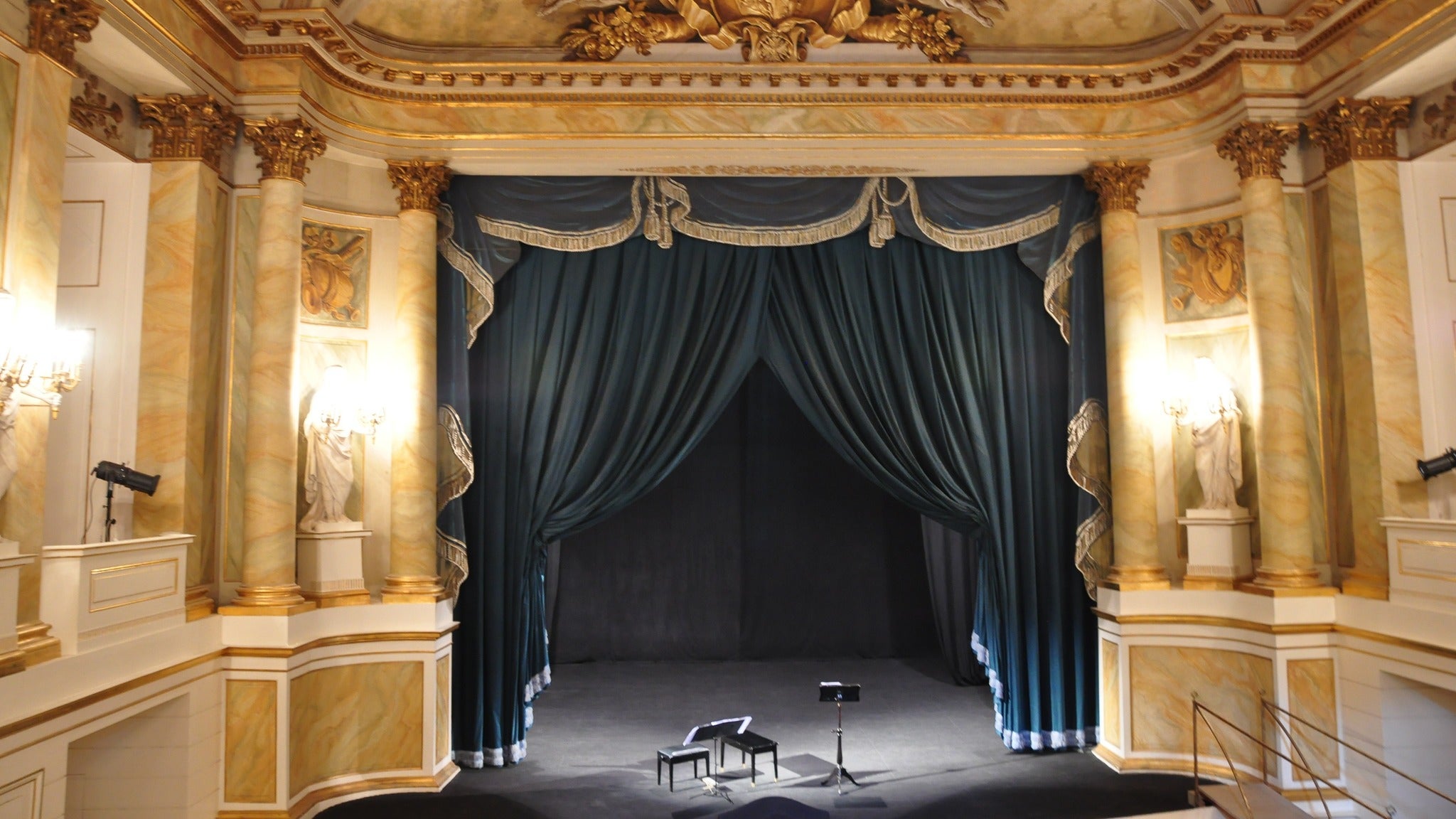 TicketsArts & Theatre · TRDiyemedimSes 1885 - Ortaoyuncular Tiyatrosu · İstanbulTicketsArts & Theatre · TRDiyemedimSes 1885 - Ortaoyuncular Tiyatrosu · İstanbulTicketsArts & Theatre · TRDiyemedimSes 1885 - Ortaoyuncular Tiyatrosu · İstanbulTicketsArts & Theatre · TRDiyemedimSes 1885 - Ortaoyuncular Tiyatrosu · İstanbulTickets
The profile · researched 1 October 2026
Eighty minutes, one woman, and the sentences she swallowed
Derya Şensoy spent the years after her father's death keeping his Beyoğlu playhouse open and losing herself doing it. Her answer was Diyemedim, a solo tragicomedy she wrote herself, which opened at Ses-1885 in February 2026 and has been on the road since April.
Raised in the wings at Beyoğlu
Neriman Derya Şensoy was born in Istanbul on 7 February 1990, into the most theatrical household in the country. Her father was Ferhan Şensoy, the playwright, director and performer who built the Ortaoyuncular company and made the Ses theatre on Istiklal Avenue its home. Her mother is the actress Derya Baykal. Her sister, Müjgan Ferhan Şensoy, also writes and directs for the stage.
The first credits on her theatre record are child appearances in the family firm: Parasız Yaşamak Pahalı in 1999 and Sahibinden Satılık Birinci El Ortaoyunu in 2001. Then she left the building for a long time. She finished Üsküdar American High School, went to New York to read illustration and design at Parsons The New School for Design, and afterwards worked in jewellery design in England. For most of her twenties the family trade was something she handled with a pencil rather than from the stage.
Back through the side door, as a designer
Her return to Ortaoyuncular in 2013 was as a maker of things, not a performer: she designed the set and costumes for Masal Müfettişi, written and directed by her father. In 2015 she designed the décor for Pera'daki Hayalet, her sister's play, and took the role of Aybike in it — the first substantial acting work of her adult career. In 2017 she appeared in her father's Nereye de Gidiyor Lan Bu Gemi?.
Screen work ran alongside it and for a while overtook it. She debuted on television in 2013 in the period comedy Doksanlar as Tuğba, followed by Mayıs Kraliçesi in 2015, Bu Sayılmaz in 2017 and Sorma Neden in 2018. Between 2014 and 2017 she worked across the Çakallarla Dans comedies and films including Hesapta Aşk, Deliormanlı and Vezir Parmağı. In 2022 she played Leyla in the Netflix film Sonsuza Dek Nedime. In 2023 the Direklerarası Theatre Awards gave her the Ragıp Ertuğrul Special Award.
What the inheritance cost
Ferhan Şensoy died in Istanbul on 31 August 2021, aged 70. Memorial ceremonies were held at Galatasaray High School and at the Ses theatre in Beyoğlu on 2 September before his burial at Zincirlikuyu. The company he founded kept going, and much of the practical weight of keeping it going fell on his younger daughter.
She has since been blunt about what that did to her. In an interview published on 13 January 2026 she said that people began asking her about the theatre's future before they had finished acknowledging that her family had lost someone, and summed up the four years that followed in one line: while trying to keep her father alive, she killed herself. Running Ses, she said, became a draining psychological job rather than an artistic one, and being known chiefly as somebody's daughter grew heavier with age until she had to step back from it.
Under that stewardship the company did keep producing — Şahları da Vururlar, the musical comedy her father first staged in 1980, was revived at Ses-1885 some 42 years later and is still in the repertoire alongside her own show.
Diyemedim: two years of writing, three months of rehearsal
The play came out of the grief rather than around it. Speaking in October 2025, on the way to rehearsals in Beyoğlu, she described Diyemedim — roughly, I couldn't say it — as a one-person piece she had been writing for two years that had finally found its shape and gone into rehearsal. She has since said it started from a feeling of brimming over during a bad period, that the writing stopped and restarted repeatedly, and that confronting her own material was harder than putting it in front of strangers. Rehearsals ran about three months.
The subject is what she could not say out loud. A long stretch of weight gain and the commentary it attracted from strangers, relatives and the internet is the spine of it, and from there the play opens out into how the health and aesthetics industry sells solutions to problems it helps create. She has framed it as the courage to narrate, as a woman, what actually happened to her. The register is tragicomic throughout: she is not asking for sympathy, she is getting laughs out of material that hurt.
It is directed by the actor Yağız Can Konyalı, who had first worked with her as an acting coach and is now her fiancé, with support from her mother. It opened at Ses-1885 in February 2026 — in the building she grew up in, on and around her own birthday — and runs 80 minutes. It is her first play as sole author and sole performer, which she says she would once have called a mad idea.
The room recognises itself
The response has been less about her and more about the audience. Writing in Sabah on 8 March 2026, the columnist Funda Karayel described the effect as one woman's account turning, within a moment, into the shared story of hundreds of women in the hall, and argued that everyone carries an archive of things they could not say: the unasked-for remarks about weight, appearance and procedures, the questions about why a body has changed. She called the show a tragicomic unburdening and read its real force as collective rather than confessional.
Early scheduling leaned on dates that mean something to the company: performances in March 2026 were pegged to 14 March, Ortaoyuncular's anniversary, and 27 March, World Theatre Day. From early April the show went out of Istanbul, with Bursa, Eskişehir, Ankara and İzmir confirmed and interest from Samsun, her father's home province.
Autumn 2026
Diyemedim is still the work she is doing. It remains listed as in performance at Ses-1885 in Beyoğlu, where Ortaoyuncular sells through Biletix and Bubilet, and the touring pattern established in spring has continued; a small block of dates is currently on sale.
Her personal news has been running in parallel and is tied to the same calendar. Konyalı proposed in December, and she said at the time that the wedding would wait until the touring season finished. The couple were photographed in Cihangir on 9 September 2026 wearing rings, and both declined to name a date: work is busy, they said, and the date will be announced when there is one.
The next piece of writing already has a title. She wants to follow Diyemedim with a play called Dedim — I said it.
The show, now
The current show is Diyemedim, and it is exactly one woman on a stage for 80 minutes with no supporting act and nothing to hide behind. The form is a written monologue rather than stand-up: a tragicomic inner outpouring that moves between grief and laughter, built around the remarks Şensoy absorbed during a period of weight gain and the aesthetics-and-health industry that profits from them, delivered close and conversationally to the room. Yağız Can Konyalı directs, and the staging is deliberately bare — the interest is in the account and the audience's recognition of it, which the Sabah columnist Funda Karayel described as one woman's story becoming the shared story of hundreds of women in the hall within a single moment. The show does not end at the curtain: afterwards the audience is invited to write down their own unsaid sentences on slips of paper and leave them in a vessel, which turns the evening into something closer to a collective deposit than a performance. The home run is at Ses-1885 in Beyoğlu, the theatre Şensoy's father built his company in and where she opened the play in February 2026; since early April 2026 it has also travelled, with Bursa, Eskişehir, Ankara and İzmir played and Samsun, her father's home province, asking for it. Tickets go through Biletix and Bubilet, and the handful of dates currently listed sell as a single-performer bill with no opener.
Researched from tr.wikipedia.org · tiyatrolar.com.tr · lavarla.com · haberturk.com · hurriyet.com.tr · hurriyet.com.tr · sabah.com.tr · biletinial.com