
On tour
Every date the ticketer lists, worldwide · venue time
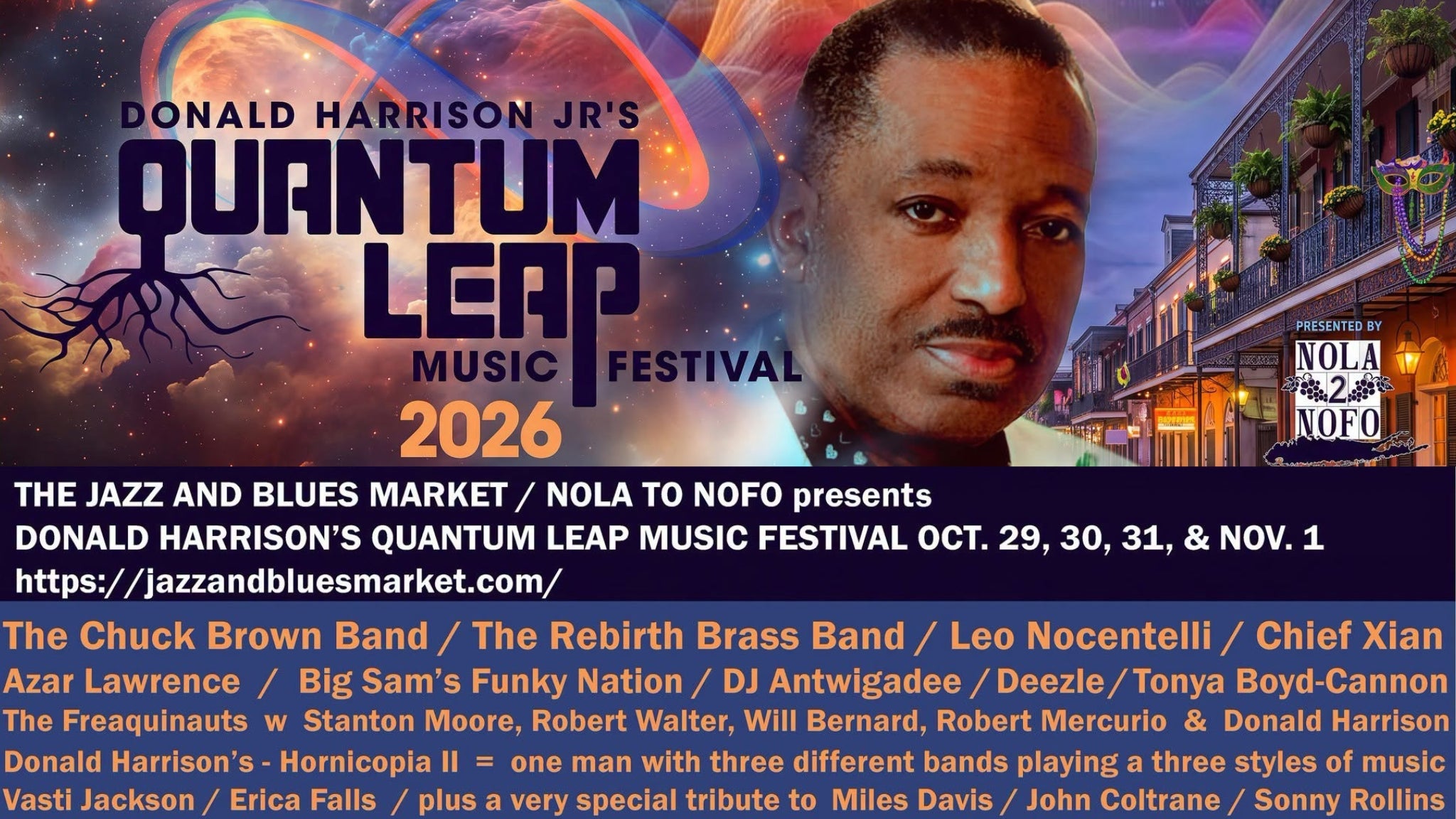 TicketsMusic · USDONALD HARRISON'S QUANTUM LEAP MUSIC FESTIVAL-CHUCK BROWN BANDNew Orleans Jazz Market · New Orleans
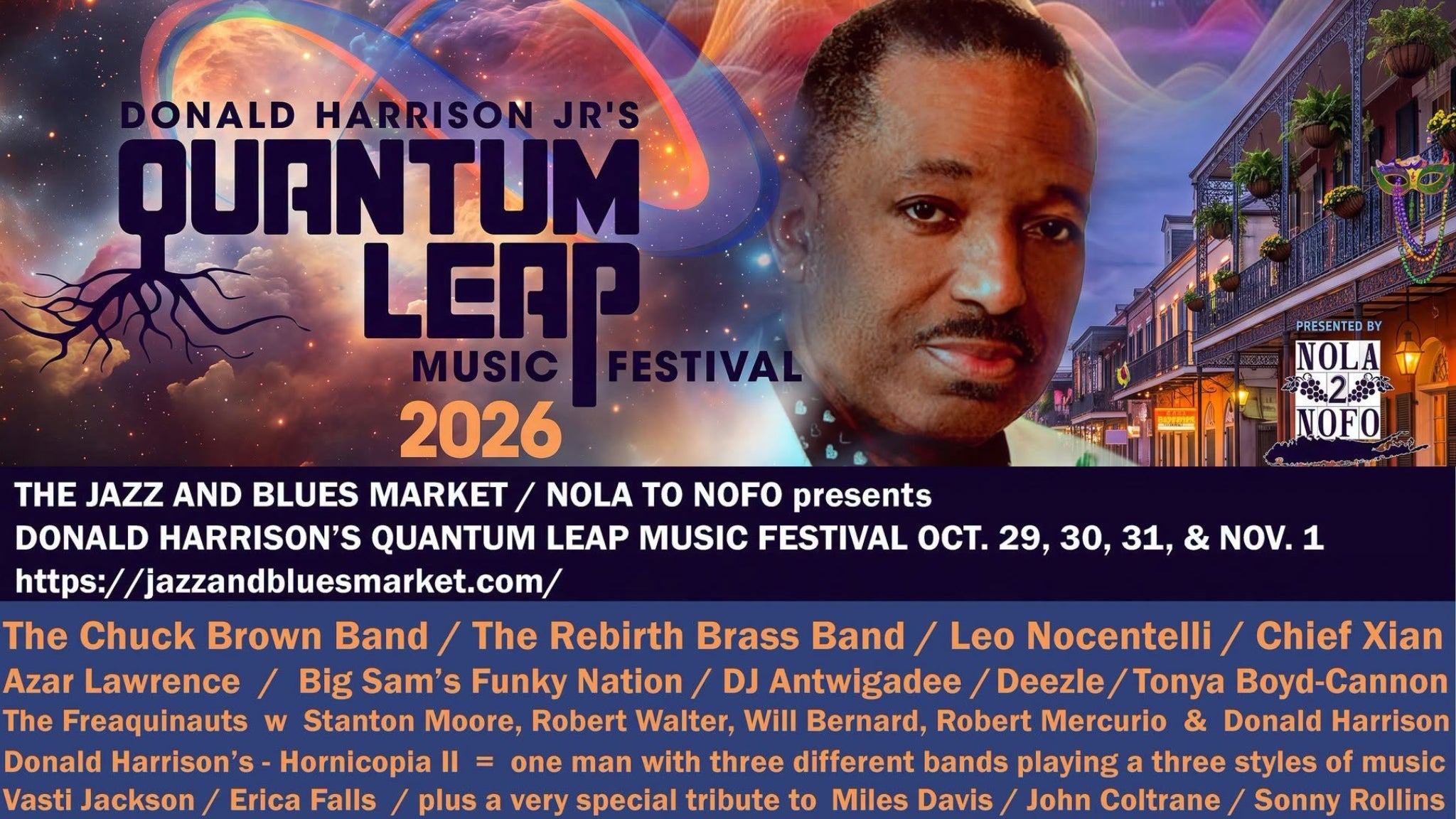 TicketsMusic · US D. HARRISON'S QUANTUM LEAP MUSIC FEST FREAKINAUTS & REBIRTHNew Orleans Jazz Market · New Orleans
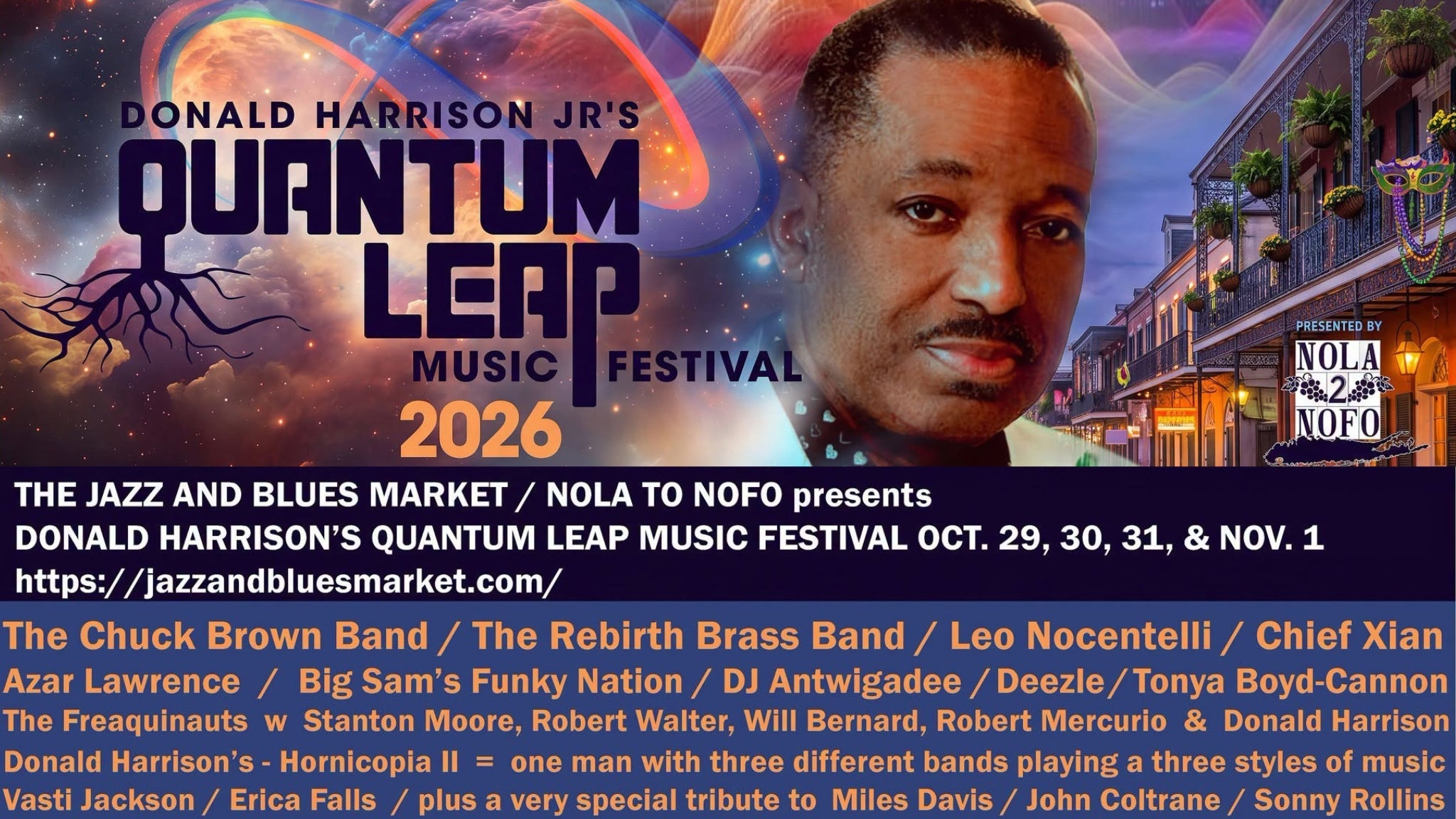 TicketsMusic · USDONALD HARRISON NEW JAM BAND INITIATIVE New Orleans Jazz Market · New Orleans
Listen
SoundCloud
The profile · researched 5 October 2026
One Tune, Ten Genres: Donald Harrison's Long Experiment Reaches Birdland
Donald Harrison Jr. is a New Orleans alto saxophonist who came up in Art Blakey's Jazz Messengers and is also Big Chief of the Congo Square Nation Afro-New Orleans Cultural Group. At 66 he is touring The Magic Touch, a project that recasts a single composition in ten different styles, with a four-night run at Birdland in October 2026 and a late-autumn block of New Orleans dates.
Little Chief of the Creole Wild West
Harrison was born in New Orleans on 23 June 1960, and was masked as a Mardi Gras Indian at the age of two under the title Little Chief of the Creole Wild West. The street tradition came first and the instrument came late: he did not pick up the alto saxophone until he was 16, then went north to study at Berklee College of Music in Boston.
Early professional work came with drummer Roy Haynes and organist Jack McDuff, and then with Art Blakey and the Jazz Messengers, where Harrison shared a front line with trumpeter Terence Blanchard and kept recording with the band until 1989. The Blakey years ran in parallel with his own records: New York Second Line, from 1983, set second-line rhythm against modern jazz rather than treating the two as separate repertoires, which is the move he has been refining ever since.
His collaborator list reaches well outside jazz clubs — Miles Davis, Lena Horne, the Notorious B.I.G. and the Louisiana Philharmonic Orchestra all appear on it.
Nouveau Swing and a jazz reading of Congo Square
Two records from the start of the 1990s mark out the two directions. For Art's Sake, from 1991, is a tribute to Blakey. Indian Blues took the chants and rhythms of the Mardi Gras Indian tradition and Congo Square — one of the few places in North America where enslaved Africans openly practised their own culture in the 18th and 19th centuries — and put them in a jazz setting, with the family's own street repertoire as source material rather than local colour.
Out of that came nouveau swing, Harrison's term for playing a swing beat against the dance musics people were actually dancing to: R&B, hip-hop, rock and soul. The 3D albums, issued in three volumes, pushed the logic further by splitting a single release across smooth jazz, straight-ahead jazz and hip-hop instead of choosing one.
In 1999 Harrison became Big Chief of the Congo Square Nation Afro-New Orleans Cultural Group, the title his father carried before him, so the cultural role and the bandleading career now run on the same calendar.
Screen work, and a teaching habit that produced other bandleaders
Harrison appeared in Spike Lee's When the Levees Broke and in eleven episodes of Treme, the HBO series built around post-Katrina New Orleans musicians. He has taught at the College of William & Mary, at the New School, and through the Tipitina's Foundation, and has been artistic director of the Louis Armstrong Summer Jazz Camp since 2022.
The teaching shows up most clearly in who came through it. Christian Scott — his nephew, now performing as Chief Xian aTunde Adjuah — Mark Whitfield and Christian McBride all count Harrison as a mentor, which is part of why the 2022 honour he received was the A.B. Spellman NEA Jazz Masters Fellowship for Jazz Advocacy rather than a performance award. Berklee gave him an honorary doctorate in 2021, and OffBeat readers voted him best saxophonist in 2017, 2020, 2021–22 and 2023.
The Magic Touch: the same tune, taken apart
The Magic Touch is the current project and the current argument. It takes one composition and records it repeatedly in unrelated styles. When Relix covered it in July 2025, the count stood at eight genres plus a ninth nouveau swing version that folded the other eight together, with jamband, classical chamber and Afrobeat arrangements still to come. By the time WBGO's Leo Sidran took it up on 16 April 2026, the figure had settled at ten: post-bop, reggae, New Orleans second line, bossa nova, blues, chilled trap hip-hop, soul and smooth jazz, salsa, Afrobeat, and nouveau swing to close.
Harrison's own account of the writing is undramatic. "It was something I was hearing that could be put in many formats," he told the Detroit Free Press in September 2026, and his test for the tune was whether it was "really melodic that a person could sing, or dance to". He credits a line of Charlie Parker's with having "turned me around 100 percent" and pushing him to go and live inside every style rather than quote from it.
The theoretical frame is borrowed from physics. Harrison has worked with the theoretical physicist Stephon Alexander on ideas about improvisation, and reduces the whole project to a sentence: all music is the same, it's just different.
Quantum Leap: his own festival
Harrison also runs a festival. The second Quantum Leap Music Festival ran from 14 to 17 August 2025 at the Castello di Borghese Vineyard and Winery in Cutchogue, on Long Island's North Fork, produced with NOLA2NOFO and built around two dozen-plus New Orleans musicians: the Dirty Dozen Brass Band, Leo Nocentelli of the Meters, the Preservation Hall Legacy Band, C.J. Chenier and the Red Hot Louisiana Band, the Headhunters with Cyril Neville, Zaccai Curtis and Erica Falls. Day tickets ran from $45 to $95 and weekend passes from $200 to $250, over-21s only.
Harrison himself played several of the slots under different headings — his Congo Square Nation Afro-New Orleans Group on the Friday, the Electric Soul Project on the Sunday, plus the Nouveau Swing Experience, a Soul Summit and an all-star jam band — with Chief Xian aTunde Adjuah guesting. Listings for late 2026 put Quantum Leap events in New Orleans across 30 and 31 October.
Autumn 2026
The current run of dates is short and clustered. Harrison played Aretha's Jazz Cafe on Madison Street in Detroit on Tuesday 29 September 2026 at 8pm, tickets $43.55, with a programme of multiple Magic Touch versions, a Sonny Rollins tribute and unreleased recordings. From 7 to 10 October 2026 he has four nights at Birdland Jazz Club in New York, then the New Orleans Jazz Market on 29 October, the Quantum Leap dates on 30 and 31 October, and the Jazz Market again on 1 November. A further Jazz Market booking stands for 27 January 2027.
Listing sites counted around a dozen confirmed shows going into October 2026, all within the United States, and he continues to appear as a member of the Headhunters alongside his own billing.
The show, now
A Harrison club date in 2026 is a straight jazz-club booking with no support act: at Birdland from 7 to 10 October he plays two sets a night, starting at 7pm and 9.30pm earlier in the run and at 8.30pm and 10.30pm later, with a small band rather than the multi-ensemble sprawl of his festival appearances. The material divides between standards and the new project — recent setlists have taken in Oleo, St Thomas and Misty alongside original compositions — and the Magic Touch pieces are presented as several versions of the same tune in different styles, which gives the evening a built-in shape as the arrangements change underneath a melody the audience has already heard. The Detroit show on 29 September 2026 at Aretha's Jazz Cafe ran to that pattern: multiple Magic Touch readings, a Sonny Rollins tribute and unreleased recordings, tickets at $43.55. Staging is minimal and the house lights do the work; Harrison's own stated measure for the music is whether a listener can sing it or dance to it, and in his New Orleans appearances the Mardi Gras Indian side of his repertoire comes forward, as it does in the Congo Square Nation and Nouveau Swing Experience sets he programmes at his own Quantum Leap festival.
Researched from en.wikipedia.org · yahoo.com · wbgo.org · relix.com · jazzizdiscovery.com · offbeat.com · songkick.com · jambase.com
Pictures
Photographs from Wikimedia Commons, credited
 Derek Bridges New Orleans, LA · CC BY 2.0
