On tour
Every date the ticketer lists, worldwide · venue time
 TicketsSports · CABlainville-Boisbriand Armada vs. Baie-Comeau DrakkarCentre d'Excellence Sports Rousseau · BoisbriandTicketsSports · CABaie-Comeau Drakkar vs. Rouyn-Noranda HuskiesAlcoa Sports Centre · Baie-Comeau
The profile · researched 6 October 2026
Thirty seasons on the North Shore: the Drakkar start again from zero
Baie-Comeau's QMJHL club is in the thirtieth season of its history and the opening months of a full rebuild — last overall in 2025-26, a new head coach in Patrice Bosch, and still without a win six games into 2026-27.
A longship moored on the Côte-Nord
The Drakkar have played out of Baie-Comeau, an aluminium town on Quebec's North Shore, since 1997. The name is simply the word for a Viking longship, and the club has leaned on that ever since: the mascot is a Viking called Snorri, and the branding nods to Norse voyaging in the Gulf of St Lawrence. The colours are red, white and gold.
Home is a building that opened in 1970 as the Centre Henry-Leonard. In August 2024 the arena itself was renamed the Centre sportif Alcoa after the aluminium producer agreed to pay $100,000 a year for five years to the junior hockey organisation; the city kept the former mayor's name on the wider site, now the Complexe récréatif Henry-Leonard. Alcoa's operations director framed it as community commitment plus visibility on game nights, while the board president pointed out that the club's costs had been rising around five per cent a year. The rink holds 3,042, with 2,779 of those seated, which makes it the smallest in the league.
Six division titles and one final
The trophy case is thinner than the club's longevity suggests. Baie-Comeau have taken six division titles — 2000-01, 2002-03, 2012-13, 2013-14, 2018-19 and 2023-24 — but have never won the President's Cup. The one appearance in the league final came in 2012-13, and the Halifax Mooseheads closed it out four games to one. The best regular season in franchise history was 2023-24: 53 wins against 12 losses.
Yanick Lehoux remains the franchise scoring leader with 164 goals and 218 assists for 382 points, and he is among the handful of Drakkar graduates to reach the NHL, along with Marc-André Bergeron and Gabriel Bourque. The 2005-06 season had an unusual afterlife: the National Film Board followed it for the documentary Junior, which is still the most widely seen portrait of the organisation.
The season that came apart
Nothing about 2025-26 went to plan, and some of it was structural. The city spent roughly $2.1 million on the arena at the start of that season — about $1.4 million on new boards alone, plus protective glass and a replacement brine pump for the ice plant, with the Quebec government reimbursing a third. The work was finished in October 2025, but it meant the Drakkar opened the campaign with seven consecutive road games and no wins from them.
What followed was worse: twelve straight losses, and another ten-game winless run in February. The final line was 15-42-5 with two further shootout defeats, 37 points from 64 games, last in the league in the first season after the divisions were abolished. The squad was dismantled as it went. Justin Poirier and the 20-year-old group had gone over the summer; Alexis Bernier, injured and never in the lineup, was traded to Chicoutimi during the holiday period; goaltender Lucas Beckman was moved mid-season. Sam Caulfield came in and gave the club its one piece of genuinely good goaltending — 5-8-1 with a 2.72 goals-against average and a.926 save percentage before injury ended it.
The crowd noticed. Average home attendance fell 48 per cent to 1,485, and only four home dates drew more than 2,000. Reviewing the year on 24 March 2026, general manager Jean-François Grégoire was blunt about his own read of it, saying he had to take a step back and ask whether the situation was really that bad, admitting he had perhaps been too optimistic in believing the Drakkar name would carry the team, and that after training camp competitiveness had given way to complacency. He also set out the three things he had chased at the trade deadline: draft capital, young talent for later, and established veterans. The haul was eight selections inside the first five rounds of the 2026 draft.
A new voice behind the bench
Grégoire, who had been doing both jobs, stepped away from coaching on 22 May 2026 after four seasons, staying on as executive vice-president and director of hockey. On 1 June the club promoted Patrice Bosch from associate coach to head coach, the fifteenth in franchise history. Bosch had arrived in Baie-Comeau in 2023 and brought 28 years of coaching across North America and Europe, including two seasons with HC Lugano in Switzerland from 2021 to 2023. He has twice been head coach of Canada East at the World Junior A Challenge and three times an assistant there, and consulted for the Swiss junior programme at the 2014 World Junior Championship. Grégoire described him as a coach with a strong reputation in the league and beyond, capable of guiding young players' development. Bosch's own line on taking the job was about working with passion, rigour and determination to represent the North Shore.
The roster he inherited is deliberately young. Three first-round picks from the 2026 draft came in together — centre Tommy Leroux, defenceman Enzo Roy and goaltender Nathan Boulanger — alongside three Austrians with international experience and two 16-year-olds. Leroux was sidelined by injury at the start of the season. The forwards flagged at the end of last year as the core worth building around are Liam Armit, Filip Vlk, Daniele Biagio Jr. and Lynden Larsen.
Where it stands in October 2026
The thirtieth season opened at home on Friday 19 September 2026 against Rimouski, in front of a good anniversary crowd, and ended 4-2 to the Océanic. Rimouski won the Saturday rematch 5-2. Bosch's assessment after the first was that his team had not played badly but had missed too many chances, and that the task was to play a full sixty minutes.
Three weeks later the same sentence was still doing service. On 3 October the Drakkar lost at home to the Victoriaville Tigres having failed to score on a 5-on-3, and as of 5 October the record stood at no wins and six losses. Bosch put it as coming close without doing enough to win, and identified penalties and power-play conversion as the recurring cost. He also named the risk directly — that the losing starts to breed frustration — calling it a trap. By his own account the effort is there and the consistency is not. One trip to Chicoutimi aside, most of the defeats have been close games finished off by empty-net goals.
Inside the Alcoa
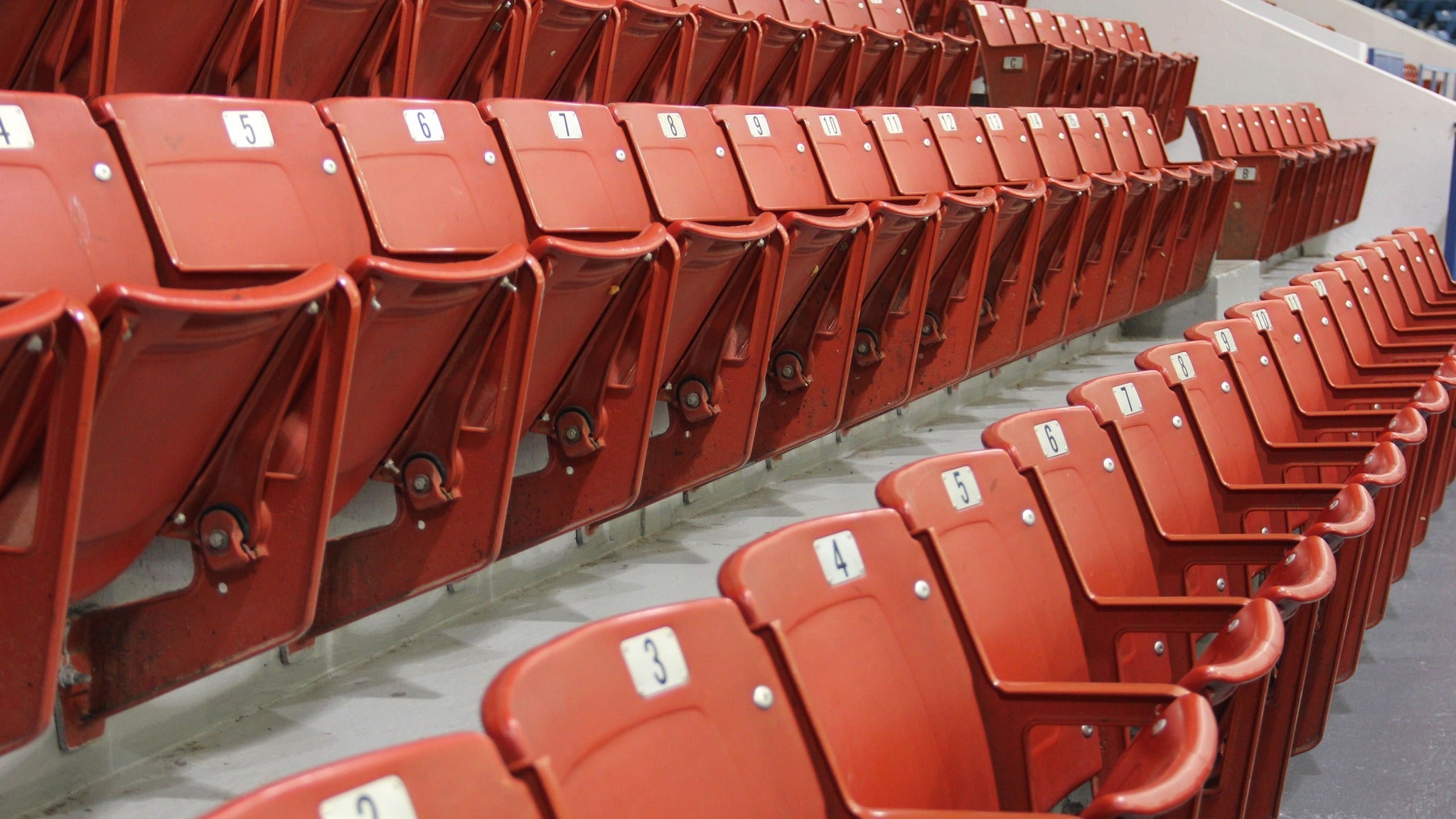
The building does a lot of the work. On the main side about twenty rows of seats climb from the ice to the roofline; the far side has ten and little in the way of a concourse. Bare metal walls and a low ceiling bounce the crowd noise back down, which is why a half-full house in Baie-Comeau still sounds like something, and the recorded music between whistles is pushed hard. There is a centre video board, generous legroom, and suites hanging directly over the glass with sightlines better than the price of the building would suggest. The club has also installed four original Montreal Forum seats that can be booked. Visiting supporters are, by most accounts, made welcome, and the rink stays a community facility with multiple pads and a gymnasium rather than a dedicated junior arena.
The show, now
A Drakkar home date is three 20-minute periods at the Centre sportif Alcoa, with two intermissions, so a little over two hours from first puck to handshake line. There is no support act in the musical sense — the opponent is the bill, drawn from the QMJHL's Quebec and Maritime clubs, and the club dresses individual nights up with themes across the season. The rink is the oldest and smallest in the league, opened in 1970 and renamed under the Alcoa sponsorship in August 2024, and it was reboarded and reglazed in a $2.1 million municipal job completed in October 2025, so the playing surface is newer than the shell around it. Seating runs about twenty rows up to the roofline on the main side and ten on the other; bare metal walls and a low ceiling amplify the crowd, the music between whistles is loud, there is a centre video board, suites sit directly above the glass, and four original Montreal Forum seats can be booked. Snorri, the Viking mascot, works the stands. What is on the ice in October 2026 is a rebuild in its first weeks: three 2026 first-round picks in Tommy Leroux, Enzo Roy and Nathan Boulanger, three Austrians, two 16-year-olds, and a team that lost its opener 4-2 to Rimouski on 19 September in front of a good 30th-anniversary crowd and was still winless at 0-6 after a 3 October home defeat to Victoriaville. Patrice Bosch's public read is that the effort is there, the sixty-minute game is not, and the power play is costing them; local coverage has described close losses sealed by empty-net goals. The counterweight is the crowd, which last season shrank by 48 per cent to an average of 1,485 and which the club is now trying to win back one result at a time.
Researched from en.wikipedia.org · en.wikipedia.org · thehockeynews.com · ici.radio-canada.ca · lemanic.ca · journalhcn.com · lenord-cotier.com · ici.radio-canada.ca
Pictures
The ticketer's photographs