

On tour
Every date the ticketer lists, worldwide · venue time
Listen
SoundCloud
The profile · researched 7 September 2026
Grouper: songs that live in the hush
Liz Harris’s long‑running project traces a singular path through ambient song, from Dragging a Dead Deer Up a Hill to 2021’s acclaimed Shade. In September 2026 she returns to North American stages for a short run of rare theatre and church dates around a Chicago festival appearance.
Roots and the slow formation of a voice
Liz Harris grew up in Northern California, part of a Fourth Way intentional community known as “The Group,” an upbringing she has said shaped her ideas about attention, silence and how sound can hold presence. She later settled in the Pacific Northwest and began releasing work as Grouper in the mid‑2000s, issuing early recordings through her own Yellowelectric imprint and kindred independent labels. The project coalesced around a way of singing and recording that made the microphone feel like a wall and a portal at once — direct in feeling, occluded in texture — a paradox she has described in interviews as deliberate rather than evasive.
Through the late 2000s Harris played small rooms and churches while releasing cassettes, CDRs and LPs that threaded field recordings, tape hiss and voice into songs that seemed to arrive with the logic of memory. A long relationship with Chicago label Kranky followed, alongside collaborations and parallel aliases (Mirrorring with Tiny Vipers’ Jesy Fortino; the duo Raum with Jefre Cantu‑Ledesma; Nivhek for more abstract, installation‑rooted work). The live show retained the same intent: near‑darkness, few words, long gradients of sound where guitar, keys and tape textures dissolve into one another.
The work that matters
Dragging a Dead Deer Up a Hill (2008) marked a turning point. Reviews at the time heard the songs — still wreathed in reverb — asserting themselves with sharpened melodic contours. If those tracks suggested dream‑pop refracted, A I A: Dream Loss and Alien Observer (both 2011) pushed into a more interior drift, guiding listeners by pulse and atmosphere rather than chorus.
Ruins (2014) pared everything back to piano, room tone and voice, much of it written or recorded in 2011 during time in Aljezur, Portugal. The restraint was radical and the reception strong; several outlets set it among the year’s best, and Harris would later describe Ruins as a work that “helped crack me open,” a pivot that allowed the material to speak plainly without losing its undertow.
Grid of Points (2018) continued that abbreviated, piano‑led language — six succinct pieces that felt like annotations to Ruins — before Shade (Kranky, 22 October 2021) reframed her catalogue as a continuum. Announced that July, Shade collected songs recorded over roughly 15 years, from a self‑devised residency on Mount Tamalpais to sessions in Portland and more recent work in Astoria, Oregon. Critics responded to the sense of time under the surface; the album landed an 86 Metacritic average and was placed at No 2 in the Washington Post’s year‑end list. Its highlights — the glinting Ode to the Blue, the closing Kelso (Blue Sky) — showed Harris lifting the veil without puncturing the spell.
Side‑paths matter to the story. As Nivhek, she issued the double‑length After Its Own Death / Walking in a Spiral Toward the House (2019), a study in extremely spare devotional drift. With Cantu‑Ledesma she revived Raum for Daughter (2022), an elegy for the late filmmaker Paul Clipson that folds field recordings and instrumental scraps into a hovering memorial. And in November 2025, to mark 20 years since its first handmade CDR pressing, her debut Way Their Crept was reissued by Kranky, returning an out‑of‑print cornerstone to circulation and re‑stating the long arc that Shade quietly mapped.
Where Grouper stands in 2026
The past few years have not brought a new Grouper studio album after Shade, but they have clarified Harris’s present course. The 20th‑anniversary pressing of Way Their Crept in November 2025 re‑centred the beginnings of her language and drew a line to the present. In April 2026, a brief North American run was announced for September, the kind of selective touring that has long characterised Grouper’s live calendar: theatres and churches, often single or double nights rather than long treks, and the occasional festival slot that prizes careful listening over volume.
That approach dovetailed with Chicago’s Sound & Gravity festival over Labour Day weekend (3–6 September 2026). Curated across multiple mid‑sized venues, the event placed Grouper alongside experimental and jazz bookings; the published schedule set her for a one‑hour set in the Athenaeum Center on Sunday evening. Local coverage and listings underscored why she fits this kind of programme: music that invites a room to lean in rather than shout back, and a presenter ethos designed for that exchange.
As of 7 September 2026 four September North American theatre dates remain on sale through primary ticketing: Toronto’s Concert Hall on 8 September; two nights at New York’s Town Hall on 15 and 16 September; and Washington, DC’s Lincoln Theatre on 19 September. Around those, Montréal’s Théâtre Outremont date on 10 September has been listed by local presenters, while a Kingston, NY church show on 12 September is billed with Jefre Cantu‑Ledesma and marked sold out on the organiser’s page. The shape of the month feels consistent with Harris’s preference for a handful of focused encounters rather than an exhaustive circuit.
Inside the room now
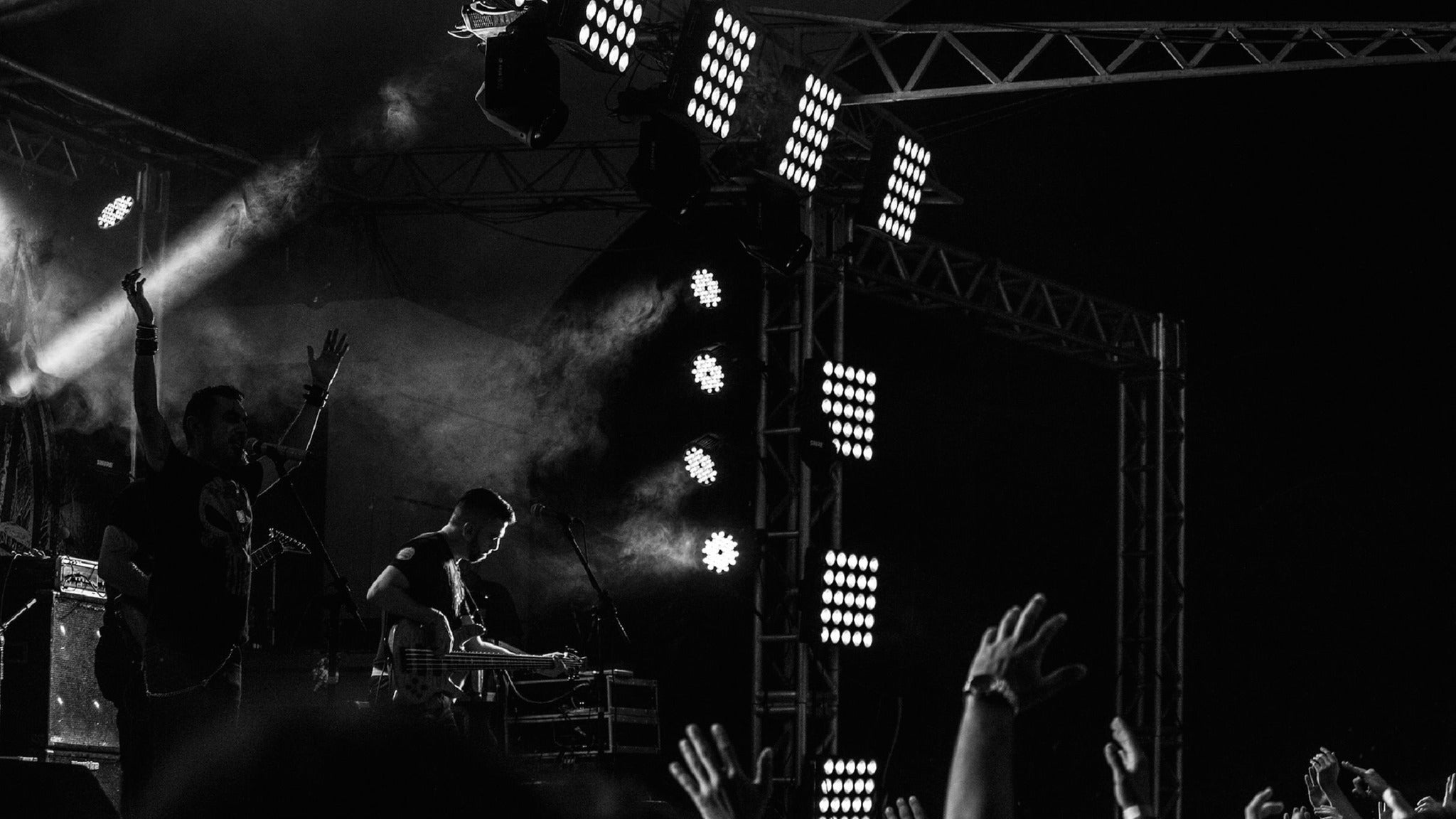
Recent live accounts still describe a stage picture close to silhouette: a performer seated low or nearly unseen, a single lamp or spill of light making a boundary more than a spotlight, and long passages where guitar, keys and pedals let tone rather than tempo carry a set. A 2015 London review called the show “barely visible, extremely quiet,” not as an affectation but a method for building attention. That aesthetic remained in place through festival dates in the 2020s: notes from Big Ears in 2023 observed sequences that blurred song and drone, with the voice often treated as a trigger for wider swells of sound.
The current run keeps similar parameters but a touch more song. Theatres like Town Hall or the Concert Hall tend to seat audiences who know to sit inside the hush; church spaces such as Kingston’s Old Dutch Church accentuate the bloom and decay of each phrase. Set lengths vary with the slot — an hour in Chicago’s festival schedule; longer evenings when there’s a listed support — and material tends to move across albums rather than replicate one in sequence. Listings around the New York dates, and advance notes when the run was announced in April, suggested a career‑spanning selection that includes Shade pieces without treating the night as an anniversary exercise.
Audience chatter in late August and early September 2026 captures the texture of the experience: shows that demand stillness; minimal or no stage talk; occasional rough edges in the mix that read as part of the fabric rather than mistakes. Those observations line up with earlier reviews and with how Harris has spoken about her practice — clarity over spectacle, presence over polish — and they remain the best guide to what these September rooms will hold.
The show, now
In September 2026, Grouper’s show sits between theatre recital and private séance. The Sound & Gravity festival schedule in Chicago set her for a one‑hour slot (8:45–9:45pm) on 6 September, while ticketed theatre nights this month list start times around 7–8pm. The Kingston, NY church date on 12 September pairs her with Jefre Cantu‑Ledesma and is advertised as sold out; elsewhere, four shows remain on sale via primaries as of 7 September (Toronto, two New York nights, Washington, DC). Sets are typically continuous and open‑ended rather than fixed‑sequence, with songs from Shade threaded among older pieces; staging is dim, seat‑bound and speech‑free, leaving the room to settle around sustained guitar, piano and tape/loop textures. Recent reviews and fan reports emphasise how quiet the performance is and how small shifts in tone, rather than spectacle, shape the night.
Researched from pitchfork.com · washingtonpost.com · pitchfork.com · thequietus.com · en.wikipedia.org · grouper.bandcamp.com · bleep.com · groundcontroltouring.com
Pictures
Photographs from Wikimedia Commons, credited
 Jarek Tuszyński · CC BY 4.0
 William Cho · CC BY-SA 2.0
 yakovlev.alexey from Moscow, Russia · CC BY-SA 2.0
 Jean-Lou Justine · CC BY-SA 3.0
 Jonathan Muhiudeen · CC BY-SA 3.0

.jpg)
.jpg)

.jpg)