
On tour
Every date the ticketer lists, worldwide · venue time
 TicketsSports · CARouyn-Noranda Huskies vs. Blainville-Boisbriand ArmadaArena Glencore · Rouyn-NorandaTicketsSports · CAGatineau Olympiques vs. Rouyn-Noranda HuskiesCentre Slush Puppie · Gatineau
The profile · researched 14 November 2026
Rebuild in the copper town: the Rouyn-Noranda Huskies after the Verdon years
The 2019 Memorial Cup winners spent four seasons as the best regular-season side in the QMJHL's west; having traded away that roster in the summer of 2026, they are now a young team built around the first pick of the draft, playing in a 1951 arena that seats 3,500.
A Montreal franchise that ended up in Abitibi
The club's paperwork runs a long way back. The licence that became the Huskies began life as the Montreal Junior Canadiens in 1933 and passed through the Montreal Bleu Blanc Rouge, the Montreal Juniors, the Verdun Juniors, the Verdun Junior Canadiens and the Saint-Hyacinthe Laser before it left the south of the province for good. On 25 April 1996 the owners Sylvain Danis and Dave Morin moved the Laser 600-odd kilometres north-west to Rouyn-Noranda, a mining city they advertised as the national capital of copper. The Huskies name was picked to match the character the owners attributed to the town and its mine workers.
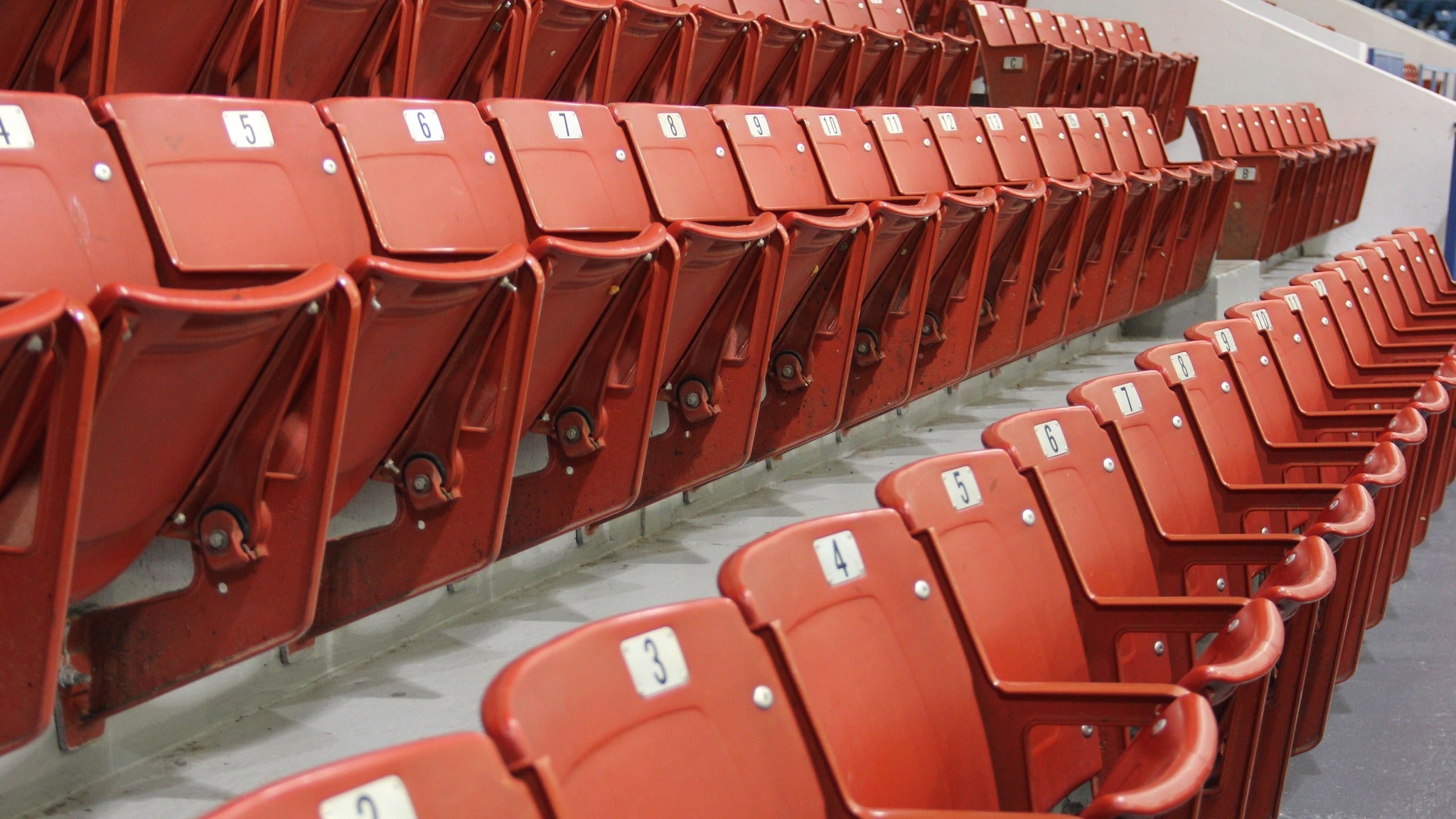
Home is the arena on the Dave-Keon site, which opened in 1951 and holds roughly 3,500. It carried the Iamgold name for years, was renamed Aréna Glencore in September 2021, and the Glencore deal was extended for another five years in an announcement the club published on 1 September 2026. The building is small enough that some seats cannot see the scoreboard and the concourses jam at intermission, which is part of why it remains one of the harder away trips in the league.
The season that justified everything
Rouyn-Noranda's first run at a national title ended in 2016, when the Huskies lost the Memorial Cup final 3-2 in overtime to a London Knights side carrying Mitch Marner and Matthew Tkachuk. Three years later they went back and finished it. The 2018-19 team set a QMJHL record with 59 regular-season wins, strung together a 25-game winning run, took the league playoff title, then beat the host Halifax Mooseheads 4-2 in the Memorial Cup final on 26 May 2019 in front of 10,595 after trailing 2-0 in the game.
Joël Teasdale was named the tournament's most outstanding player and Jakub Lauko led it in scoring, with Noah Dobson and Félix Bibeau also named to the all-star team. Mario Pouliot, who had won the previous year's Memorial Cup with Acadie-Bathurst, became the first head coach in Canadian Hockey League history to win the trophy in consecutive years with two different clubs.
The honours board otherwise reads: league playoff championships in 2016 and 2019, and first-overall regular-season finishes in 2007-08, 2015-16 and 2018-19. Three numbers hang in the rafters — 3 for Marc-André Bourdon, 9 for Mike Ribeiro and 44 for Jérôme Tremblay. Nikita Kucherov, Dobson, Timo Meier, Ribeiro and Maxime Talbot all passed through, as did André Tourigny, who coached the team for a decade from 2003 before his NHL career.
Four years as the best team in the west
The recent record is a long stretch of regular-season dominance that kept stopping short. In 2023-24 the Huskies went 47-15-1-5 for 100 points and won the Western Conference, then lost in the second round to Victoriaville. In 2024-25 they again topped the west with 82 points from a 37-19-3-5 season and were knocked out by Moncton. In 2025-26 they finished first in the conference once more at 40-17-5-2, 87 points, 221 goals for and 178 against.
That last side was a veteran group. Thomas Verdon put up 95 points — 36 goals, 59 assists — third in the league, and was named to the first all-star team; Samuel Meloche took the bulk of the goaltending. On 15 February 2026 Meloche stopped 27 of 29 in a 6-2 home win over Sherbrooke for his 26th victory of the season, a day after the Huskies had shut out conference-leading Blainville-Boisbriand 5-0. In the playoffs they beat Gatineau 4-3, swept Shawinigan 4-0, and then lost the semi-final 4-2 to Chicoutimi, who went on to take the Gilles-Courteau Trophy from Moncton.
The front office committed to its coach in the middle of that season. On 16 February 2026 the club gave Steve Hartley a five-year extension and added the title of assistant general manager under managing director Yannick Gaucher. Hartley had won 95 of his first 155 games behind the bench; Gaucher's stated reason was player development, and Hartley's answer was that his family had settled in the town.
Selling the roster, buying the draft
The 2026 off-season was a deliberate teardown. Meloche was traded to the Saint John Sea Dogs for a large return of draft picks plus Cole Renaud; Charlie Benigno and Nathan Langlois were also moved. Verdon, Benjamin Brunelle — 19 points in 17 playoff games — and Axel Dufresne aged out or left, and the two European imports went home, Guus van der Kaaij and Lars Steiner both returning to HC Davos. Steiner had scored 30 goals.
What the Huskies bought with all that was the top of the draft. At the Scotiabank Centre in Halifax on 5 June 2026 they used the first-overall pick, acquired via Baie-Comeau, on Thomas Boisvert, a forward from Trois-Rivières who had been playing at Mount St Charles Academy and who wears 71. He is a cousin of the NHL player Sasha Boisvert and was also taken by Green Bay in the USHL Futures Draft. His transfer to Rouyn-Noranda was confirmed on 12 June 2026. The camp list added two more first-round picks, the goaltender Zachary Lainesse and the right winger Malik Tremblay.
Writing a season preview on 12 September 2026, The Hockey News read the whole thing as a step back taken on purpose, with the year's real business being ice time for the young forwards and a timeline built around Boisvert, and Antoine St-Laurent, Jayden Pominville and Charles Laforest expected to carry more.
Mid-November 2026
Boisvert missed the first ten games of his junior career with an injury. He debuted in mid-October — reported on 16 October 2026 — and scored on his first night, finishing with three points in a 6-3 defeat to Blainville-Boisbriand.
Results since have swung hard, which is what a rebuilt roster tends to do. On 31 October the Huskies beat the Shawinigan Cataractes 9-3 at home. On 8 November they won 1-0 against the Victoriaville Tigres, and on 13 November they lost in a shootout at Val-d'Or. That leaves them mid-table in the Western Conference rather than on top of it for the first time in four years, with the league's own standings page showing them fourth in the west on around 21 points from 17 games. The next home date is 15 November against the Sherbrooke Phoenix, followed by a trip to Baie-Comeau on 19 November.
Pominville has been among the more visible of the promoted forwards, taking second-star honours in a 2-1 overtime loss to Gatineau earlier in November.
A night at the Aréna Glencore
The game is the standard QMJHL format — three 20-minute periods, two intermissions, overtime and a shootout if required — and the building does the rest. A Stadium Journey review published on 15 March 2018 scored the arena 3.57 and described a 1951 barn hung with banners, team photographs and NHL memorabilia, loud on home goals and silent on away ones, with plastic and cardboard horns in the stands and one supporter leading a worked-out routine after every Huskies goal. The mascot, Lappy, circulates banging two empty plastic jugs together.
Attendance at that point averaged roughly 2,000 to 2,200, a little under the league norm, and the reviewer put tickets at $18.75 with no discounts, free line-up sheets and hockey cards handed out at the door, free parking, cash-only concessions with handwritten menus, and poutine as the main order. Before a 2025 playoff series against Halifax, the club's operations director Gilles Bérubé said the Huskies were hoping for at least 2,500 a night. The game most often recommended is the derby against the Val-d'Or Foreurs, about 100 kilometres down the road.
The show, now
A Huskies night runs the standard QMJHL shape — three 20-minute periods with two intermissions, about two and a half hours in the building, overtime and a shootout if the score holds, as it did at Val-d'Or on 13 November 2026. The Aréna Glencore opened in 1951 and seats around 3,500, with banners, old team photographs and NHL memorabilia on the walls and a few seats that cannot see the scoreboard; Stadium Journey's review of 15 March 2018 scored it 3.57 and recorded plastic and cardboard horns in the stands, a goal song, one supporter leading a rehearsed routine after each Huskies goal, and the mascot Lappy touring the concourse banging two plastic jugs together. Crowds then averaged about 2,000 to 2,200, tickets were $18.75 flat, parking was usually free, line-up sheets and hockey cards were handed out at the door, and the cash-only concessions sold poutine off handwritten menus with a wider bar list than the building suggests; the concourses are narrow enough to clog between periods. Before a 2025 playoff series against Halifax the club's operations director Gilles Bérubé said they were targeting at least 2,500 a night. On the ice the draw this season is youth rather than a finished team: the 9-3 win over Shawinigan on 31 October and the 1-0 win over Victoriaville on 8 November came from the same roster that lost 6-3 to Blainville-Boisbriand in October, and the first-overall pick Thomas Boisvert, in number 71, is the reason most locals are watching. The recommended fixture remains the visit of the Val-d'Or Foreurs from 100 kilometres away.
Researched from en.wikipedia.org · en.wikipedia.org · en.wikipedia.org · chl.ca · thehockeynews.com · thehockeynews.com · rds.ca · rds.ca
Pictures
Photographs from Wikimedia Commons, credited
 Tabercil · CC BY 3.0
