
On tour
Every date the ticketer lists, worldwide · venue time
Listen
Top tracks on Spotify
The profile · researched 7 September 2026
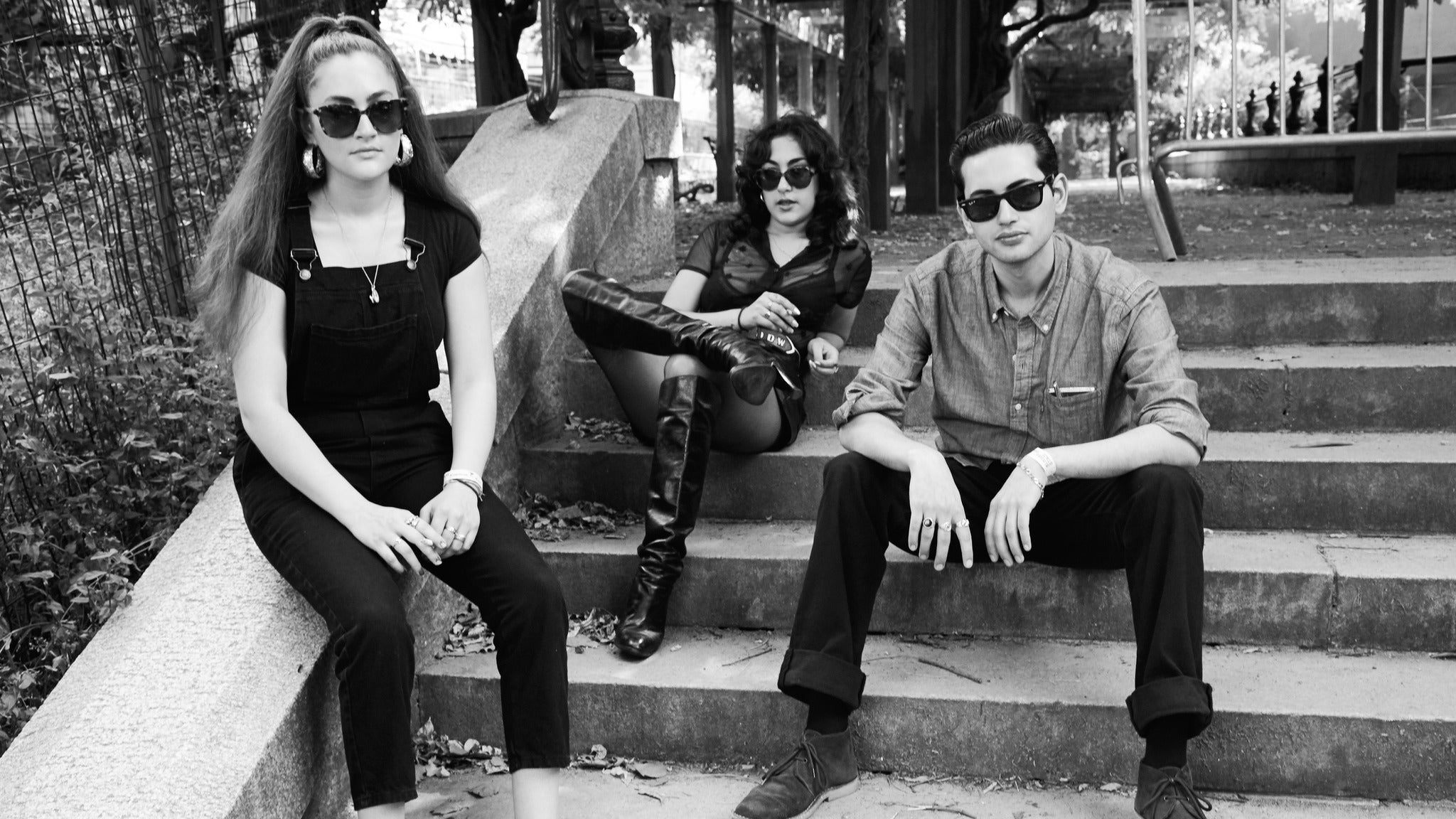
Kitty, Daisy & Lewis: North London siblings keeping rock’n’roll live and analogue
The Durham siblings built a following by swapping instruments, cutting to tape and making old songs feel present-tense. In 2026 they’re back on the road across Europe, Brazil and Australia, road‑testing new material while celebrating the catalogue that made their name.
Roots in Kentish Town, built on tape
Kitty, Daisy & Lewis grew up in Kentish Town, North London, in a household where playing together was routine rather than ritual. Their father, Graeme Durham, is a guitarist and a veteran mastering engineer at The Exchange; their mother, Ingrid Weiss, drummed with The Raincoats. Early on, the three siblings gravitated to the Sunday afternoon country/rockabilly pub circuit and, before long, were bringing that energy to studios they built themselves. The first two records were largely made in the back room of the family home; in the early 2010s they converted a derelict Indian restaurant in Camden into a purpose‑built, all‑analogue room — Durham Sound Studios — and doubled down on their aversion to digital processing. They’ve long insisted that performance and arrangement trump technology, a philosophy they were still articulating in June 2026, when they told a Galician newspaper, “You can have the best gear in the world, but if the performance is bad, it will sound bad.”
What this yields on stage is a family dynamic that is practical as much as sentimental. All three sing and switch between drums, piano, guitars, harmonica and more; Graeme remains in the touring band on guitar. Ingrid, however, stepped away from the road nine years ago. The extended family connection persists: the bass chair has been kept within the fold, and at spring club shows in Spain the group added a guest on upright bass to thicken the bottom end without compromising their lean setups.
Records that matter
The self‑titled debut in 2008 bottled the band’s early club‑room momentum and placed them on the UK Independent Albums chart, while the singles “(Baby) Hold Me Tight/Buggin’ Blues” and their version of “Going Up the Country” reached the UK Singles Top 100 and made notable inroads on specialist charts. Smoking in Heaven (2011) broadened their palette with jump‑blues and early‑R&B inflections and reached No 18 on the Official Jazz & Blues Albums Chart. The Third (2015), produced with Mick Jones of The Clash after the siblings had finished the Camden studio build, pushed furthest into original, hybrid material — ska shadings here, a soul‑funk sway there — and drew warm notices from broadsheets and magazines. Superscope (29 September 2017) tightened the focus to rock’n’roll and blues groove; tracks such as “Down On My Knees” and “Just One Kiss” have anchored setlists ever since.
Commercially, the numbers tell a steady story for an independent roots outfit: over multiple releases on Rob da Bank and Sarah Bolshi’s Sunday Best Recordings (often in partnership with [PIAS] for distribution), the band have notched multiple entries across independent and format‑specific charts. Just as significant, their physical‑media audience has held; a fresh neon‑pink vinyl repress of Superscope is shipping in early October 2026, bundled with a “complete collection” box for late‑year fulfilment. That appetite dovetails with the group’s analogue ethos and with a live show that treats songs from each era as current repertoire rather than heritage set‑dressings.
On stage in 2026
The band’s 2026 itinerary resumed in late spring and has since criss‑crossed festivals and clubs. On 6 June they opened the second Ou Yeah! festival in Ourense, Spain, on a bill with Loquillo and The Rapants; a weekend of local press and listings built to a set that Spanish reviewers praised for nimble instrument‑swaps and a brisk tour through four albums. Germany followed: Rudolstadt booked them on the Heinepark main stage at 17:30 on Friday 3 July, and the next day (4 July) a club date at Dresden’s Saloppe ran for about 95 minutes, kicking off at 20:05 and wrapping 21:40 with an 18‑song set. That Dresden list — “Paan Man Boogie”, “It Ain’t Your Business”, “Bitchin’ in the Kitchen”, “Baby Bye Bye”, “(Baby) Hold Me Tight”, “Buggin’ Blues”, Louis Jordan’s “Ooo Wee”, “Just One Kiss”, “I’m Coming Home”, “Turkish Delight”, “Don’t Make a Fool Out of Me”, “Good Looking Woman”, “No Action”, “Developer’s Disease”, Canned Heat’s “Going Up the Country”, and encores “Say You’ll Be Mine” and “Mean Son of a Gun” — mirrors what they’ve played elsewhere this year: a cross‑section that leans slightly towards The Third while still pulling hard from the debut and Smoking in Heaven.
By the end of July the trio had crossed to Austria for the poolbar Festival, and on 2 August they were back in London for the Ealing Blues Festival: a one‑hour Big Top slot (19:30–20:30) between Phoenix City All‑Stars and Misty In Roots. Early September then took them to Brazil for Lucky Friends Rodeo Motorcycle IX in Sorocaba, São Paulo state — a Saturday 20:30–21:30 headline turn at a motor‑culture gathering whose 2026 edition mixed US punk and rockabilly imports with Brazilian acts. Mid‑September brings a Spanish club run (16–19 September in Madrid, Valencia, Barcelona and Seville), with the Netherlands (10–11 and 17–18 October) and an eight‑date German sweep (24–31 October) rounding out the European leg before an Australian return from 24 November to 1 December.
How it plays in the room
Reports from this year’s rooms are consistent: instrument changes are choreographed rather than fussy; tempos breathe; the family telepathy is audible. A Bilbao club review dated 3 May 2026 described the show as sold‑out, opened by the boogie‑woogie instrumental “Paan Man Boogie” and peppered with cast‑iron details — Daisy leading “Bitchin’ in the Kitchen”, Kitty on harmonica in “Buggin’ Blues”, a late‑set stroll through “Developer’s Disease” that sharpened the band’s anti‑gentrification lyric. That night also featured Jack Flanagan (Mystery Jets) on double bass and Graeme on rhythm guitar, underlining how the group bulk up the low end while keeping arrangements unfussy. Festival‑side, the Ealing slot slotted neatly between ska and roots‑reggae turns, a reminder of how comfortably the trio sit within a British lineage that prizes feel and attack over backline excess. Audience feedback from the German summer dates skewed positive on performance — with very local caveats about car‑park logistics — and the set‑building has felt tight enough that festival stages have rarely blunted the impact.
Length depends on the billing: festival hours push them to an hour; their own club plays this year have hit the 90–95 minute mark, usually with an encore pair that nods to their 2006–08 material. The setlist core leans on The Third — “Baby Bye Bye”, “No Action”, “It Ain’t Your Business”, “Turkish Delight” — but there’s always headroom for the debut’s “(Baby) Hold Me Tight”, the call‑and‑response of “Buggin’ Blues” and their Canned Heat standard. Superscope’s “Just One Kiss” slots as a sleek, late‑set gear‑change rather than a centrepiece.
Where they stand now
As of early September 2026, Kitty, Daisy & Lewis are both looking back and edging forward. On 5 June they told La Voz de Galicia they were deep into work on a fifth album and beginning to road‑test material. Promoter copy in Germany and on summer festival programmes has trailed a 2026 release after a nine‑year album gap; whether it lands before year’s end or slips into 2027, the live show has already been tightened to absorb it without dislodging the older mainstays. Meanwhile the official site’s autumn listings — Netherlands in mid‑October, eight German cities between 24 and 31 October, and an Australian run from 24 November — reinforce the sense of a band rebuilding international muscle memory after years without a long album cycle.
The picture, then, is of a family unit that has learned to evolve without blunting its edges. The analogue recording stance remains, and the habit of treating instruments as chairs to swap rather than roles to police keeps sets agile. Most importantly for a live‑first band, 2026 has offered ample chances to be seen: summer festivals in Portugal, Germany, Austria and London; a south‑western Spanish opener; a first South American date; and the promise of more clubs and theatres before the year is out.
The show, now
In 2026 their headline shows typically run around 90–95 minutes with an 18‑song arc and two‑song encore (Dresden on 4 July began at 20:05 and ended 21:40). Festival slots sit at an hour (Ealing Blues Festival scheduled 19:30–20:30 on 2 August). Setlists blend The Third mainstays — Baby Bye Bye, No Action, It Ain’t Your Business, Turkish Delight — with earlier favourites (Buggin’ Blues, (Baby) Hold Me Tight) and a couple of well‑placed covers (Louis Jordan’s Ooo Wee; Canned Heat’s Going Up the Country). The siblings rotate instruments from song to song; father Graeme is on guitar, and the bass chair is handled within the extended family or by a guest player (Bilbao on 30 April featured Jack Flanagan on upright). Staging is minimal — backline and mics rather than production bells and whistles — and recent reviews and fan notes emphasise the fluidity of the swaps, the swing in the drums and the sense that the catalogue plays as one piece across eras.
Researched from kittydaisyandlewis.com · media.lavozdegalicia.es · mondosonoro.com · setlist.fm · ealingsummerfestivals.com · rudolstadt-festival.de · areaone.de · zmf.de
Pictures
Photographs from Wikimedia Commons, credited
 Smial (talk) · FAL
_IMGP5507_smial_wp.jpg)