
On tour
Every date the ticketer lists, worldwide · venue time
The profile · researched 9 November 2026
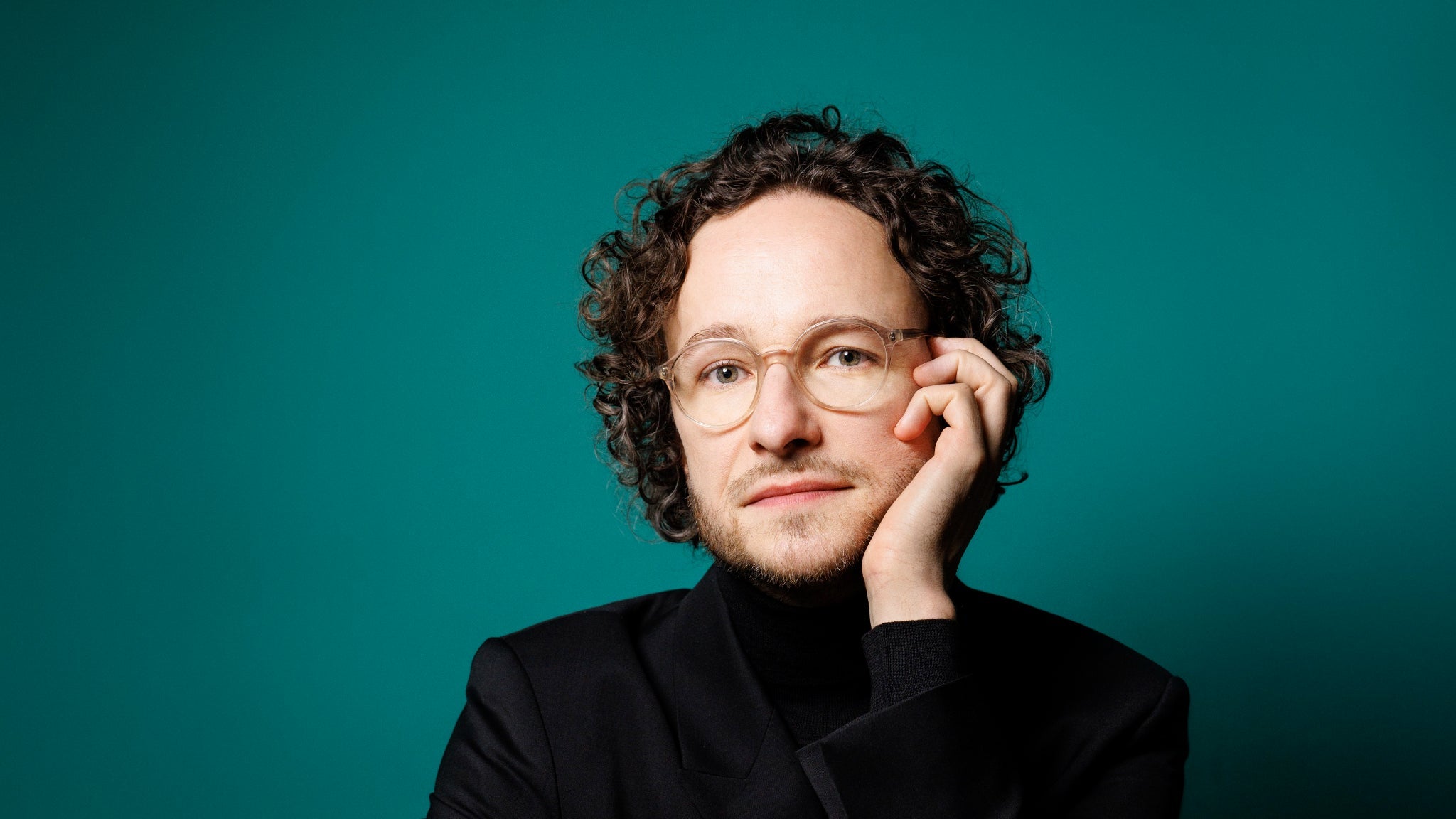
Four double albums by 2028: Martin Helmchen's long game with Schubert
The Berlin pianist has spent twenty years building a career on chamber music and concerto partnerships rather than showmanship; a complete Schubert sonata cycle on Alpha Classics now anchors it, with the second instalment out on 30 October 2026 and a two-week European tour with the Hong Kong Philharmonic starting on 23 November.
Berlin, Hanover, and a prize in Vevey
Martin Helmchen was born in Berlin in 1982 and started at the piano at six. He trained first with Galina Iwanzowa at the Hanns Eisler conservatory in his home city, then moved to the Hochschule für Musik in Hanover to study with Arie Vardi, graduating in 2001. The same year he won the Concours Clara Haskil, which is the point his career tends to be dated from. Alongside the conservatory route he was mentored by William Grant Naboré and by Alfred Brendel, a lineage that shows in the repertoire he has stuck with: Mozart, Beethoven, Schubert, Schumann, Brahms, Bach.
Other early markers followed quickly. He took the Kissinger Klavierolymp in 2003, and in 2006 both the Credit Suisse Young Artist Award and an ECHO Klassik. From 2005 to 2007 he was a BBC New Generation Artist, which put him in front of British audiences and orchestras early. His first orchestral disc, of Mozart concertos, appeared in 2008. The American debut came later than the European one: Tanglewood with the Boston Symphony in 2011.
Since 2010 he has held an associate professorship in chamber music at the Kronberg Academy near Frankfurt, which doubles as the place he records. Both Schubert volumes so far were made there.
The Alpha Classics catalogue
Helmchen is an exclusive Alpha Classics artist, and the discography has a shape to it rather than being a scatter of recital programmes. The Beethoven concerto cycle with the Deutsches Symphonie-Orchester Berlin under Andrew Manze, recorded across 2019 and 2020, is the set that made his name as a concerto player on record: Nos. 2 and 5 came first, then Nos. 1 and 4. At the 2020 Gramophone Awards the cycle took a special Beethoven 250 Award, and the Nos. 2 and 5 disc was a finalist in the concerto category. Reviewers kept returning to the same point — that the rapport between soloist and conductor carried the interpretation, and that there was no self-indulgence in it.
The 2024 release of Bach's six keyboard Partitas was a sharper left turn. He recorded them not on a modern grand but on an antique Späth und Schmahl tangent piano from 1790, an instrument that sits between harpsichord, clavichord and fortepiano in the way it speaks. In the booklet he wrote about the symbiosis of those characteristics and the way the instrument opens up polyphonic texture. The disc was a Gramophone Editor's Choice in June 2024 and went on to a nomination at the International Classical Music Awards for 2025 and a Gramophone Awards shortlisting in the instrumental category.
Then the big one. Helmchen is recording all of Schubert's piano sonatas as four double albums, timed to land before 2028, the bicentenary of the composer's death. Volume 1 arrived in October 2025 and set out the terms: alongside the finished sonatas he played the F-sharp minor fragment D571, a work that survives as an abandoned first movement, in a completion he made himself. He built it from Badura-Skoda's analyses and from separately published Schubert pieces, aiming at something that read as convincing rather than speculative, and the result ran to four movements.
Volume 2 followed on 30 October 2026 — two hours and four minutes of music across D568, D625 and D845, again with movements completed by the pianist, finishing with the G major Sonata D894, all on a Bösendorfer 280. Gramophone's November 2026 notice read it as confirmation of his standing in this repertoire, singling out the breadth of dynamic range he works across without pushing to either extreme, and the authority of the D845 Andante.
Chamber music is not the side project
Helmchen has said consistently that chamber music matters to him as much as solo and concerto work, and the diary backs that up. His closest partner is the cellist Marie-Elisabeth Hecker, who is also his wife; the two of them co-direct the Fliessen International Chamber Music Festival and are working through a Beethoven duo cycle together, with the second, fourth and fifth sonatas programmed for the 2026/27 season. Beyond that duo the recurring names are the violinists Frank Peter Zimmermann, Antje Weithaas and Christian Tetzlaff, the baritone Matthias Goerne and the soprano Juliane Banse. He was a regular partner of the late Heinrich Schiff, and has played often with Julia Fischer.
Wigmore Hall has been a steady London home for the chamber side of the work. He has also commissioned new music rather than only inheriting it: a double concerto from York Höller, premiered in June 2022.
The 2024/25 season brought a residency with the Frankfurter Opern- und Museumsorchester. The orchestral list elsewhere runs through the Berlin and Vienna Philharmonics, the London Philharmonic and the San Francisco Symphony.
Chicago, on crutches
The relationship Helmchen talks about most warmly outside Europe is with the Chicago Symphony. He debuted there in 2016 with Beethoven's Second Concerto, gave a recital in 2018, and came back for Mozart concertos in 2022 and 2023. He has said he has had no ongoing relationship like it with any orchestra outside Europe.
The return on 28–31 May 2026 was his first performance of a Brahms concerto with any American orchestra, and it did not go to plan on either side of the podium. Nikolaj Szeps-Znaider withdrew with a leg injury that stopped him travelling and David Afkham took over; Helmchen walked on with crutches, having ruptured an Achilles tendon. He played the First Concerto anyway, in a programme with the Rosenkavalier suite and Ravel's La valse. Chicago Classical Review called it a commanding, deeply felt performance of an epic work, wanted more piano weight in places in the first movement, and praised the drive of the finale and its coda. Four curtain calls later he gave Schumann's Vogel als Prophet from Waldszenen as an encore. Speaking before the run he described the Brahms concertos as having an Olympic feeling about them, and the First as one of the desert-island pieces every pianist loves from youth onwards.
On the road this winter
The current engagement is an eight-city, four-country European tour with the Hong Kong Philharmonic, running from 23 November to 6 December 2026. It is the orchestra's first international tour under Tarmo Peltokoski, who became its music director for the 2026/27 season, and Helmchen is the only soloist on it. In October 2026 he played with the Danish National Symphony Orchestra.
Two nights are currently on sale: Munich's Herkulessaal der Residenz on 30 November and the Berliner Philharmonie's Großer Saal on 3 December. They are not the same concert. Munich gets Mozart's Twenty-Fourth Concerto paired with Wagner; Berlin gets the Saint-Saëns, with Helmchen and Peltokoski at two pianos. Hamburg's Elbphilharmonie date on 5 December has already sold out.
The show, now
Through late 2026 Helmchen is touring Europe as the sole soloist with the Hong Kong Philharmonic under Tarmo Peltokoski, eight cities between 23 November and 6 December, and the two dates on sale are not identical programmes. Munich's Herkulessaal on 30 November pairs Mozart's Piano Concerto No. 24 in C minor with Henk de Vlieger's orchestral arrangement of Wagner's Ring; the Berliner Philharmonie on 3 December drops the Mozart and opens with Yao Chen's Waltz of the Rolling Giants, an HK Phil commission inspired by the giant panda, before Saint-Saëns's Carnival of the Animals in the two-piano-and-orchestra version — Peltokoski plays the second piano part while conducting — and then the Wagner. There is no support act in the pop sense; the new commission functions as the curtain-raiser. The Helsinki night on the same tour is billed at roughly one hour fifty including the interval, with tickets at €21–125, which is a fair guide to the length and price of the German dates. Staging is straight concert-hall presentation, no amplification or projection. Recent notices describe a player who gets his effects from control of dynamic range and texture rather than volume: Chicago Classical Review, hearing his Brahms First in May 2026, wanted more sonority in the first movement but called the whole thing commanding and deeply felt, and he encored it with Schumann's Vogel als Prophet after four curtain calls — played, that night, on crutches with a ruptured Achilles tendon. Hamburg's Elbphilharmonie date on 5 December is sold out.
Researched from en.wikipedia.org · chicagoclassicalreview.com · chicagosymphony.org · crosseyedpianist.com · kronbergacademy.de · dresdnerphilharmonie.de · hkphil.org · colinscolumn.com
Pictures
Photographs from Wikimedia Commons, credited
 Thorsten Krienke from Detmold, Germany · CC BY-SA 2.0
