
Music · Hip-Hop/Rap
No.1
13 dates on sale
On tour
Every date the ticketer lists, worldwide · venue time
 TicketsMusic · TROktoberfest X Antalya Müzik Festivali - KombineAntalya Open Air · Antalya
 TicketsMusic · TRRitual Fest - 1. GünLife Park · İstanbul
 TicketsMusic · TRRitual Fest - 2. GünLife Park · İstanbulTicketsMusic · TRNo.1JJ Arena Ataşehir · İstanbulTicketsMusic · TRNo1Kastel · İstanbulTicketsMusic · TRNo.1EKM Erciyes Kültür Merkezi · KayseriTicketsMusic · TRNo.1Hayal Kahvesi Kocaeli · KocaeliTicketsMusic · TRNo.1Rovers Gastropub & Live Music · AdanaTicketsMusic · TRNo.1EKM Erciyes Kültür Merkezi · KayseriTicketsMusic · TRNo.1Milyon Performance Hall Eskişehir · EskişehirTicketsMusic · TRNo.1Holly Stone Performance Hall - Bursa · BursaTicketsMusic · TRNo.1Hayal Kahvesi Premium Denizli · DenizliTickets
Listen
SoundCloud
The profile · researched 12 October 2026
A stolen microphone, a five-year gap, and the album that ended it: No.1 back on the road
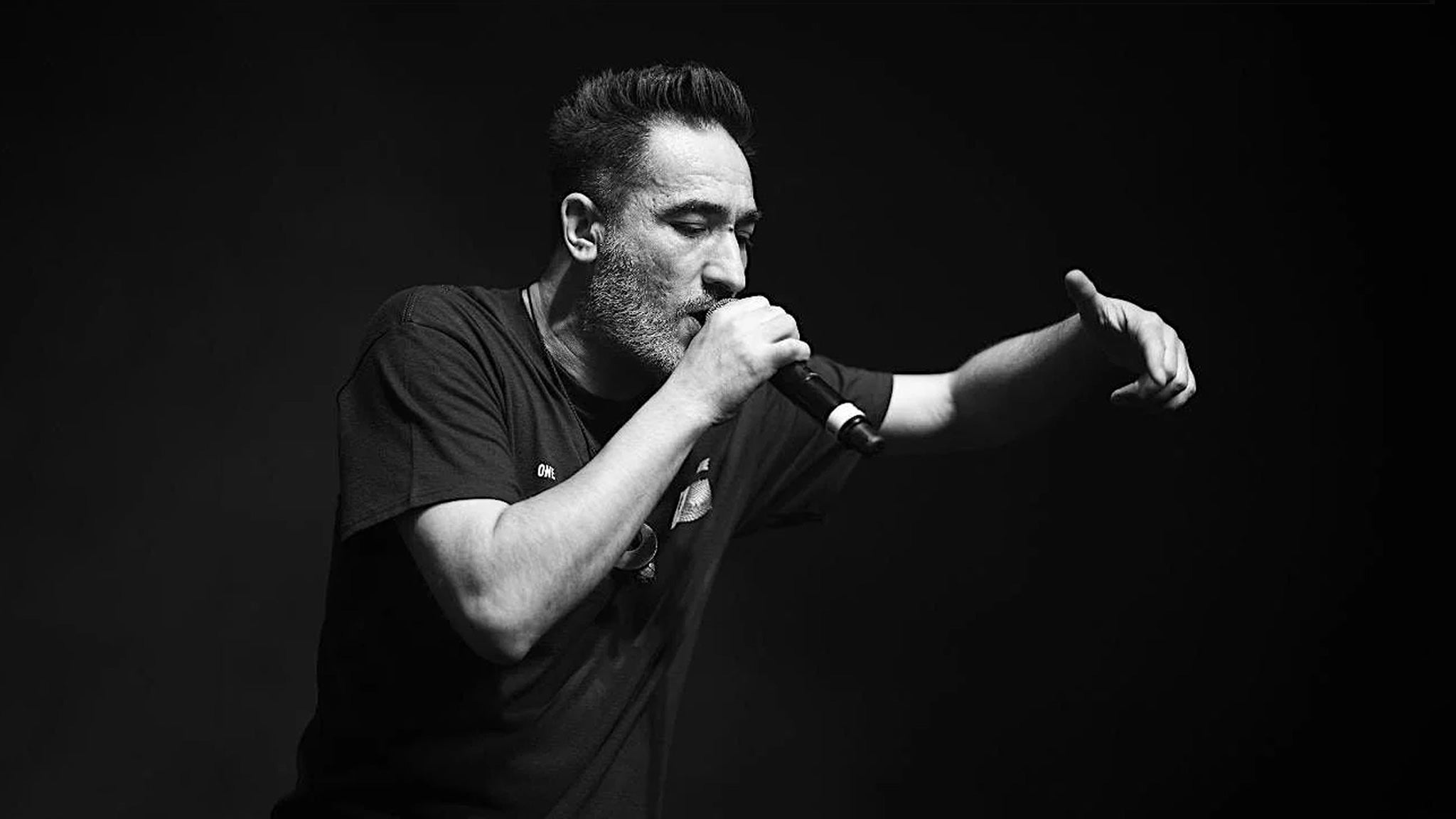
Can Bozok has rapped and produced as No.1 since the early 2000s, building a catalogue of self-made beats and plain-spoken Turkish verses. Tövbe, released on 4 June 2026, is his first album in five years, and it has him working a run of Turkish halls that stretches to the end of December.
Denizli, a printing plant, and the microphone that named a record
Can Bozok was born in Denizli on 19 May 1988. His mother taught school, which did not keep him in one: by his own telling he was expelled five times in succession and left formal education behind, taking work in a printing plant. Rap arrived in the early 2000s, when he found FL Studio on a computer and started building beats rather than borrowing them. He dates his first finished songs to 2003 and his first album to 2004, recorded on a microphone he had taken from a rap show in his home town. The underground release that carried his name out of Denizli was titled after the theft itself — Çalıntı Mikrofon, Stolen Microphone.
That arrangement never really changed. Bozok writes the words and makes the music, and the two halves of the job have stayed visible in the catalogue: alongside the vocal albums sit instrumental volumes under his own name, including 808 in 2015, a second volume of 1nstrumentals in 2016 and an instrumental edition of Kron1k in 2022. The records sound like one person in one room because, for the most part, that is what they are.
258 Noise, Street Melodeez, İstanbul Trip
The 2000s and early 2010s were spent in company. Between 2007 and 2010 he worked inside 258 Noise with Kaos, Morfin, Mrf and Mesth. He formed Street Melodeez with İzah, and later turned up in İstanbul Trip alongside Heja, Maestro, Şam, Ashoo and Xir. Turkish rap in that period ran largely on crews, mixtape trades and local reputations rather than labels, and the collectives functioned as both studio and distribution.
A single in 2011 is generally marked as the point where his reach widened beyond that circuit. The crews left two things behind: a working address book of collaborators he still records with, and a writing habit shaped by having to hold a verse against four other people on the same track.
SKBR, Siyah Bayrak, and the melancholy register
The album that fixed his reputation was Sen Kötü Bir Rüyasın — You Are a Bad Dream — shortened to SKBR, dated 2014 in Turkish press accounts and carried on streaming services with a 2016 date. It produced several of the songs that still define him, and it set the register: first-person storytelling about work, drink, debt and leaving, delivered flat rather than declaimed.
Siyah Bayrak followed in 2017 and widened the audience through two collaborations in particular — "Dünya Gül Bana" with Heja and "Hiç Işık Yok" with Melek Mosso, the latter pairing his delivery against a singer from well outside rap. The streaming evidence bears out where listeners have settled: his most-played tracks are "Yarım Kalan Sigara", "Dünya Gül Bana", "Böyle İyi", "Hiç Işık Yok" and "Tekel Mavisi" — four of them slow, none of them boastful. Where much of the Turkish scene moved towards trap aggression in the late 2010s, his commercial centre of gravity stayed with the sad ones.
The gap, and what filled it
After Siyah Bayrak he effectively stopped. The period from 2017 to 2020 produced no album; he resumed recording in 2020 and returned with Kron1k in 2021, following it with the instrumental version in 2022. That year also brought "Kaset" with Çağrı Sinci and a slot on Warner Music's Tirat compilation, which put him on a major label's release schedule without tying his own records to one.
Then another long quiet. The 2025 output amounted to two singles, "Jelatin (Freestyle)" and "hep jazz hep jazz" — the first a format that costs an afternoon, the second a title that announces its own looseness. Through the first half of 2026 the singles came faster: "Nefes Alamıyorum", "Gravity Pirates", "Sevdin mi en berbat halimi?" and "Çıldırmamalıyım" all landed before the album did.
Tövbe, June 2026
Tövbe — repentance — was released on 4 June 2026 through talentino: eleven tracks, thirty-six minutes, no padding. It is his first full album since Kron1k in 2021. The track that travelled furthest outside Turkey is "Traphouse", a collaboration with Eko Fresh, the Cologne rapper whose career has run along the Turkish-German seam for two decades. That connection is not decorative; the German diaspora has been part of No.1's live base for years, and the record acknowledges it.
A further single, "Yediveren", arrived on 11 September 2026, suggesting the album cycle is being extended rather than wound down. The title choice — a word for a plant that flowers repeatedly through a season — reads as deliberate from a writer who has twice gone silent for years at a stretch.
Where he stands in October 2026
The touring year has not been frictionless. On 27 January 2026 the local press in Eskişehir reported that his 6 February show at Holly Stone Performance Hall had been cancelled with no reason given and no statement from the artist at the time of publication. He is booked back into the city — at Milyon Performance Hall — on 4 December, which reads as the matter being settled rather than litigated.
Otherwise the diary has thickened since the album. In May he played Macadam in Nantes; in April he was at Hayal Kahvesi in Bursa; in September he played Theater Sapperlot in Lorsch, a German room that appears in his listings repeatedly, with further entries already posted into 2027. This week he is on two festival bills at once — the Oktoberfest X Antalya Müzik Festivali across 16 to 18 October and Ritual Fest in Istanbul on 17 and 18 October — before headlining JJ Arena Ataşehir in Istanbul on 18 October.
What follows is a working winter rather than a victory lap: Istanbul, Kayseri twice, İzmit, Adana, Eskişehir, Bursa, and a 26 December night at Hayal Kahvesi Premium in Denizli, the town he left. Twenty-two years after the stolen microphone, the circuit is the same size as the audience — a few hundred to a couple of thousand a night, bought rather than borrowed.
The show, now
The current run is clubs and performance halls, not arenas. Between mid-October and the end of December 2026 the calendar takes in the Oktoberfest X Antalya Müzik Festivali (16–18 October), Ritual Fest in Istanbul (17–18 October), a headline night at JJ Arena Ataşehir on 18 October, Kastel in Istanbul on 6 November, Erciyes Kültür Merkezi in Kayseri on 15 and 29 November, Hayal Kahvesi in İzmit on 22 November, Rovers in Adana on 26 November, Milyon Performance Hall in Eskişehir on 4 December, Holly Stone in Bursa on 19 December and Hayal Kahvesi Premium in Denizli on 26 December; German dates at Theater Sapperlot in Lorsch sit alongside them, though one listed 4 December entry clashes with the Eskişehir date the same night, which points at the aggregator rather than the diary. The ticket listings name no support acts for the club shows; at the two October festivals he is one act on a shared bill, which means a shorter slot than on the headline nights. No setlists for him have been logged on setlist.fm, so the shape of a current set is not on public record — what the streaming figures indicate will be in it are "Yarım Kalan Sigara", "Dünya Gül Bana", "Böyle İyi", "Hiç Işık Yok" and "Tekel Mavisi", with Tövbe's eleven tracks supplying the new material. The pattern of repeat bookings in the same Turkish halls, and of a German room holding dates for him into late 2027, says more about the state of the live business than any single night does.
Researched from songkick.com · music.apple.com · music.apple.com · substreet.co · kralmuzik.com.tr · eskisehir.net · play.anghami.com · setlist.fm
Pictures
Photographs from Wikimedia Commons, credited
 https://commons.wikimedia.org/wiki/User:Cbaile19 · CC0
 Audriusa · CC BY-SA 3.0

