
Arts & Theatre · Theatre
ÖZKAN AKSU
11 dates on sale
On tour
Every date the ticketer lists, worldwide · venue time
 TicketsArts & Theatre · TRŞahları Da VururlarSes 1885 - Ortaoyuncular Tiyatrosu · İstanbul
 TicketsArts & Theatre · TRŞahları Da VururlarSes 1885 - Ortaoyuncular Tiyatrosu · İstanbulTicketsMusic · TRŞahları Da VururlarSes 1885 - Ortaoyuncular Tiyatrosu · İstanbulTicketsArts & Theatre · TRŞahları Da VururlarSes 1885 - Ortaoyuncular Tiyatrosu · İstanbulTicketsArts & Theatre · TRŞahları Da VururlarSes 1885 - Ortaoyuncular Tiyatrosu · İstanbulTicketsArts & Theatre · TRŞahları Da VururlarSes 1885 - Ortaoyuncular Tiyatrosu · İstanbulTicketsArts & Theatre · TRŞahları Da VururlarSes 1885 - Ortaoyuncular Tiyatrosu · İstanbulTicketsMusic · TRŞahları Da VururlarSes 1885 - Ortaoyuncular Tiyatrosu · İstanbulTicketsMusic · TRŞahları Da VururlarSes 1885 - Ortaoyuncular Tiyatrosu · İstanbulTicketsArts & Theatre · TRŞahları Da VururlarSes 1885 - Ortaoyuncular Tiyatrosu · İstanbulTickets
The profile · researched 20 October 2026
Özkan Aksu and the long second life of Ortaoyuncular's first play
A stage actor whose credits run back to the mid-1990s, Aksu belongs to the Istanbul ensemble that brought Ferhan Şensoy's 1980 debut Şahları da Vururlar back to Ses-1885 in November 2022 — and is still playing it there, with dates on sale through late autumn 2026.
An actor who belongs to a house
Özkan Aksu was born in Istanbul on 4 July 1966, and the shape of his working life has been determined less by individual billing than by a single address: Ses-1885, the theatre on İstiklal Caddesi in Beyoğlu that has been home to the Ortaoyuncular company since 1989, when Ferhan Şensoy took over the building and rebuilt it. Şensoy founded the company in 1980 and ran it until his death; the building also houses a Café Tiyatro and a bookshop next door, which is part of why the place functions as a working theatre rather than a receiving house.
That matters for reading a career like Aksu's. Turkish stage databases list him as an actor and, in the late 1990s, as an assistant director — two jobs that in a small permanent company are often held by the same person in the same season. He is not a name that comes with a publicity apparatus, no autobiography and no solo show. What exists is a credit trail inside one ensemble's repertoire, and the repertoire is the biography.
The credit trail
The earliest stage credit recorded for Aksu is Üç Kurşunluk Opera in 1995, Şensoy's Turkish reworking of the Brecht-Weill model into local idiom and wordplay. Two assistant-director jobs follow close behind: Haldun Taner Kabare in 1997, and Çok Tuhaf Soruşturma in 1998. Taner is the writer who more or less invented modern Turkish political cabaret, so the apprenticeship was in the exact tradition — satire built from language, performed fast, aimed at the government of the day — that Şensoy extended for four decades.
After that the listings thin out and then resume: Ruhundan Tramvay Geçen Adam in 2010, Bom! in 2018, and from 2022 the production he is still in. Turkish film databases record two screen appearances, in the comedy-drama Pardon in 2005 and in İki Aile in 2006. Aksu has also appeared at the Istanbul Theatre Festival in more than one programme strand. The pattern is that of a company actor rather than a screen face who visits the stage: decades of work in one room, with film as the exception.
Bringing back the play the company started with
Şahları da Vururlar was Ortaoyuncular's first production, written and directed by Şensoy and first staged in 1980. It is a musical comedy built on puns, set in Iran in the 1940s, in which a man named Ömer Hayyam is jailed by mistake because the intelligence service has confused him with somebody else; around that error the play stages the collapse of Reza Shah Pahlavi's rule, the distance between a palace and the people paying for it, and the question Şensoy kept returning to — what Westernisation actually is, and what it only pretends to be. It ran 586 times with Şensoy himself in it across the first half of the 1980s.
The company intended to revive it in 2020, to mark forty years since its founding. Covid stopped that. Şensoy died in September 2021, and his daughters Müjgan Ferhan Şensoy and Derya Şensoy took on the running of what he left. The 26th Istanbul Theatre Festival then invited the production as a tribute to him, and it opened at Ses in November 2022, forty-two years after the original.
Volkan M. Sarıöz directed the restaging, working with small additions and cuts that kept both the text and Şensoy's own reading of it intact. The original music is credited to Fuat Güner and Şensoy, with Nejat Yavaşoğulları and Gökhan and Burhan Şeşen handling the musical side in performance. Yavuz Pekman did the dramaturgy, Başak Özdoğan the set and costumes, Akın Yılmaz sound and light, Nebi Birgi the choreography. Aksu is listed in a cast of eleven alongside Celal Belgil, Erkan Üçüncü, Serap Günaydın, Elif Durdu Şensoy, Orkun Akyıldız, Sefa Tantoğlu, İlksen Ökte, Yavaşoğulları and the two Şeşens — most of them faces the house audience already knew.
What the critics made of it
Writing in Cumhuriyet on 15 November 2022, the critic Dikmen Gürün reviewed the festival performance and reported a full house and an audience that was, in Gürün's words, devoted to the play. The judgement was that the piece remains a product of Şensoy's intelligence, his sense of humour and his cultural depth, and that Sarıöz's restaging had preserved the script's essence rather than redecorating it.
The recurring note in Turkish commentary since is that the forty-two-year gap did the play no damage: the references to how countries are run landed again, and the old formula of making an audience laugh and think in the same beat still works. That is a specific kind of praise — it credits the writing and the ensemble's delivery of it, not a new concept imposed on top.
Four years in the repertoire
The production did not close after the festival. On 27 February 2023 the company played it at Ses as a benefit, with the proceeds going to victims of the earthquake in southern Turkey earlier that month. By then Sefa Tantoğlu was playing Ömer Hayyam, and the text had picked up contemporary insertions — the EYT early-retirement row among them — which is how Şensoy's scripts were always meant to be kept alive.
Ortaoyuncular's current repertoire is short: Şahları da Vururlar and Diyemedim, a solo piece written, directed and performed by Derya Şensoy, described by the company as a tragicomic outpouring about loneliness and connection. That makes Şahları the company's only full ensemble show, and Aksu one of the handful of actors carrying it.
It is still selling. Tickets have been on sale for performances at Ses-1885 on 17, 24, 25 and 28 October 2026 and 1 and 8 November 2026, after a run through the spring that included 13 March 2026. Four years on from the tribute premiere, the revival has outlasted the occasion that prompted it.
The room itself
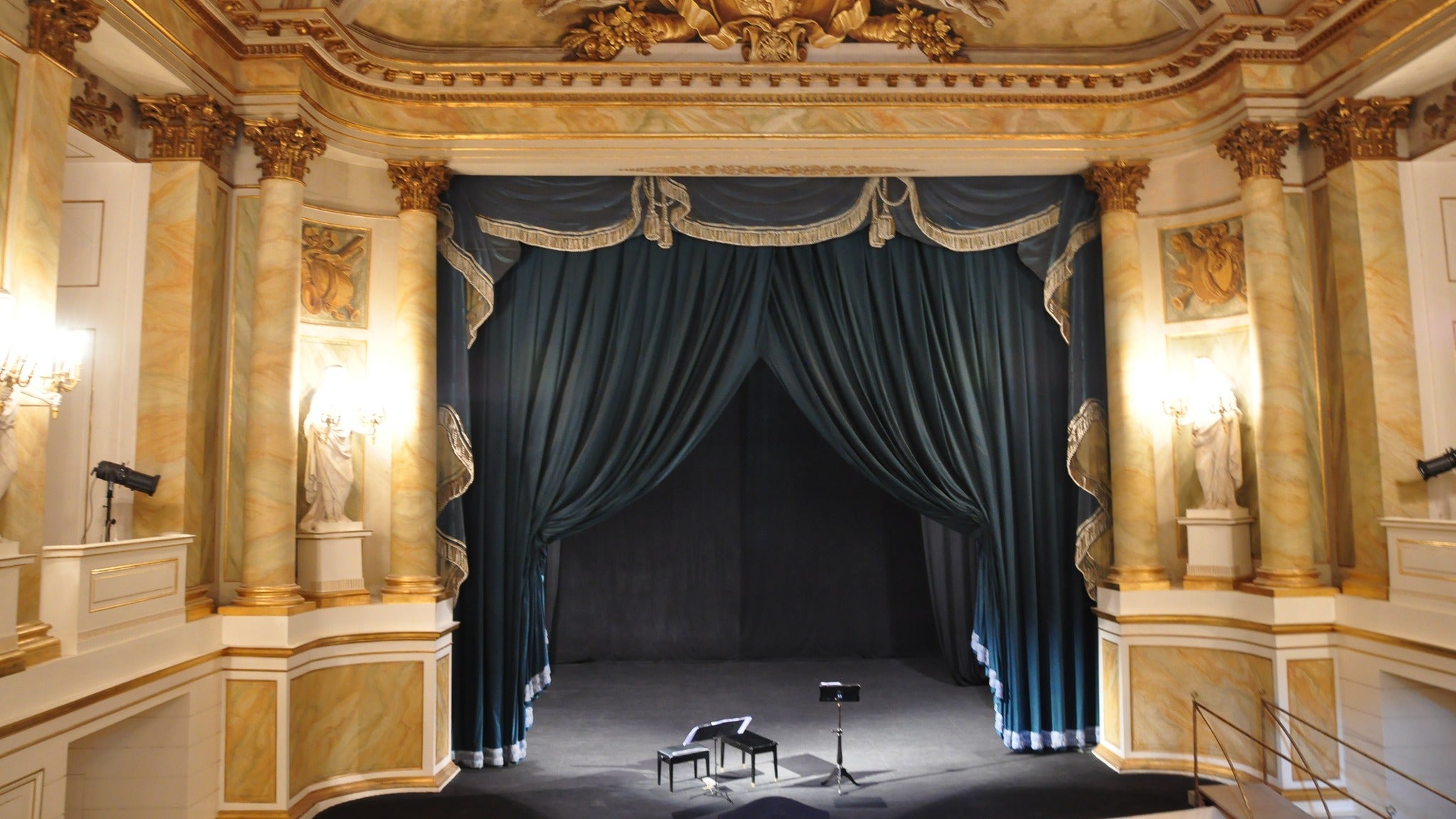
Ses-1885 is a nineteenth-century house in the middle of Beyoğlu's main pedestrian street, with a stalls level and a balcony, and the company sells it directly as well as through the ticketing platforms. The pricing is deliberately split: for the autumn 2026 dates, online seats start at 800 lira, with stalls in the top band reaching 1,500, while the box office keeps a student rate at 500 lira on production of a card and sells loge seats at 850.
This is not a touring act and there is no second venue. Anyone wanting to see Aksu work has to go to İstiklal Caddesi on one of eleven or so announced evenings, which is roughly how the company has operated since 1989.
The show, now
A night with Aksu means Şahları da Vururlar at Ses-1885 on İstiklal Caddesi, and nothing else — there is no tour and no second cast. The show runs about 135 minutes including one interval and is rated 13 and over, performances starting at 20.00 on weekday and Saturday evenings and 18.00 on Sundays. It is a musical comedy for eleven actors, played straight through Ferhan Şensoy's 1980 script in Volkan M. Sarıöz's 2022 restaging: Iran in the 1940s, a man wrongly jailed because the secret police muddled his name, a shah losing his grip, and song numbers carried live by Nejat Yavaşoğulları with Gökhan and Burhan Şeşen from the original music by Fuat Güner and Şensoy. Başak Özdoğan's set and costumes serve the period rather than comment on it, and Nebi Birgi's choreography keeps the ensemble moving in formation. The pleasure, by consistent critical and audience account, is verbal — Şensoy's punning is the engine, and the company plays it fast — with topical insertions dropped in over the years, including a run of EYT pension jokes by early 2023. There is no support act and no interval entertainment beyond the theatre's own café and bookshop. Dikmen Gürün, reviewing the festival performance for Cumhuriyet in November 2022, found a packed house and an audience attached to the play; the recurring verdict since is that a forty-six-year-old satire about who governs and who pays still reads as current. Online seats for the autumn 2026 dates start at 800 lira and run to 1,500 for the best stalls, with 500-lira student tickets and 850-lira loge seats sold at the box office only.
Researched from tiyatrolar.com.tr · ortaoyuncular.com · ortaoyuncular.com · tiyatro.iksv.org · cumhuriyet.com.tr · cumhuriyet.com.tr · hurriyet.com.tr · biletix.com