
On tour
Every date the ticketer lists, worldwide · venue time
The profile · researched 20 October 2026
Eight Mandarin hitmakers, one Sunday afternoon: inside the third Songs That Keep Us Together
Songs That Keep Us Together 3 is a package bill, not a band: eight singers whose records defined Mandarin pop radio between the late 1980s and the early 2000s, booked into one room in Sentosa on 15 November 2026. It is the third edition of a series that has turned nostalgia into a repeatable promoter format.
A format, not a group
There is no group called Songs That Keep Us Together. The name belongs to a concert series — 那些年的歌 — built by Big Tree Entertainment Singapore, which assembles eight Mandarin-pop names per edition and sells the lot as a single ticket. The third instalment takes place at the Resorts World Convention Centre inside Resorts World Sentosa on Sunday 15 November 2026, with a 5pm start rather than the usual evening slot, and tickets went on general sale at noon on 19 August 2026.
The commercial logic is plain. Six price tiers run from S$198 down to S$88 for restricted-view seats, with S$168, S$148, S$128 and S$108 in between, and booking fees of S$1 to S$6 per ticket depending on the band. That is roughly the cost of one mid-tier solo show for eight performers, most of whom could fill a theatre alone but would struggle to justify a Singapore arena date on their own in 2026. Admission is Mandarin-language throughout, photography and video recording are prohibited, and children under two are not admitted at all — those aged two and above need their own seat, and anyone twelve or under must be with a parent or guardian.
The second edition played the same hall on 8 August 2026, at 8pm, with a completely different eight: Tarcy Su, Wan Fang, William So, the Southern Duo, Lin Lung-hsuan, Huang Shu-chun, Panda Hsiung and Shino Lin. Barely a fortnight later, the third was on sale. That turnaround is the series in miniature — a rotating cast against a fixed venue, price grid and running order.
Eight routes into the same decade
The 2026 line-up is Matilda Tao, Lee Yi Jun, Chris Yu, Cyndi Chao, Linda Wong, Chang Hao Che, Wang Rui Yu and Ma Yu Fen. What binds them is not a scene but a window: most arrived through Taipei's folk-house and songwriting-contest circuit, and most peaked commercially between 1987 and 2000.
Chris Yu, born in Taipei on 30 October 1968, sang at the folk venues Wooden Guitar and Gypsy before winning a college songwriting competition and appearing on a 1989 Keling Records compilation. Chang Hao Che took an odder path: born in Gwangju, South Korea, on 12 January 1962, he read Chinese literature at Chinese Culture University from 1982, took a master's in political science at National Taiwan University in 1986, and was performing in the folk bars of Taipei's Ximen district when the musician Huang Qingyuan picked him up. Wang Rui Yu came out of the same campus folk-song tradition a decade earlier.
Lee Yi Jun, born in Taipei on 27 April 1969 as Li Hua-ling, trained in drama from the age of ten at the National Taiwan College of Performing Arts, and was signed by accident in 1986 after being asked to sing while accompanying classmates to an audition. Linda Wong's entry was similarly sideways: born in Hong Kong on 5 August 1968 to the martial-arts film figure Wang Yu and the actress Lin Tsui, she was reading journalism at National Chengchi University when classmates sent a tape of her singing to a label; PolyGram signed her in October 1992. Matilda Tao read journalism at the same university. Ma Yu Fen is the one name on the bill better known inside the trade than on it — a backing vocalist, arranger and vocal producer rather than a front-of-house star.
The records the bill is built on
Lee Yi Jun's 1987 debut album Ping Ju sold more than 300,000 copies, and she followed it with Feng Zhong de Chengnuo in 1990, Nuoyan as a 1995 drama theme, and Yu Die in 1998 from the television hit Huan Zhu Ge Ge. She has been with Warner Music Taiwan since 2017, after spells at Shanghua and others.
Chris Yu released his first solo album, Can't Wait to Tell You, in November 1993, and broke through with Lian Shang Yi Ge Ren in 1994. The songs that will carry his set — Yi Tian Yi Wan Nian, Wu Yue de Xue, Meng Po Tang, Xia Sha and Ai Wo de Ren He Wo Ai de Ren — come from a catalogue of more than 400 compositions written between 1993 and 2015.
Cyndi Chao, born in Taipei on 19 May 1967, debuted in 1988 on Points Records with Duo Shuo Yi Xie Hua, and has one song that outruns everything else she has done: Zui Langman de Shi, from the 1994 album My Love, My Dream, My Home. She was nominated for best song of the year at the Golden Melody Awards in 1990 and again in 1994. Chang Hao Che debuted in January 1988 on Polydor and found his register with his fourth album in 1990, carrying Bei Feng, with Bu Shi Wo Bu Xiao Xin and Zai Hui Dao Cong Qian close behind across fourteen studio albums to 2005.
Linda Wong's Bie Wen Wo Shi Shei topped Taiwan's charts in 1993, the year she also released Ban Ni Yi Sheng and took new-artist gold awards from Commercial Radio and RTHK plus a TVB silver; Wen Ni Wen Wo and Sheng Ming You Jia followed in 1995. Matilda Tao's own singing career was slow to catch — she debuted in 1990 with Sky Don't Cry for Me on Feida to modest returns — then moved to Feng Hua and cleared 400,000 copies with the 1999 album I've Changed, home to Sisters Stand Up and Leave Me. The 2000 follow-up, Love Deficit, carrying Too Wronged, managed 200,000 in a shrinking market.
Where they stand in late 2026
None of the eight is coasting on reissues, but none is in a release cycle either. Chris Yu is the busiest: his Ai Wo de Ren He Wo Ai de Ren tour has run from 2024 through 2026 across Shanghai, Suzhou, Nanchang, Chengdu, Hangzhou and Wuxi, which makes the Sentosa date a short detour rather than a comeback. Lee Yi Jun played her Yi Ru Ji Wang shows in 2023 and further dates across Taiwan and South East Asia in 2024.
Matilda Tao's centre of gravity moved to television decades ago. She has won three Golden Bell Awards for variety hosting, in 1999, 2001 and 2007, and has fronted the Golden Horse, Golden Melody and Golden Bell ceremonies roughly twenty times; in 2023 she returned to Sanli Television with BIBO Wish Partners and All-Star Debate after a fifteen-year absence from the network. Cyndi Chao released Simple Happiness in 2013 and shared a bill with Lin Jun-yi at the Taipei International Convention Center in 2021. Linda Wong stepped away from the industry between 2001 and 2010 to raise a family, returned in 2011 with the covers album Xin Qing, and now teaches yoga and barre alongside occasional performances. Chang Hao Che shifted his working base to mainland China after 2005.
The series itself is the thing with momentum. Having staged editions two and three within four months, Big Tree is taking the format across the causeway: a Kuala Lumpur date is set for 27 February 2027 at the Unifi Arena in Bukit Jalil, with early-bird pricing.
The shape of the evening
Reporting from the 8 August edition gives a fair picture of what the November show will be. Shino Lin opened it with four songs and a good deal of movement, which set the room going early. Lin Lung-hsuan used his slot to admit he has written something like 10,000 songs of which roughly 1,000 were ever released. The Southern Duo, 36 years into their partnership, joked that theirs outlasts most marriages. Huang Shu-chun described himself as one of the music industry's missing persons before producing a harmonica. Tarcy Su, at 55, mixed her older hits with material from her recent album. William So closed, switched to Cantonese when the audience asked for it, and remarked on how few people stay to the end.
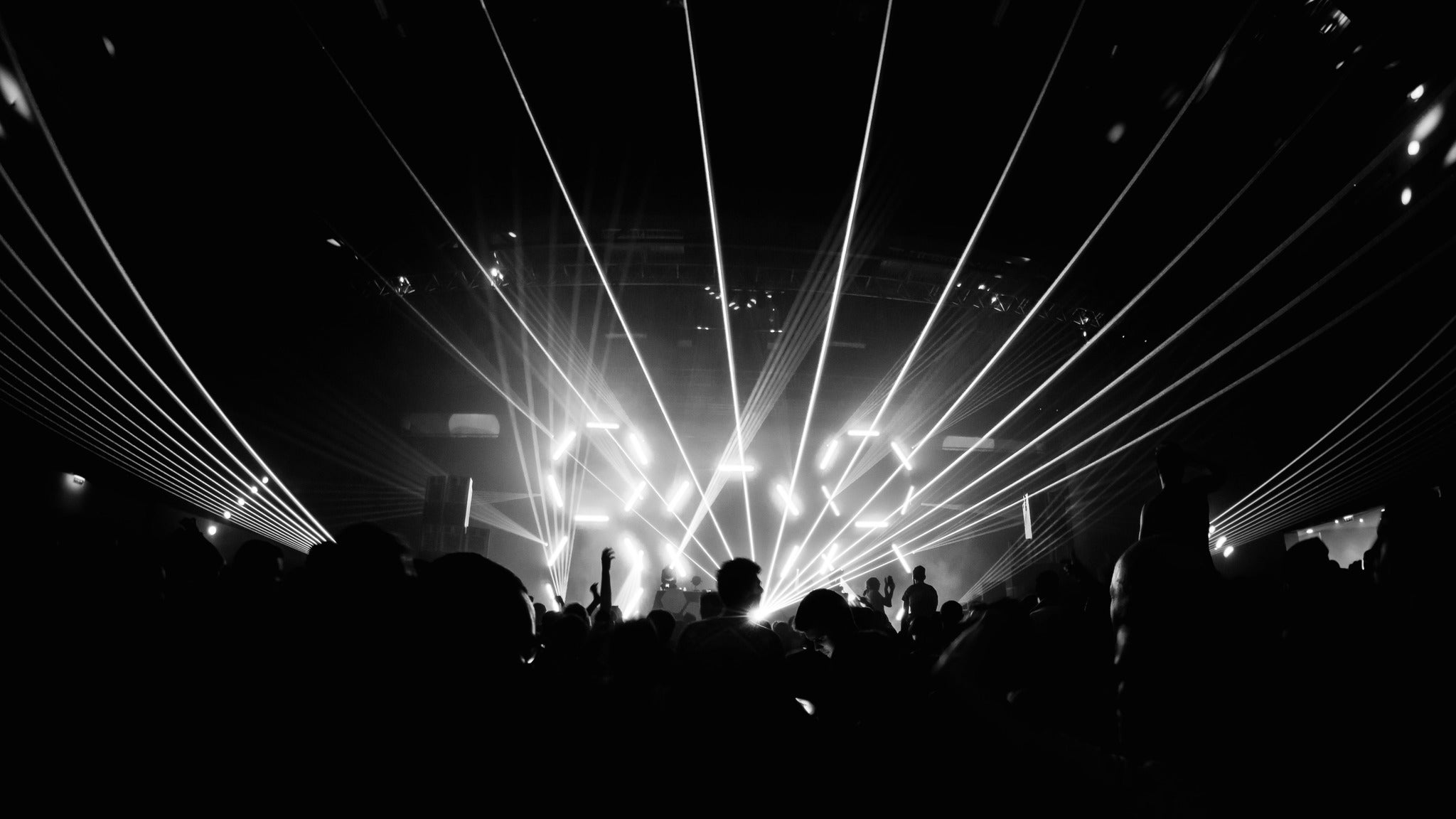
That last line is the structural catch in a package bill: eight sets of a handful of songs each, a shared band, and no single artist with enough stage time to build an arc. What the format delivers instead is density — a run of original recordings, sung by the people who made them, with the between-song talk doing the work a solo show would give to pacing.
The show, now
A Songs That Keep Us Together night is eight short sets rather than one headline show, and the third edition starts unusually early — 5pm on Sunday 15 November 2026 at the Resorts World Convention Centre in Sentosa, where the second edition played at 8pm on 8 August 2026. On that night the structure was an opener with real pace (Shino Lin, four songs and plenty of movement), a middle stretch where the between-song talk carried as much weight as the singing — Lin Lung-hsuan confessing to roughly 10,000 written songs of which about 1,000 were released, the Southern Duo marking 36 years together, Huang Shu-chun calling himself one of the industry's missing persons and then playing harmonica, Tarcy Su at 55 setting her hits against newer album tracks — and a closer, William So, who switched to Cantonese on request and noted how thin the room gets by the finale. Expect the same frame in November: a house band behind all eight, original recordings sung by their original voices, and set lengths short enough that the draw is coverage rather than depth. There is no support act; the bill is the support act. Seating is reserved across six tiers from S$198 to S$88, the cheapest being openly sold as restricted view, and the hall's rules are strict — no photography or video, no admission for under-twos, a paid seat for every child aged two or over, and an accompanying adult for anyone twelve or under. No reviews of the third edition exist yet, since the show has not happened.
Researched from bookmyshow.sg · mytruthmedia.com · x.com · fantopia.io · zh.wikipedia.org · zh.wikipedia.org · zh.wikipedia.org · zh.wikipedia.org