
Arts & Theatre · Children's Theatre · Children's Theatre
Spiekpietjes
3 dates on sale · on Ticketmaster
On tour
Every date the ticketer lists, worldwide · venue time
The profile · researched 8 November 2026
The picture-book helpers who now fill three Flemish theatres every November
De Spiekpietjes started in 2012 as a boxed picture book about Sinterklaas's smallest spies. Fourteen years on, the Brasschaat publishing house built around them is touring a new musical, Spiekpietje vermist!, through Antwerp, Ghent and Hasselt, with a walk-through exhibition in Ostend running alongside it.
A boxed picture book, 2012
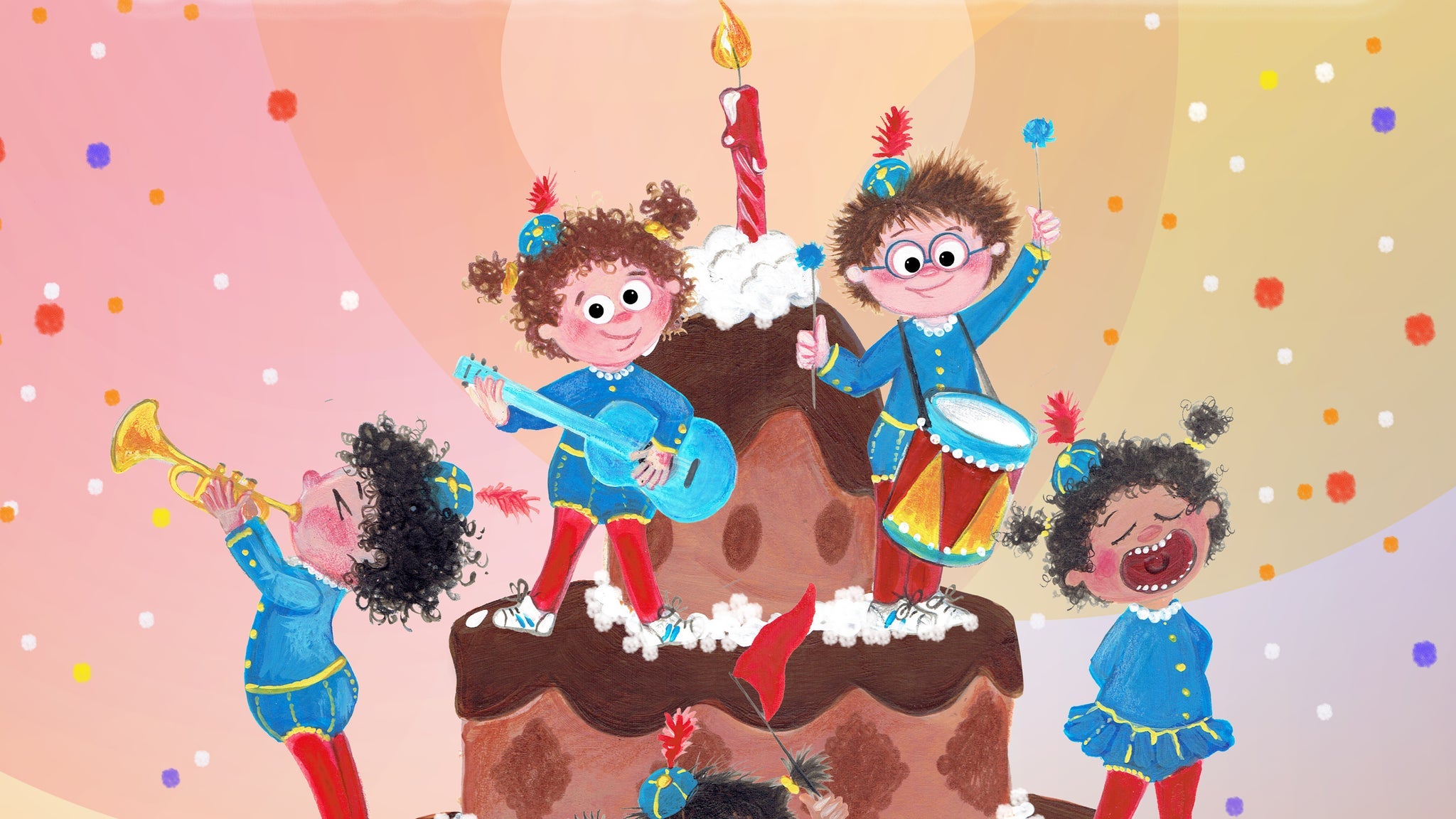
The Spiekpietjes were a publishing idea long before they were a stage act. Thaïs Vanderheyden's De Spiekpietjes appeared in 2012 through Clavis: twenty-four pages, marked for readers from four, and sold in a box with a plush doll for €29.95. The premise is logistical rather than magical. Sinterklaas cannot watch every child, so he sends his smallest helpers — identifiable by very fast trainers and a mini mobile phone — to hide in houses and classrooms through November and call in a report each evening. The books push the watching towards the positive: effort, helping, politeness, and the countdown to the feast itself.
Not everyone was convinced. The Flemish children's-books site Pluizer reviewed the first book and found the drawings colourful, overfull and not particularly special, and the concept too thin to carry what was being asked of it. The cover's claim to be a new Sint tradition was dismissed in the review as a contradiction in terms, on the grounds that a tradition is not something a publisher announces. The reviewer allowed that children might enjoy it anyway. Fourteen years of sequels, dolls and theatre bookings suggest the second half of that verdict won.
The publisher built around the characters
De Spiekpietjes is now published by De Limonadefabriek in Brasschaat, which describes the series as its most popular. The house was set up by Vanderheyden, born in 1976, and Tom Vekemans, born in 1970, and it works as both a children's-book publisher and a production company. The Spiekpietjes range it lists runs to fifteen picture books, two search-and-find books, six board books and twelve different dolls, plus pyjamas and games.
Vekemans came out of theatre and the music industry before turning publisher, which explains a good deal about how the series behaves. His production credits through the house include the Kapitein Winokio exhibition, the Grote Kunst voor Kleine Kenners exhibition, and both the Spiekpietjes exhibition and the Spiekpietjes musical. The stage work is made in-house rather than licensed to a third-party producer, so the author writes the script and the lyrics and co-designs the set for the show that sells her books.
The hand behind the drawings
Vanderheyden works from a studio in Brasschaat, with a pellet stove and classical music on while she draws. She studied art history at university and credits an academy teacher with the instruction that drawing is ninety per cent looking and ten per cent putting it down. Her method is acrylic paint worked over with coloured pencil — Caran d'Ache — to add shadow and depth, which is what gives the pages their crowded, maximalist surface. She has severe dyslexia and plans her books in images rather than written notes.
Her other series are Grote Kunst voor Kleine Kenners, which introduces art to small children, Bas en Klara, and Santa & de Pixies. The book she describes as mattering most to her is Lievelingsverdriet, about grief and love. Within the Spiekpietjes she redrew the inherited Sinterklaas imagery to move it away from racist depictions — a live question for any Dutch-language series that puts helpers of Sinterklaas at its centre, and one the stage version inherits.
From page to stage
The musical strand is much newer than the books. Earlier editions include Paniek in de speelgoedfabriek, taken from the book of the same name, in which a tour of Sinterklaas's toy and sweet factory goes wrong once the well-behaved-children meter starts climbing and production cannot keep up; and De Spiekpietjes Academy, in which the helpers sit exams for a Spiekpietjes diploma and Pietje keeps making mistakes and drifting into daydreams. Both played the same three large rooms the current production plays.
The shape of the operation has settled into something closer to a seasonal event than a theatre run. Rather than a long sit-down season, the company puts a handful of afternoon performances into big Flemish theatres across two late-November weekends, in the exact weeks the books, dolls and advent rituals are already in the house. The producers bill the 2026 edition simply as the Spiekpietjes going back on tour.
Where things stand: Spiekpietje vermist!
The 2026 production is Spiekpietje vermist!. Helper number 333 has gone missing on the annual November mission, and a mysterious elf lands on the castle roof in his place; Pietje and Grietje set off through the snow of the far north to find their friend, and pick up an unexpected companion. Vanderheyden wrote the script and lyrics and co-designed the scenography with Karl Van der Elst. The music and arrangements are by Fritz Sundermann, musical direction is by Nele Kintaert, who also directs with Barbara Honnay, and the choreography is by Gregory Langen.
Seven performers are on stage: Niels Batens, Ian Schelfaut, Alizee Gillon, Gregory Langen, Helene Kamers, Jade Bruggeman and Gitte Vanderhoydonck. Luk De Koninck supplies the voice of Sint rather than appearing in person — a sensible choice for a show whose central figure is more effective heard than seen.
Four performances are on sale: Stadsschouwburg Antwerpen on 22 November 2026 at 11.30 and 15.00, Capitole Gent on 28 November at 15.00, and Trixxo Theater Hasselt on 29 November at 15.00. Tickets start at €33 and the show is marked from age three.
The musical does not travel alone. A doe-expo under the same title, Spiekpietje vermist!, runs in Ostend from 24 October to 6 December 2026: the same missing-helper story turned into a walk-through hunt, with a play zone for climbing, scrambling, rolling and jumping, and a quieter area with refreshments and a making corner for parents and the youngest visitors. Sharing one title across a book season, a tour and an exhibition is how the house runs its autumn.
What a performance is like
The running time is around ninety minutes including an interval, which puts it at the long end for a show sold from age three and explains the matinee-only scheduling and the double bill in Antwerp. There is no support act; the two halves are the piece itself. Because the author designs the set, the stage picture is built to match the density of the books rather than reinterpret it, and Langen choreographs the numbers he also performs in.
Accessibility is handled rather than ignored: a sensory guide produced under the Toerisme voor Autisme scheme is published alongside the production through the venues' own asset library, which is unusual for a seasonal family show at this scale. On reception, honesty is better than invention — no published press review of the stage production turned up. The clearest available signal of how it lands is structural: the same three theatres book it back each November, and Antwerp carries two performances in a single day.
The show, now
The current show is De Spiekpietjes musical 2026 — Spiekpietje vermist! — running about ninety minutes including an interval, marked from age three, with tickets from €33. Four afternoon performances are on sale: Stadsschouwburg Antwerpen on 22 November 2026 at 11.30 and 15.00, Capitole Gent on 28 November at 15.00 and Trixxo Theater Hasselt on 29 November at 15.00. There is no support act. Seven performers carry it — Niels Batens, Ian Schelfaut, Alizee Gillon, Gregory Langen, Helene Kamers, Jade Bruggeman and Gitte Vanderhoydonck — with Luk De Koninck heard as the voice of Sint. The story follows Pietje and Grietje north through the snow after helper number 333 disappears and an unfamiliar elf lands on the castle roof. Thaïs Vanderheyden wrote the script and lyrics and co-designed the set with Karl Van der Elst, so the staging reproduces the crowded look of the books; Fritz Sundermann wrote the score, Nele Kintaert directs with Barbara Honnay and leads the music, and Gregory Langen choreographs as well as performs. A sensory guide produced under the Toerisme voor Autisme scheme is published with the production. No press review of the stage version was found; the firmest evidence of its standing is that the same three theatres rebook it each November and Antwerp schedules two performances in one day.
Researched from delimonadefabriek.be · delimonadefabriek.be · delimonadefabriek.be · pluizer.be · iedereenleest.be · visitoostende.be · dam.beatvenues.be