Delhi's heat does not lift so much as loosen. Somewhere after six the light goes flat and orange, the sandstone stops throwing the afternoon back at your ankles, and a city that spent the day indoors comes out onto the street. If you have been waiting out the worst of it under a fan, this is the hour your trip actually starts, and almost everything here worth doing sits on the other side of it.
This is an evening-shaped plan rather than a list. Delhi rewards people who pick one part of the city per night and stay in it, because crossing town at nine o'clock will cost you the hour you were trying to save. For daytime context and the wider city, the Delhi guide covers the rest; this piece starts at about six.
Old Delhi is an evening city
The most useful fact about Chandni Chowk (Old Delhi, the Red Fort to Fatehpuri Masjid stretch) is administrative. A Delhi Gazette notification keeps motor vehicles off that stretch from 9am to 9pm, so between sunset and nine you can walk down the middle of a main bazaar road instead of pressing yourself into a shopfront every forty seconds. Enforcement is patchy. A scooter will still come past your elbow, and after nine the traffic returns in full. Even so, the hour after sunset is walkable, and it is free.
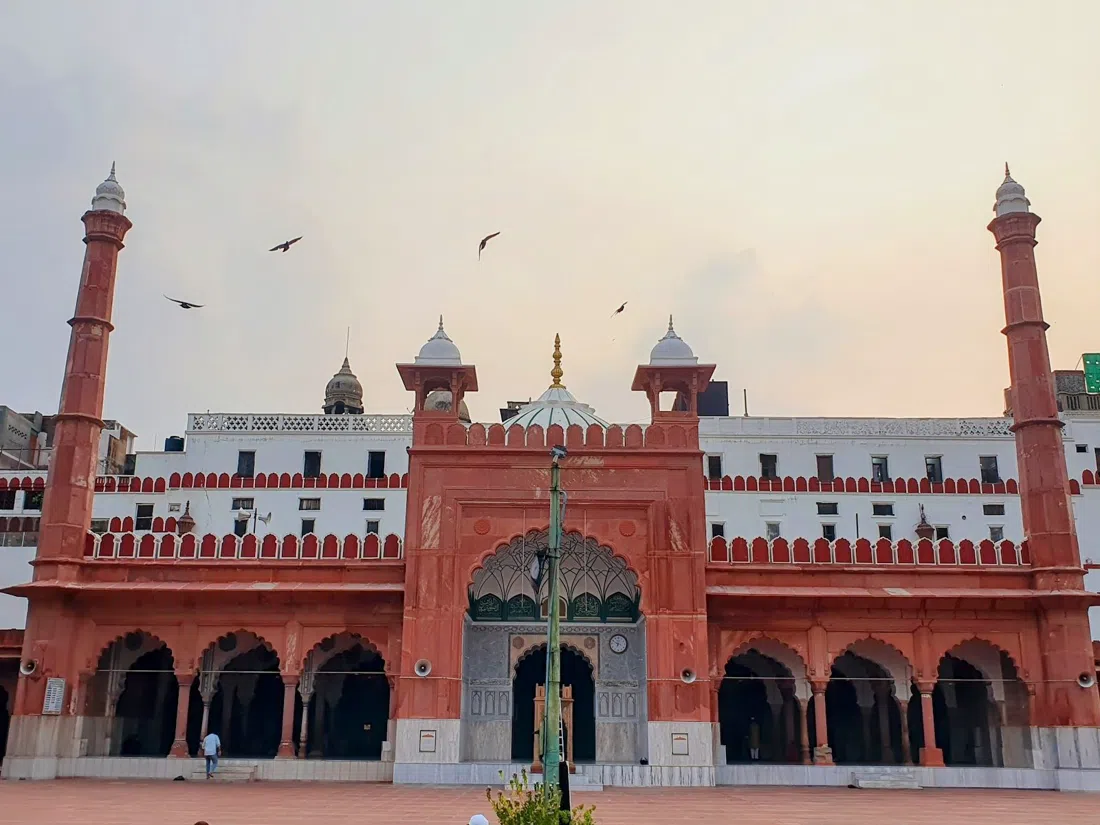
Chandni Chowk is not one place. Within a few hundred metres you pass paper and printing traders, silver dealers, spice wholesalers whose shutters are already coming down, and sweet shops just hitting their stride. The character changes every block, and the side lanes, the galis, are a different city again, barely shoulder-width and much darker. Walk them single file, keep your wallet in a front pocket, and if you are in a group, agree a meeting point before you go in, because you will lose one another inside ten minutes. Pickpocketing risk here tracks crowd density more than time of day. Street snacks run roughly ₹30-150 a plate, cash only in practice.
Plan the entry and the exit. Chandni Chowk station on the Yellow Line puts you at the western end near Fatehpuri Masjid; Lal Qila on the Violet Line drops you at the Red Fort end. Pick one, walk the length once, and leave from the other. Doubling back through the same crowd wastes a cool evening.
If this is your first trip and choosing between two hundred stalls sounds more stressful than appealing, Delhi Food Walks (Old Delhi, meeting points confirmed on booking) solves the problem properly. Anubhav Sapra's evening walk runs around ten stops over roughly five hours, moving by pedal and electric rickshaw rather than car, which is the only sane way through those lanes. It is a premium guided rate, quoted per group rather than per head, and you book direct by phone or email, with no instant checkout. Two honest caveats: five hours is five hours, so eat almost nothing at lunch, and it is built for small private groups, so a party of ten needs a conversation before it is a booking.
Whichever way you eat, Karim's (beside Jama Masjid) is the reliable late anchor. It has been serving since 1913, spreads across several small rooms around a courtyard, and stays open to roughly 12.30am. There are no reservations, which is the thing to plan around: at peak the staff seat you wherever there is space, and a group of six becomes two tables of three in different rooms. Arrive before 8pm or after 10.30pm if sitting together matters. Expect ₹400-800 per head.
A courtyard performance in the old city
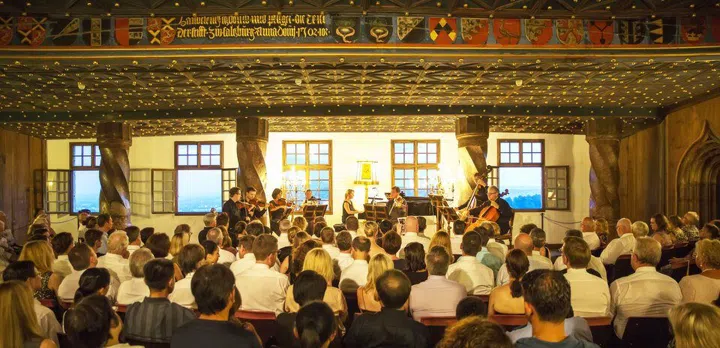
Haveli Dharampura (Old Delhi) is the one address in the walled city that pairs a real rooftop view of Jama Masjid with a proper sit-down evening. The restored haveli runs Kathak in its courtyard on Saturdays and Sundays, 7-10pm, and Hindustani classical nights on Wednesdays and Thursdays. Both are seated and ticketed rather than background entertainment you wander past. The rooftop restaurant, Lakhori, takes group bookings on advance reservation only. Budget ₹2,000-4,000 per head for the dinner-and-performance evening.
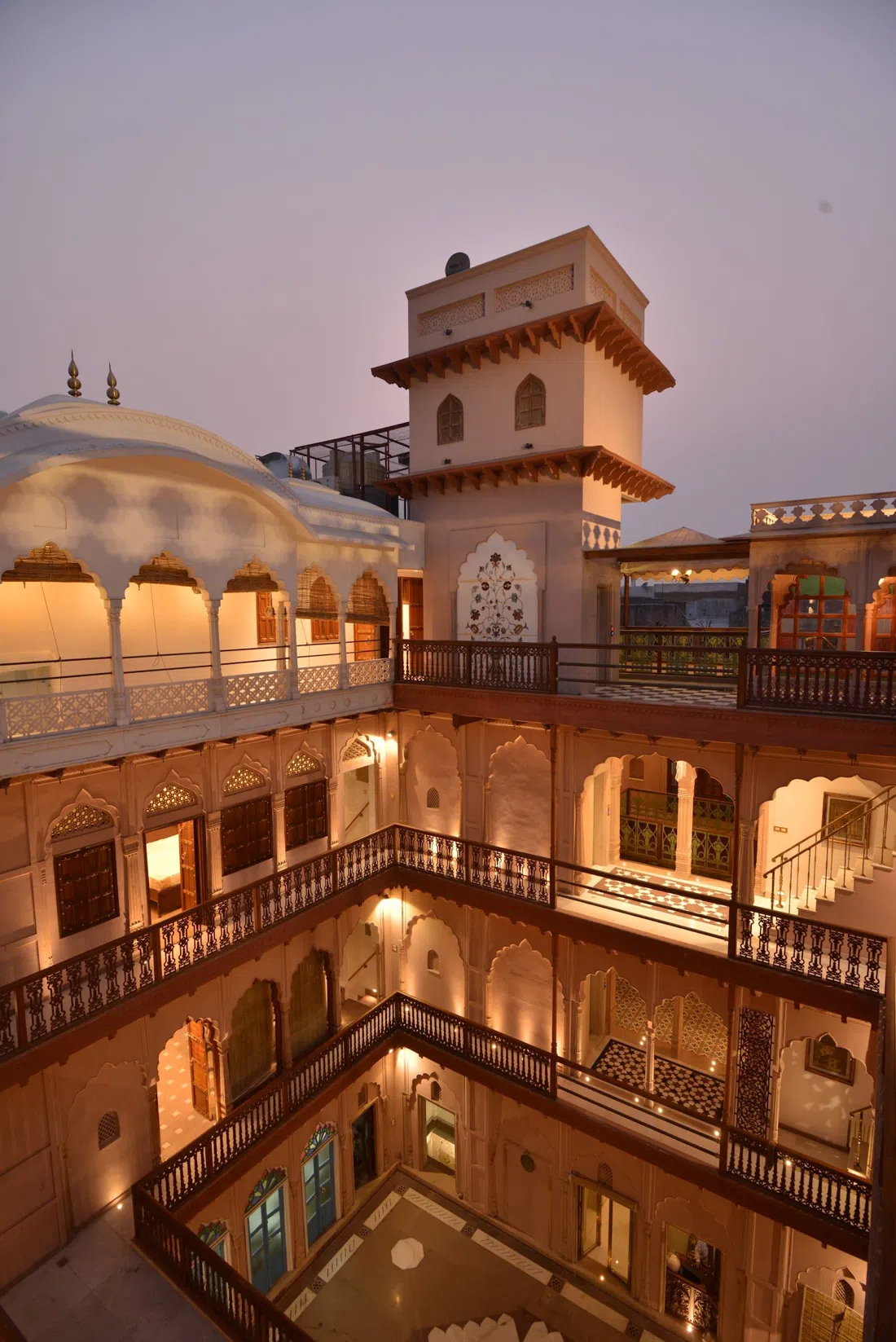
Book ahead. Walk-ins are routinely turned away, and walking back out through the lanes at half ten without the table you wanted is a poor end to a night. This is the evening to choose if you are travelling as a couple, or if someone in the group has reached their limit with standing up to eat.
The only way into the Red Fort after dark
Night entry to the fort requires a show ticket, which is what makes the Jai Hind Sound & Light Show (Red Fort) worth more than its first impression. It runs daily except Monday, usually with a 7.30pm show and a later one, from about ₹250 per seat in tiered seating, and blocks of seats are bookable online, which makes it the rare Delhi evening that suits a large group.
Arrive 30-45 minutes early. The security queue is the whole risk here, and turning up at 7.25pm for a 7.30pm show means watching the opening from the line. Pair it with Chandni Chowk earlier and Karim's afterwards and the whole evening sits inside one square kilometre.
Thursday nights at the shrine
Hazrat Nizamuddin Dargah (Nizamuddin Basti) holds qawwali after the Maghrib prayer every Thursday, running two to three hours; the shrine itself stays open until about 10.30pm. It is free, open to all faiths and nationalities, and there is nothing to book, which is exactly why you should arrive before Maghrib if you want courtyard space rather than a view of other people's shoulders.
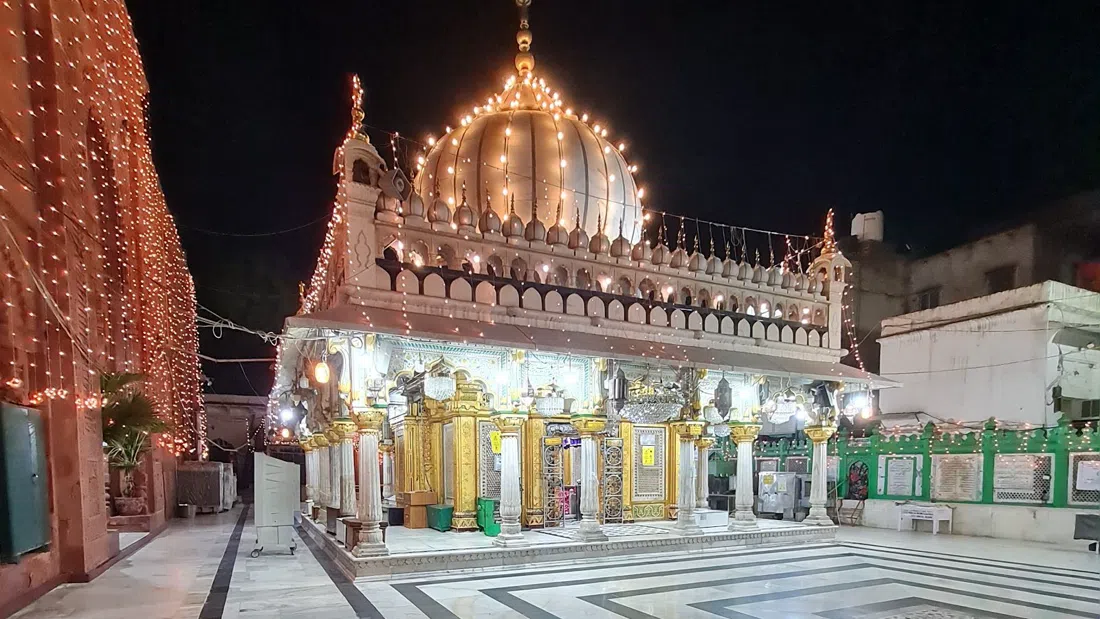
The approach is through a narrow bazaar lane, and you go barefoot from the shoe stand at its mouth. Leave your shoes there, cover your head, and carry a small note for the offering if you want to make one. This is a working shrine. People are praying a few feet from where the musicians sit, and the singers respond to the room rather than to a setlist. Women are welcome in the courtyard where the qawwali happens but are not admitted to the inner tomb chamber, which is worth knowing before you arrive rather than at the threshold. Large groups are awkward here. Come as two or three, sit where you are directed, and stay longer than you planned.
The coolest ninety minutes in central Delhi
Sunder Nursery (Nizamuddin, a short ride from the dargah) is open 7am-10pm in summer with last entry at 9pm, and it is lit specifically to show its monuments off after dark. The gate ticket is modest, roughly ₹50-200 and higher for foreign nationals, the lawns are picnic-friendly, and group experiences can be booked through the park office.
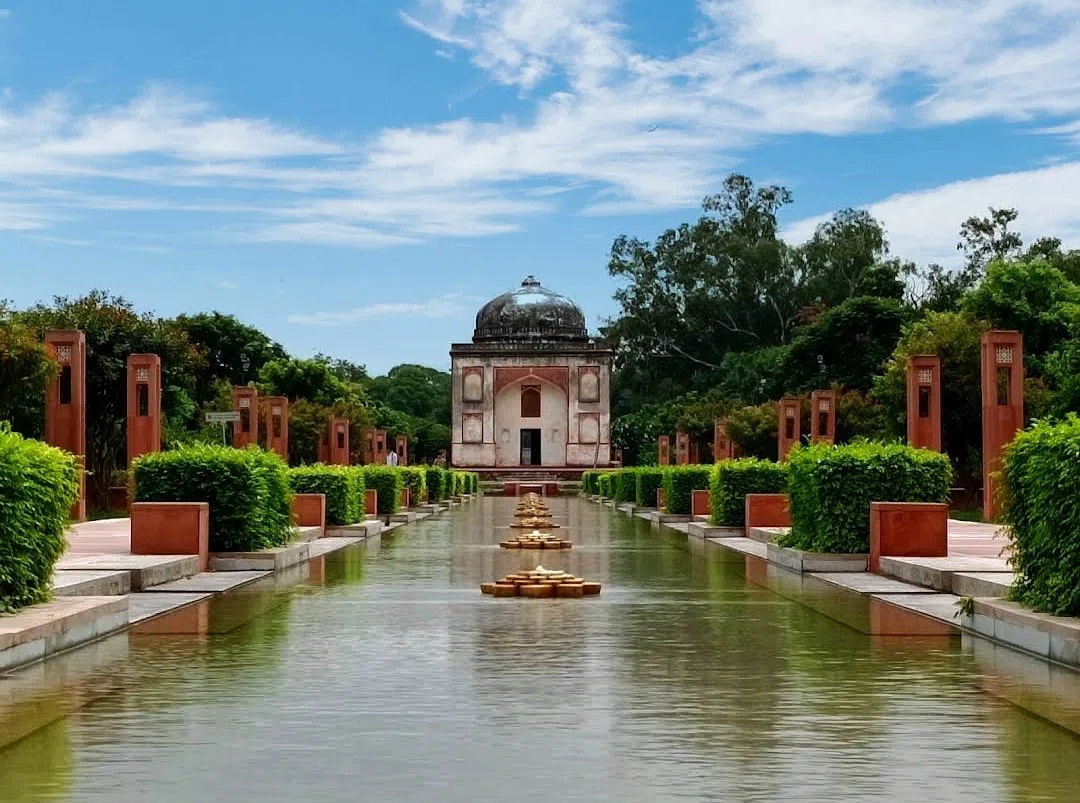
Come for the temperature and the quiet. Central Delhi holds its heat in concrete and traffic; this is fifteen-odd hectares of trees doing the opposite, and by half eight it is several degrees kinder than the road outside. It suits couples, families with tired children, and any group that needs somewhere to sit down that is not a restaurant. Just watch the 9pm cut-off, which is on entry, not exit.
A free meal and a quiet dome
Gurudwara Bangla Sahib (central Delhi, near Connaught Place) is open 24 hours to everyone, and the evening langar, the free community meal, runs roughly 7-10pm and seats hundreds at a time. Around nine or ten the complex is at its calmest and the dome is at its best against the dark.
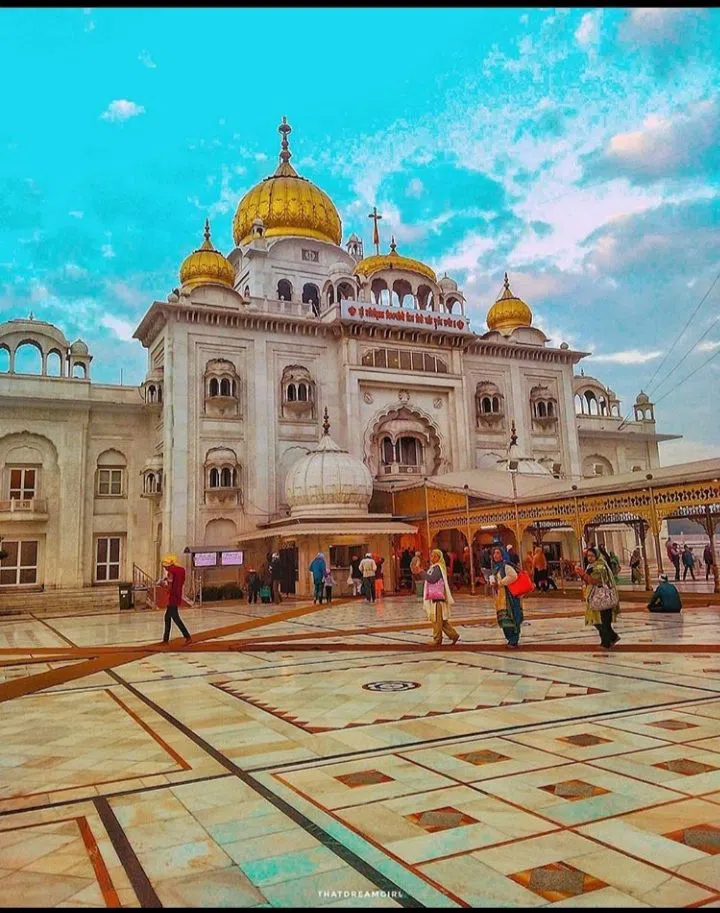
The practicalities are simple and non-negotiable. Heads covered, with scarves available if you have not brought one, and shoes and socks off at the free counter. Everything, including the meal, costs nothing, and volunteering in the kitchen is welcomed rather than tolerated; if you have an hour and want to do something other than look at things, roll chapatis. Groups are routine here, which makes it one of the few late options in Delhi where a party of eight causes no problem at all.
Markets that outlast the heat
Dilli Haat INA (INA, directly opposite the metro station) is the easiest place in the city to feed a mixed group with incompatible tastes. Entry is ₹30-100 and higher for foreign nationals, dishes run ₹100-350, and it opens daily 10.30am-10pm, so it absorbs a whole evening without any timing skill. The craft stalls rotate every fortnight, and the regional food stalls let you eat Nagaland, Kerala and Kashmir in one sitting. Seating is open and plentiful, nobody takes reservations, and nobody is turned away at the door.
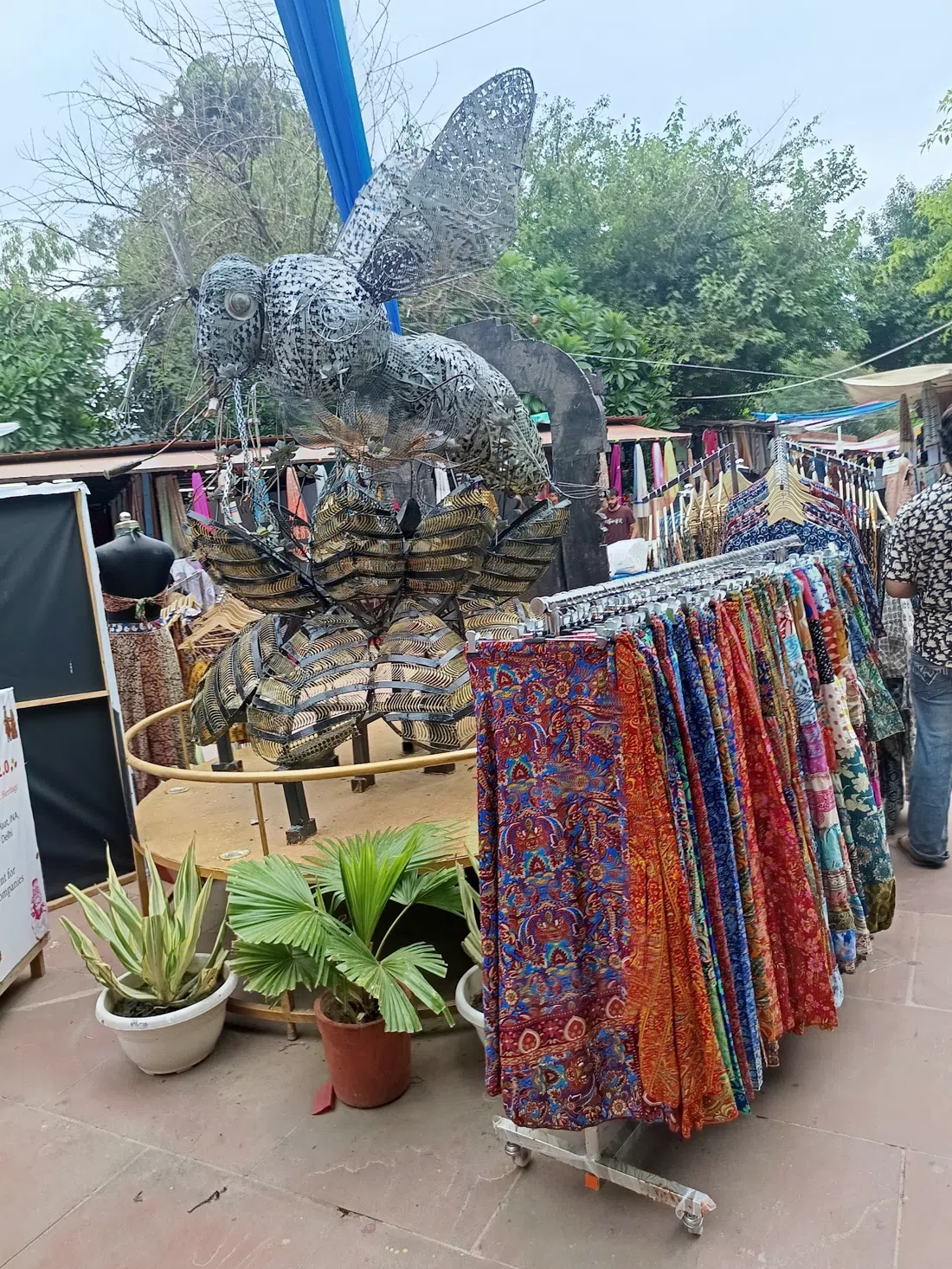
Khan Market (Khan Market, on the Violet Line) is the least punishing shopping in Delhi when the pavements are still warm. Bookshops, textile shops and perfumers stay open into the evening, and the restaurants above them run later still. Two things catch people out: it is closed on Sundays, so plan around that, and the good restaurants are small and upstairs, which means groups need reservations rather than optimism. Meals run ₹800-2,500 per head, the expensive end of a Delhi evening.
Majnu ka Tilla (New Aruna Nagar, north Delhi) is an early-evening stop, not a late one. The Tibetan colony's kitchens and shops mostly shut around 9pm, so aim to be eating by half seven. Ama Café, Dolma House and Tee Dee all fill up early and queues form; the rooms are tiny, so a group of more than four should expect to wait or split across two places. Go for the thukpa and the laphing, and stay for lanes narrow enough that two people cannot pass without turning sideways. ₹150-400 per head covers it comfortably.
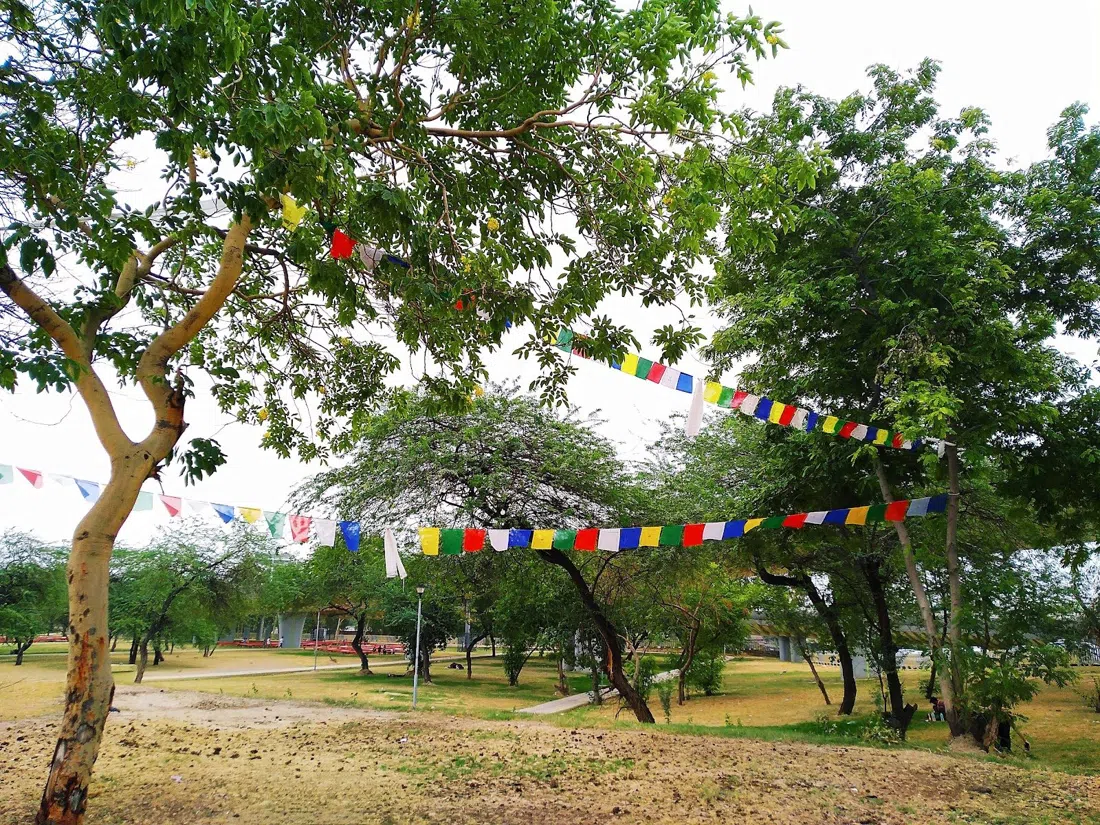
The lane to land in after a hot day
Champa Gali (Saket, two minutes from the metro) is shaded before the sun has even gone, which is most of its appeal. It is a small design-and-café lane, casual and walk-in, open roughly 11am-10pm and later on Sundays, at ₹300-700 per head. The courtyards are small, so a group over six should split tables or call ahead to Jugmug Thela or Blue Tokai. It works best as the soft landing between an afternoon indoors and whatever you have booked for nine.
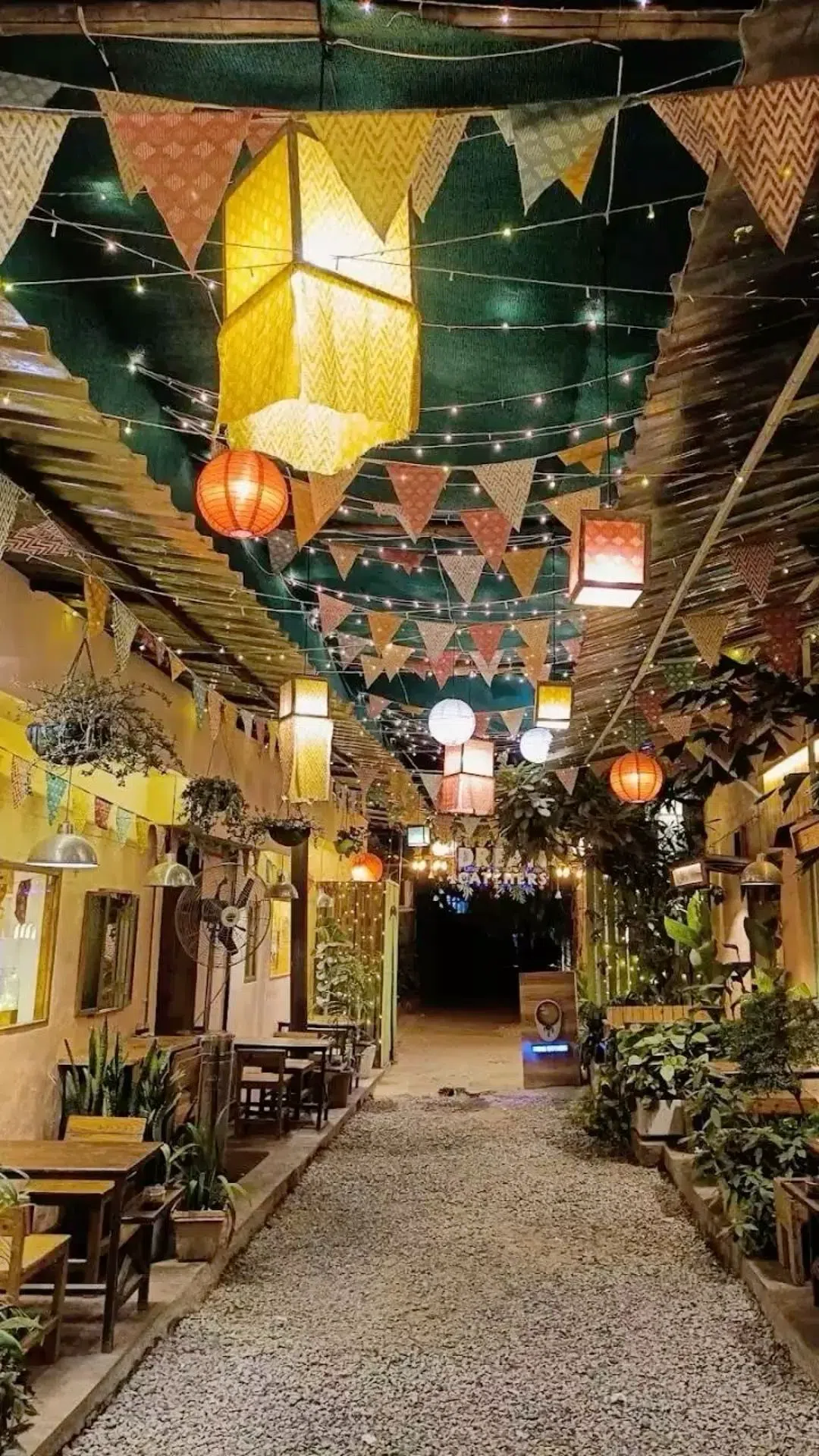
A water show with the phones left behind
The Sahaj Anand Water Show at Swaminarayan Akshardham (Akshardham, Blue Line) is 24 minutes long, starts around 7.30pm after sunset, and costs ₹110 for adults and ₹80 for children aged 4-11 on top of complex entry. It is closed on Mondays.
The rule that ruins evenings is the last entry into the complex at 6.30pm, an hour before the show. Miss it and you miss the show entirely, with no exceptions, and the complex is far enough east that you will not be improvising a replacement nearby. Security is strict: no phones, cameras or bags inside, with a free cloakroom at the gate. Leave the phone in the car and accept that you are not photographing this one. Group seating in the amphitheatre is fine and unreserved in practice, so arrive together.
Music and a bar worth the detour
The Piano Man Jazz Club (Safdarjung) is Delhi's serious jazz room: cabaret seating, a cover charge from about ₹500 per head plus food and drink, sets at 1.30pm and 9pm daily, open until 1am. The room is small and the 9pm set sells out, so book online in advance, especially for a group; private bookings go through the site. Check the address twice. There are sister venues at Eldeco Centre in Saket and one further out beyond the city limits, so confirm which one is on your ticket before you get in a cab.
Sidecar (south Delhi) opens Tuesday to Sunday, roughly noon to 1am. It was the first Indian bar to make Asia's 50 Best Bars and is still on the list, and nearly every flavour extraction on the menu is made in house, which is why it reads unlike anything else in the city. Cocktails run ₹700-1,200. Downstairs suits pairs, upstairs takes groups, and at weekends you should book rather than arrive.
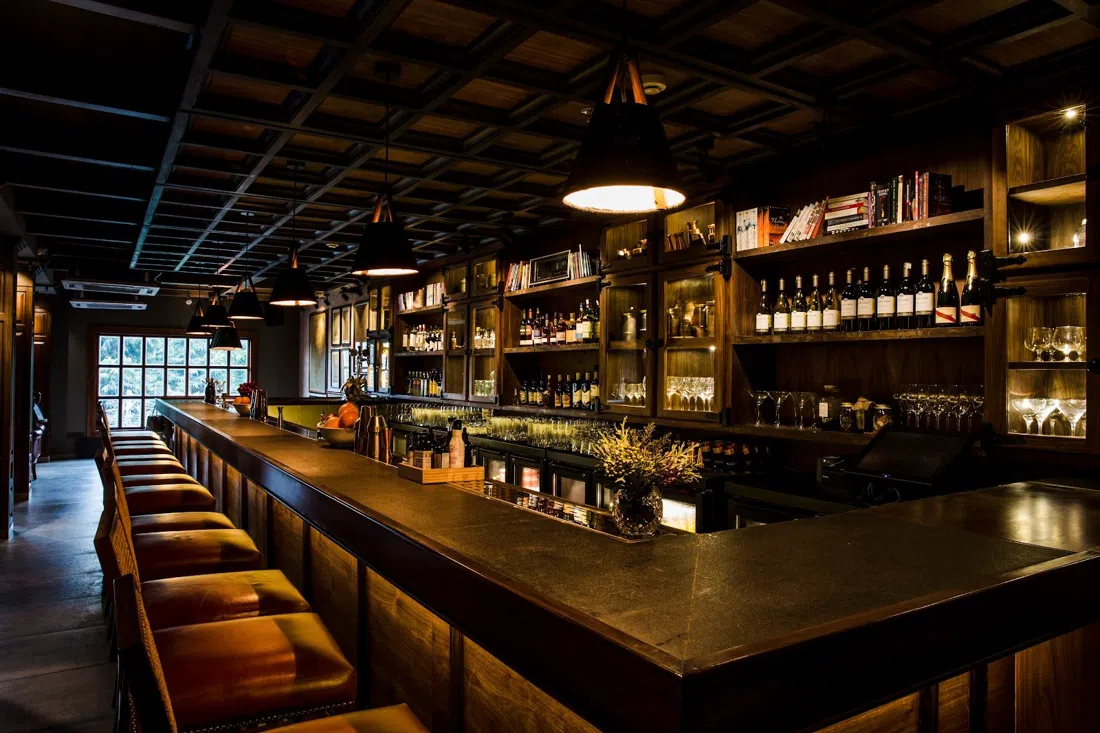
Before you go out
The metro is the fastest thing in Delhi by a wide margin, air-conditioned, and it takes a rechargeable smart card or a QR ticket from the app. Last trains leave the terminal stations around 11pm, so if you are still at a bar at midnight, plan on a cab. App cabs work everywhere but cannot enter the Old Delhi lanes; you will be dropped at the edge and walk in. With autorickshaws, insist on the meter or agree the fare before you sit down.
Digital payment is universal among locals, but foreign cards often cannot be linked to it, so carry ₹2,000-3,000 in small notes. Street food, shoe stands, shrine offerings, market entry and rickshaws are all cash in practice. Sunder Nursery and Dilli Haat charge foreign nationals more at the gate, which is normal and posted.
On timing, nothing serious starts before seven. Mondays close both the Red Fort show and the Akshardham show; Sundays close Khan Market; Thursday is the qawwali night at Nizamuddin. Build the week around those four facts and the rest arranges itself. Book Haveli Dharampura, the Piano Man 9pm set and any Khan Market restaurant ahead; everything else takes you as you come.
On budget, a street-food-led evening (Chandni Chowk, Karim's, a metro ride each way) lands at ₹800-1,500 per head. Add the Red Fort show or Dilli Haat and it barely moves. A haveli dinner with a performance, or cocktails at Sidecar, takes an evening to ₹3,000-5,000. The best hours of the day here, at the shrine and the gurudwara, cost nothing at all.
Where you stay near a metro line matters more than the postcode, because it decides how late you can stay out. Compare options with the Delhi hotel search and pick the line rather than the view.
Questions
What time does Delhi actually cool down enough to go out?
From about six in the evening the light flattens and the stone stops radiating heat, and it keeps easing until nine or ten. In practice nothing worth doing starts before 7pm anyway: the Red Fort show, the Akshardham water show and the Piano Man's main set all begin between 7.30pm and 9pm.
Is it safe to walk around Old Delhi at night?
Chandni Chowk between the Red Fort and Fatehpuri Masjid is busy and fine to walk, and motor vehicles are kept off it from 9am to 9pm. What you need to watch for is pickpocketing where the crowds are thickest, not assault. Keep your wallet in a front pocket, walk the side galis single file, and if you are in a group agree a meeting point before entering them.
Which night should I go to Nizamuddin for qawwali?
Thursday. The singing starts after the Maghrib prayer and runs two to three hours, and the shrine stays open until about 10.30pm. It is free and you cannot book, so arrive before Maghrib if you want courtyard space. Go barefoot from the shoe stand in the bazaar lane, and cover your head.
What do I need to book in advance?
Haveli Dharampura, always: walk-ins are routinely turned away. Also the Piano Man's 9pm set, any upstairs restaurant at Khan Market, Sidecar at weekends, and the Delhi Food Walks evening tour, which you book direct by phone or email. Karim's takes no reservations at all, so time your arrival instead: before 8pm or after 10.30pm.
How do I get home after the metro stops?
Last trains leave the terminal stations around 11pm, so anything running past midnight (Sidecar, the Piano Man, a late table at Karim's) means an app cab or an autorickshaw. Cabs cannot enter the Old Delhi lanes, so expect to walk out to the main road, and agree an auto fare before you get in if the meter is not running.
First published on thedelihguide.com, the Delhi guide.