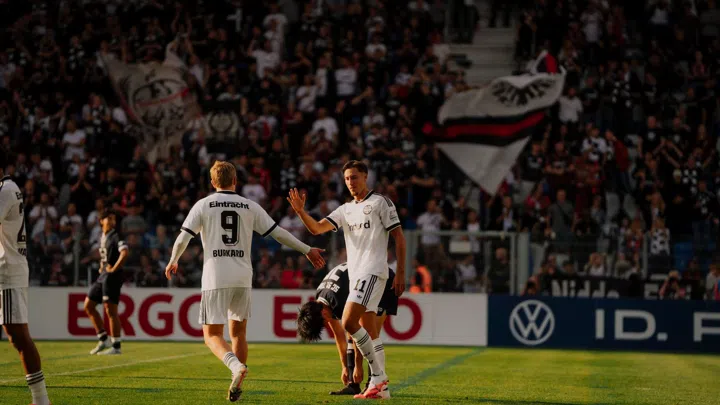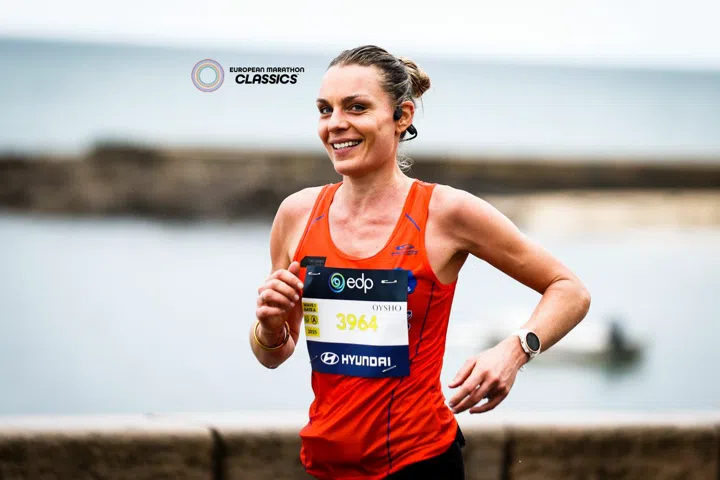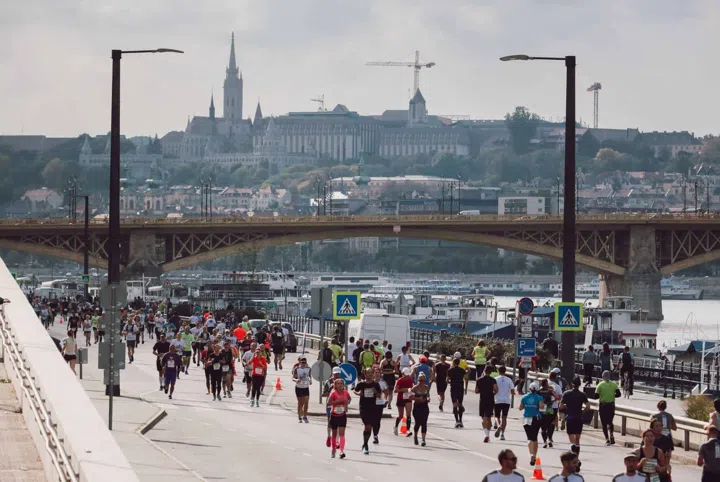
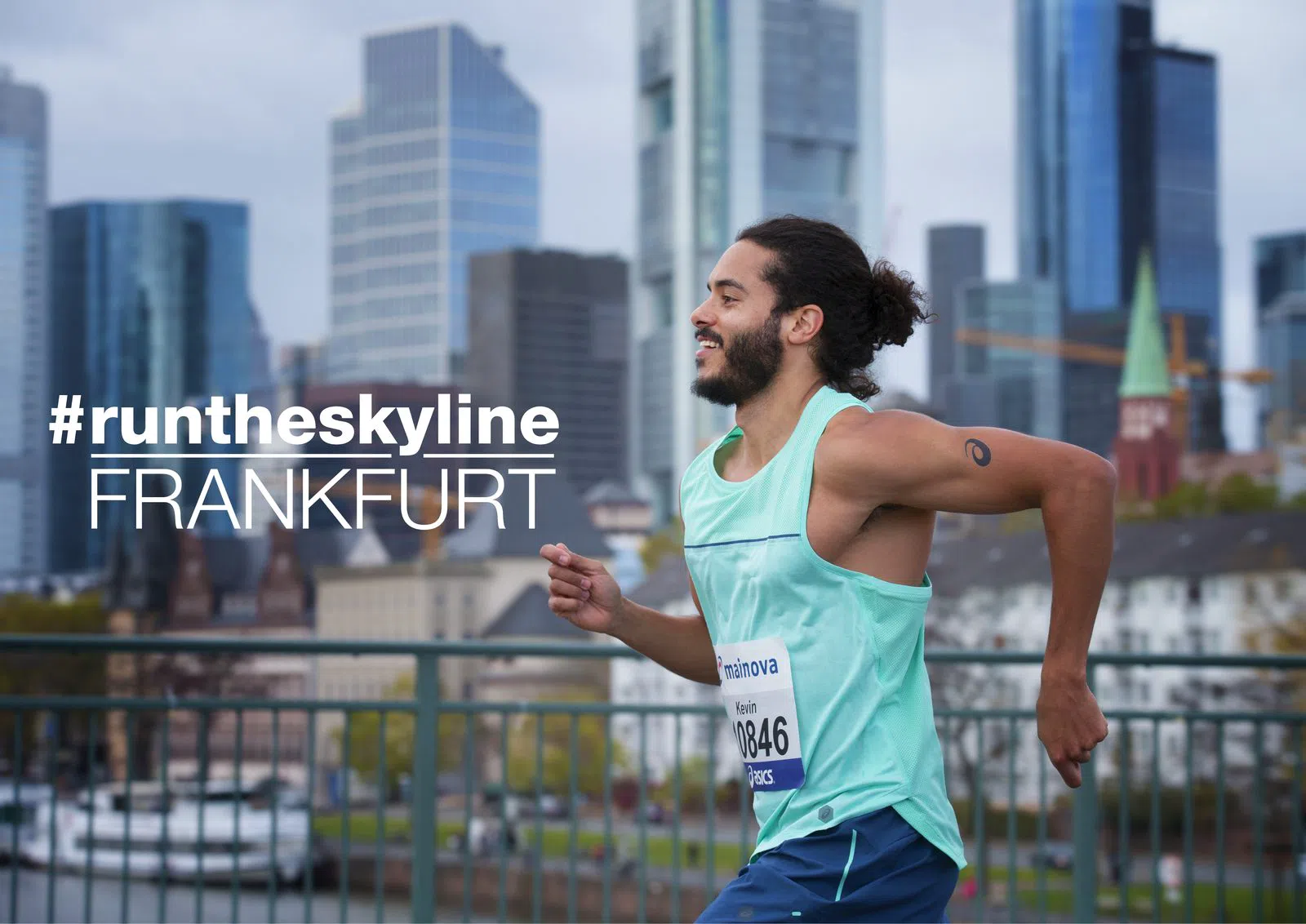
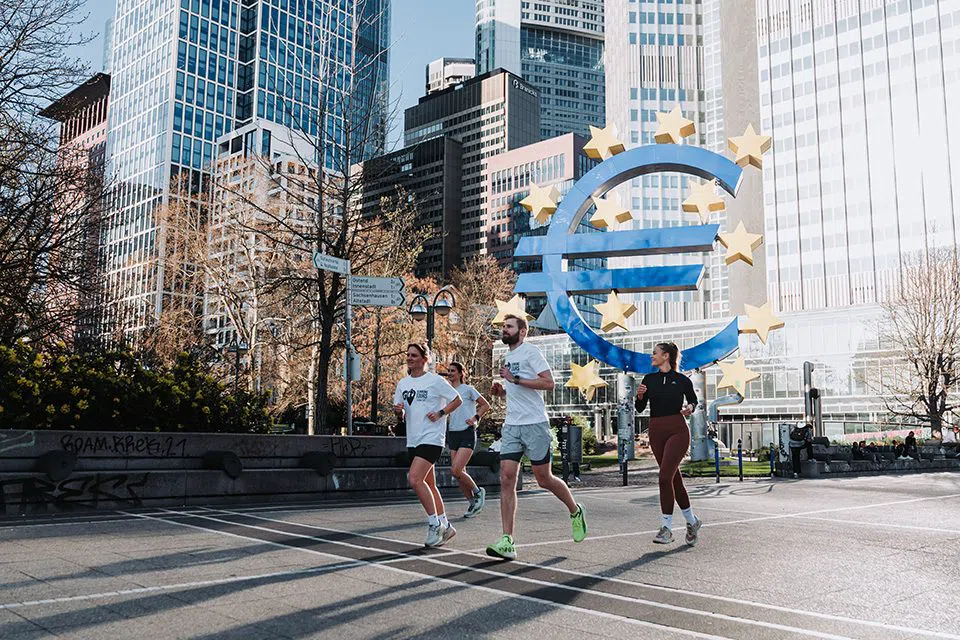
The Main runs flat through the middle of Frankfurt, and so does the race. Between the lowest point of the Mainova Frankfurt Marathon course at 89.4m and the highest at 117.2m there are 27.8 metres, spread across the whole 42.195km, which means no climb ever arrives to take the decision out of your hands. What is left is pacing, late-October weather, and what you did with the two days before the gun.
What actually makes the course fast
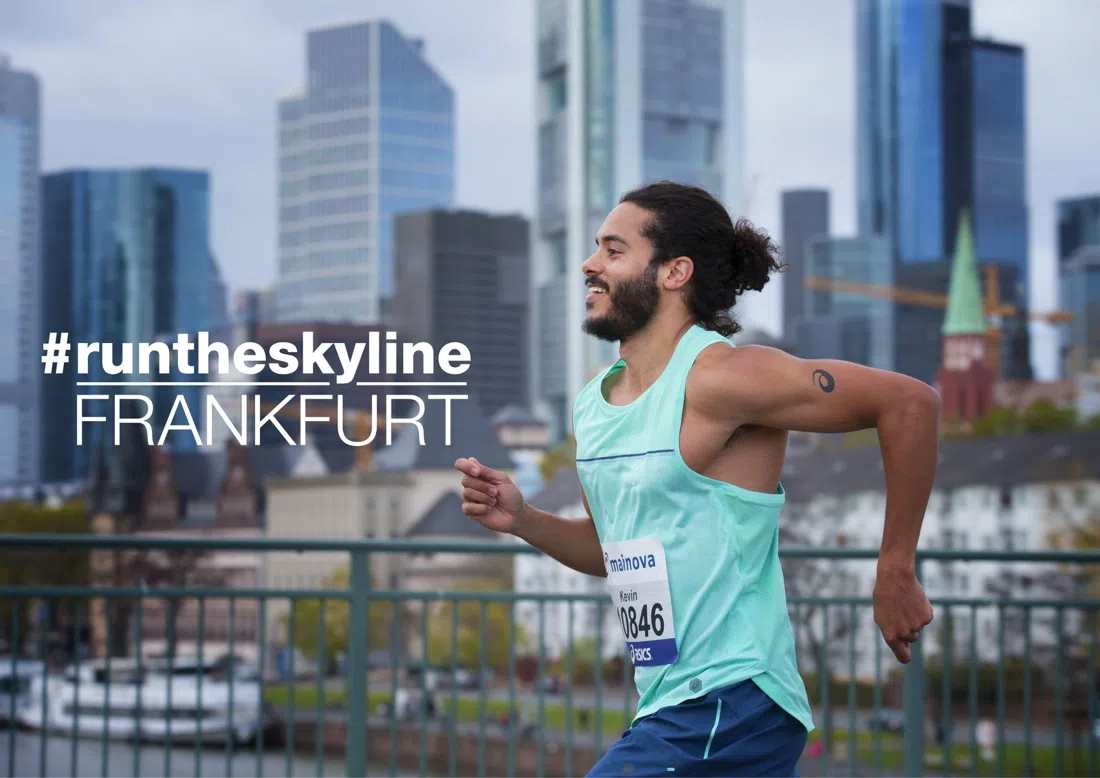
Flat is a word every race organiser uses and almost none of them earn. Frankfurt earns it. The route is a single loop that works both banks of the river, and the 27.8m spread between its lowest and highest points is small enough that you can hold one pace from the first kilometre to the last without ever recalculating. That is the entire argument for coming here rather than somewhere prettier and lumpier: you will run the time your training says you can run, not the time the terrain allows.
The 2026 race is on Sunday 25 October at 10:00. Entry runs roughly €100 to €145 depending on how early you register, and the field sells out, so the order of operations matters: get the entry, then book the trip. Doing it the other way round is how people end up with a hotel and a spectator weekend they did not want. Start your hotel work early too, because race weekend compresses the city's rooms; the Frankfurt hotel search is the sane place to begin, and anywhere within a walk of the river will do.
There is no door policy to negotiate, only entry limits. Groups are properly catered for. Relay teams, charity blocks and club entries are part of the setup rather than an afterthought, so a running club can travel together and still have a sensible race for the one member chasing a time.
Finishing indoors under a glass dome
Most autumn marathons end in a fenced car park with a foil blanket and a queue. Frankfurt ends inside Festhalle Frankfurt (Messe, west of the centre), a Wilhelmine arena under a glass dome holding around 15,000 people, and you come in down a red carpet with the noise closing over you. It is the best reason to pick this race over anything else on the October calendar, and it does something useful for the people who travelled with you: on marathon day the hall is open to spectators and supporters free, no ticket. Outside race weekend it is a concert venue and tickets run €40 to €120.
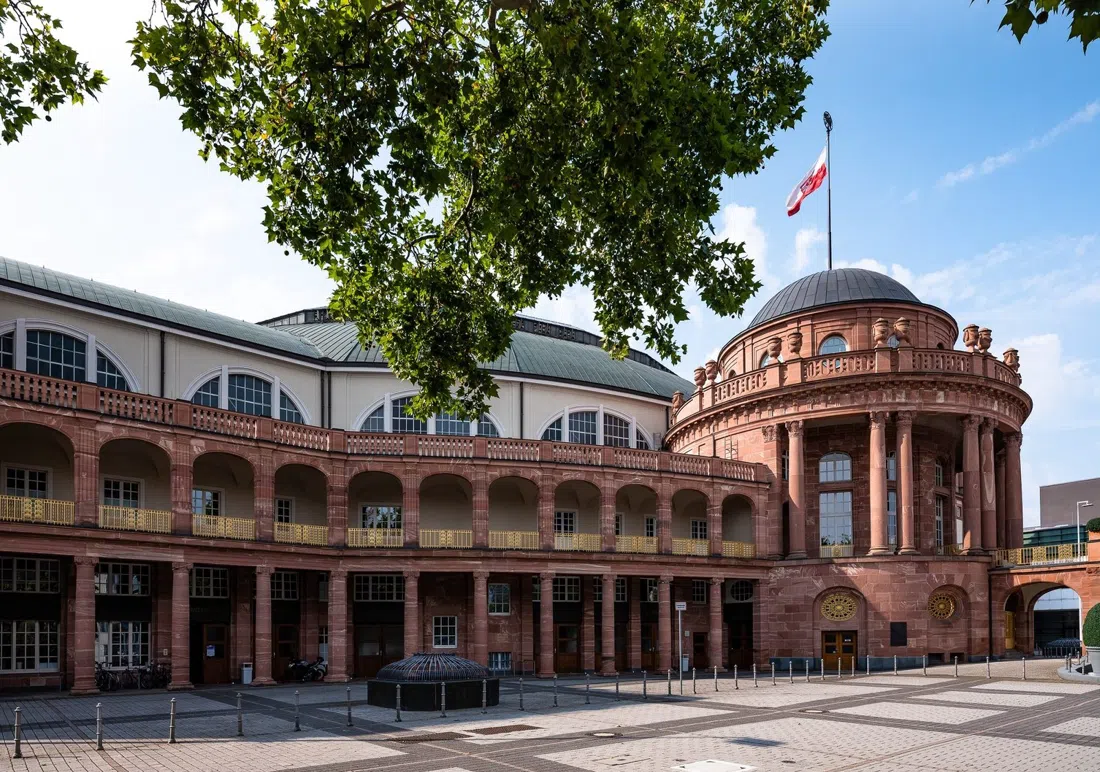
U4 and U5 engineering works close the Festhalle/Messe U-Bahn stop for stretches of 2026, which matters more than the phrase "engineering works" suggests. Check the live position in the week before you travel, and if it is shut on the day, walk your supporters in rather than discovering it at 09:15 on race morning with a runner to deliver to a start pen.
Two shakeout runs that double as a course recce
The Mainuferweg and Museumsufer promenade (Sachsenhausen and Altstadt banks) is the obvious Saturday shakeout: roughly 5km of continuous flat path from the centre out to the Ostend, free, open at all hours, with separate pedestrian and cycle lanes along most of it so a group can run abreast without irritating half the city. Better still, the marathon uses both banks, so twenty easy minutes here is a preview of ground you will cover under pressure the next morning.
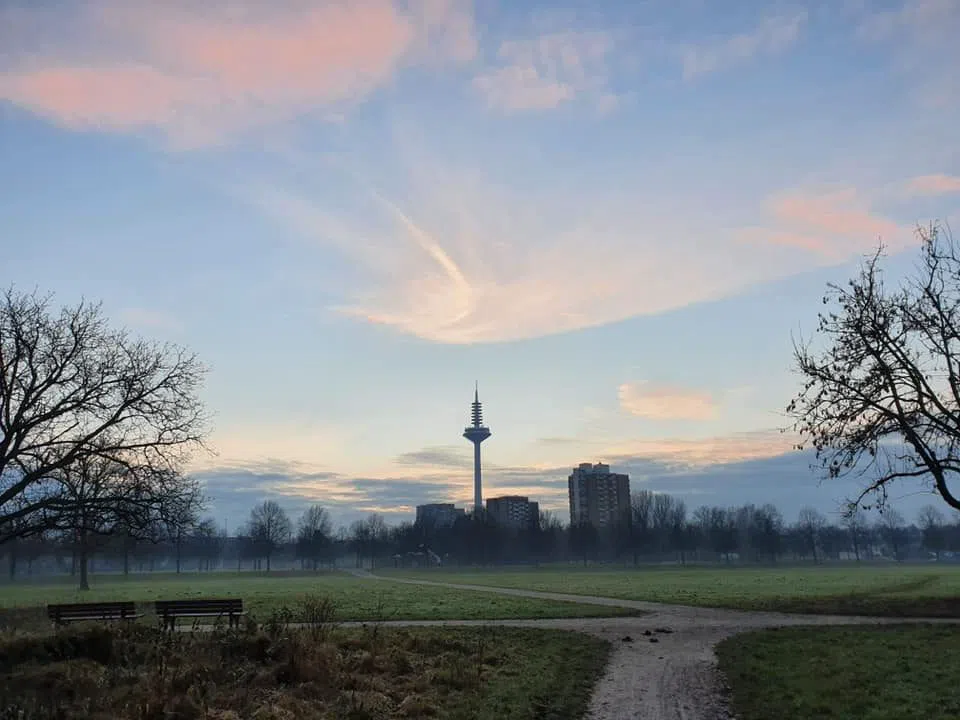
If you want something with a clock on it, Nidda parkrun (Ginnheim, north-west) meets Saturdays at 09:00 at Am Ginnheimer Wäldchen 4. It is free, flat, timed and deliberately open to anyone. Register once online and bring a printed barcode, the one step visitors forget. It is also the easiest way to meet Frankfurt's running scene from a standing start. It is still a 5k the day before a marathon, so run it as a jog with friends and leave the result alone.
For something structured, GO! Running Tours Frankfurt (city-wide, hotel pickup) is built for groups rather than merely tolerant of them: private guides, your pace, your distance, any day of the week, roughly €45 to €90 per person depending on group size and how far you go. The 8km opera-to-old-town loop and the 21km scenic route overlap much of the marathon course, so you are paying for a guided recce with someone who knows where the kerbs, tram rails and street furniture sit. That counts for a lot when you are deciding which side of the road to run on at kilometre 30.
Soft ground for the long weeks before
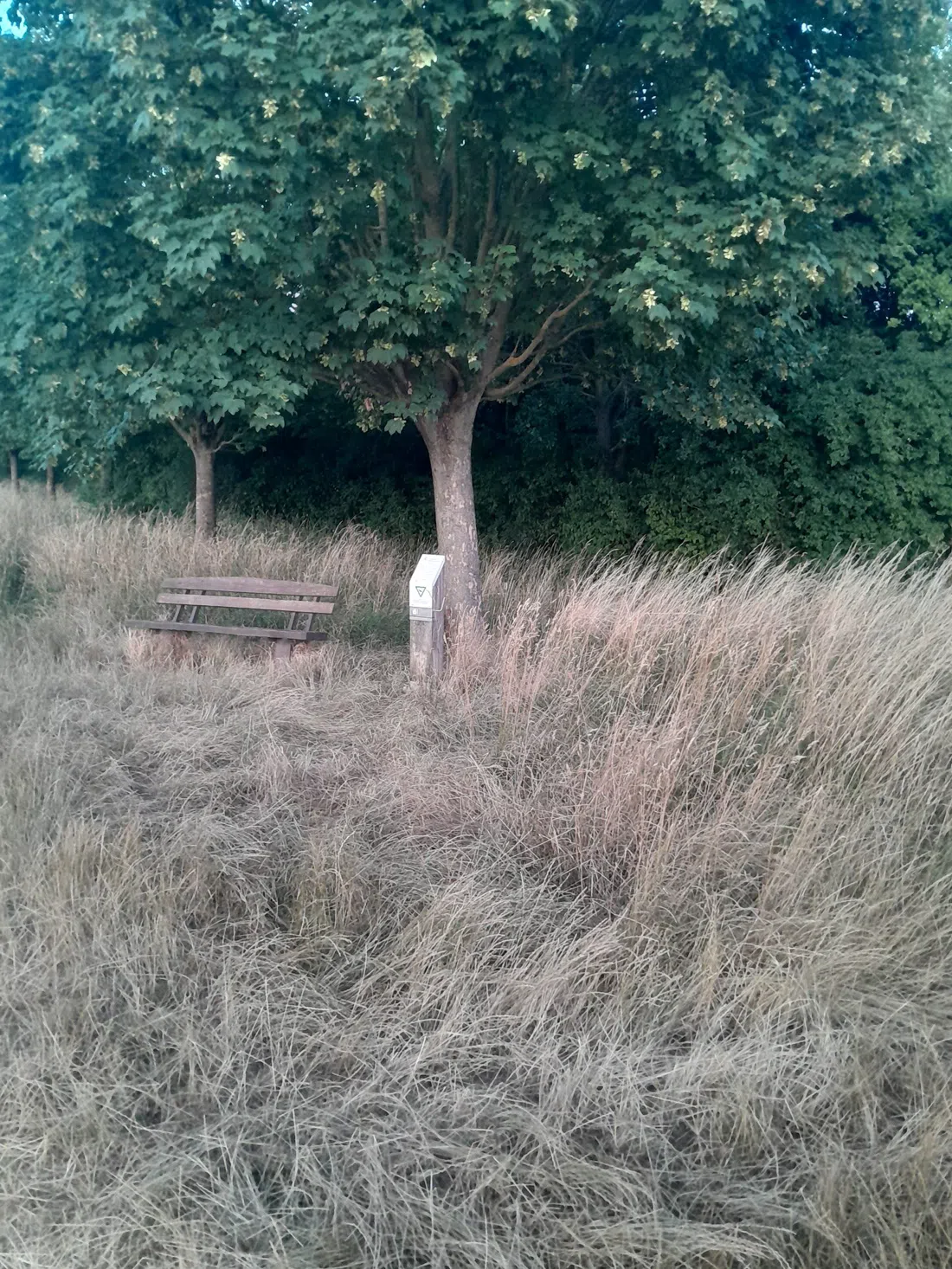
If you are in the city for longer than a race weekend, the tarmac will eventually ask for a rest. The Frankfurter Stadtwald and Goetheturm (south of Sachsenhausen) is the answer: a very large city forest, free and unlimited in terms of group size, with the soft-surface long runs the road course cannot give you. The Goetheturm itself burned down in an arson attack in 2017 and was rebuilt and reopened in 2020; it is 196 steps to the top and open 1 April to 31 October, 08:00 to dusk, which puts marathon weekend just inside the season.
The bigger commitment is the GrünGürtel-Rundwanderweg (a ring right around the city), a waymarked loop of roughly 68km with only about a third of it asphalt. It is free and unticketed, you can start anywhere on it, and a club can split it into legs and run them as a relay across a weekend. It is also why Frankfurt works as a training base and not only as a race venue: most fast city courses give you nowhere to run a slow twenty-two miler.
Shoes, gait analysis and last-minute fixes
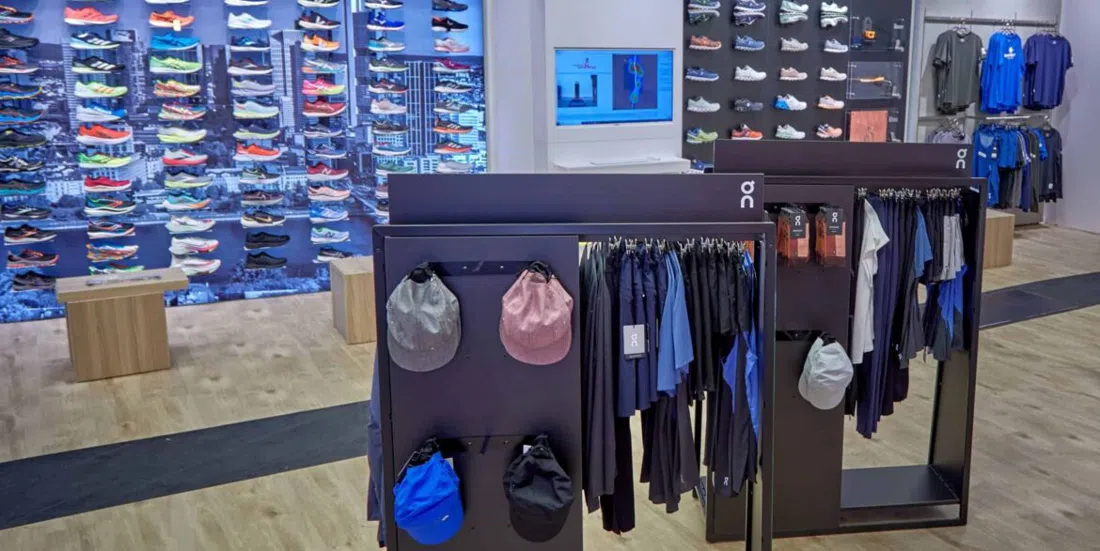
Frankfurter Laufshop (central Frankfurt) is the marathon's official running shop and now in its twenty-fifth year, which is why it is the place to solve a kit problem on the Friday. Shoes run €120 to €220 and the advice is free. It also runs open meet-up nights that visitors are welcome to join. It is a small shop, though: a few runners at once is fine, a full club will overwhelm it, so split up and take turns.
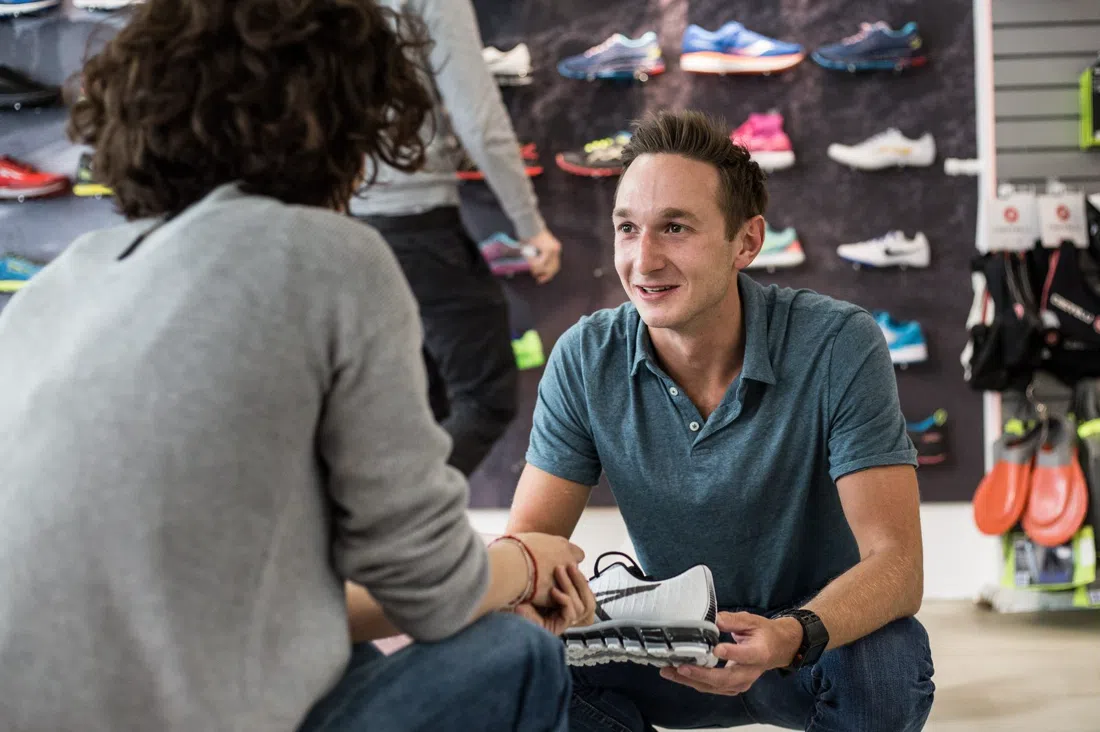
If you arrive with a niggle rather than a shopping list, Laufshop069 (Kornmarkt 6, Innenstadt) is the better call. Treadmill gait analysis comes included with a fitting, and there are in-house physiotherapist appointments, so a tight calf can be assessed by someone qualified instead of run through and hoped about. It works on a one-to-one fitting model, open Monday to Saturday 11:00 to 19:00. Book ahead, and do not turn up as a group of eight expecting to be seen.
The standing rule applies regardless of how good the shop is: nothing new on race day. Buy the gels, buy the socks, buy the anti-chafe stick. Do not buy the shoes you intend to race in on the Saturday afternoon.
Where to put the people who came to watch
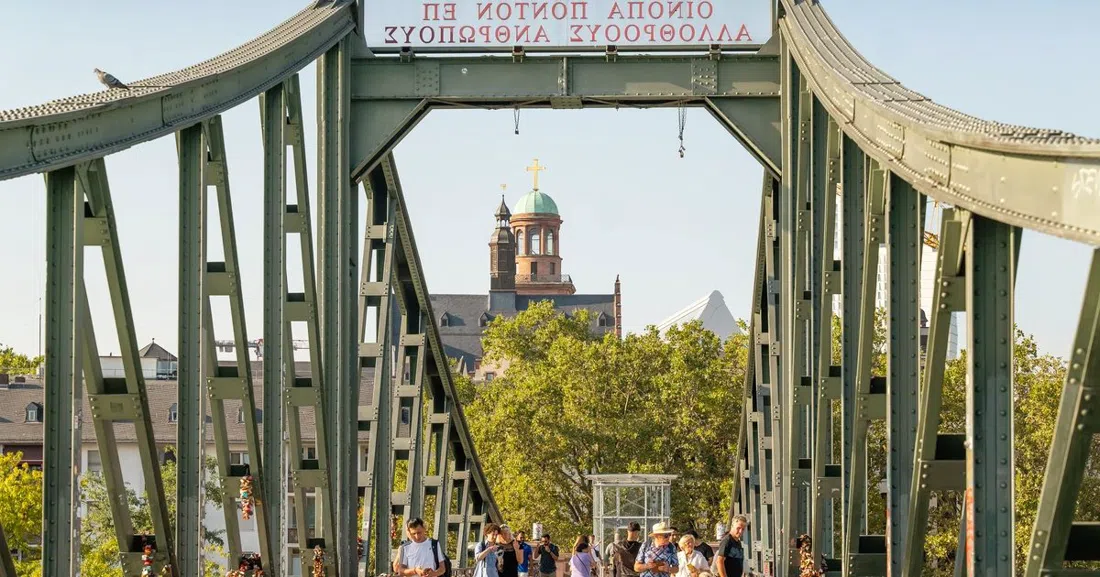
Support crews need a plan, and in Frankfurt it starts at Eiserner Steg (Altstadt), the pedestrian-only footbridge that is the default meeting point for groups splitting across the two banks. Because the course works both sides of the river, one crossing on foot lets a crew catch the same runner twice without a road closure standing in the way. It is free and always open, and it becomes a genuine bottleneck on race morning, so send them early and agree a specific end of the bridge rather than the bridge in general.
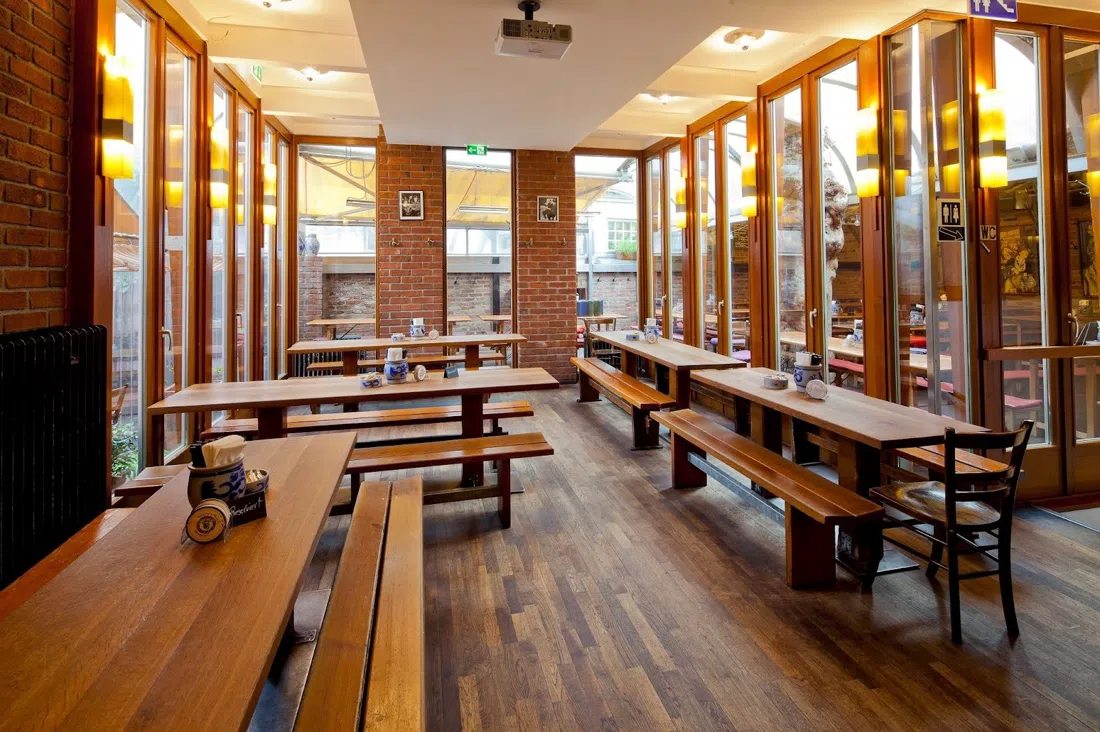
The other good perch is Apfelwein Wagner (Sachsenhausen), which sits directly on the marathon's Sachsenhausen stretch and has been open since 1931. It runs daily 11:00 to 24:00, so it is a midday spectating base with a roof and a toilet, and then the recovery table at six. Shared refectory seating is the whole point of the place, which makes it unusually good for groups; mains land around €12 to €20 and Apfelwein is a few euros a glass. Large parties should ring ahead anyway.
Eating on Friday and Saturday
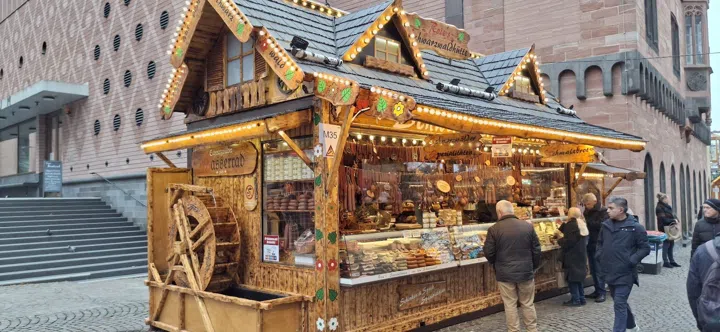
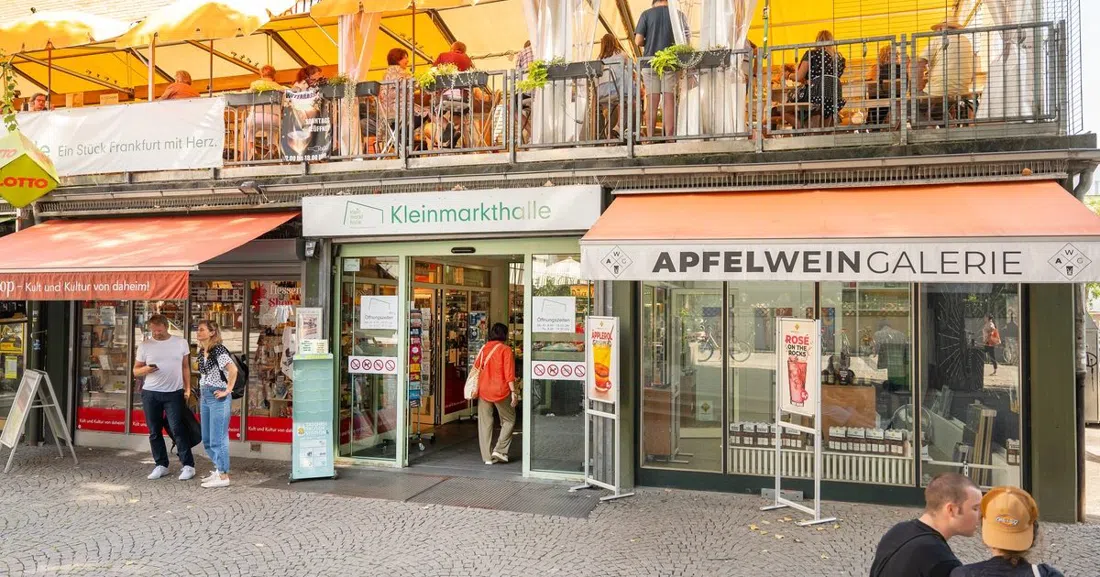
For the pre-race meal, build it yourself at the Kleinmarkthalle (Innenstadt), where over sixty traders carry something like 5,000 products between them. Snacks run €4 to €12 and there is no booking. The aisles are tight and a large group moving as one block is miserable for everyone, so spread out and meet upstairs. The hall closes on Sundays and public holidays, which makes carb-loading here a Friday or Saturday job; anyone planning a race-morning bread run will find a shut door.
The apple-wine tavern as a finish-line ritual
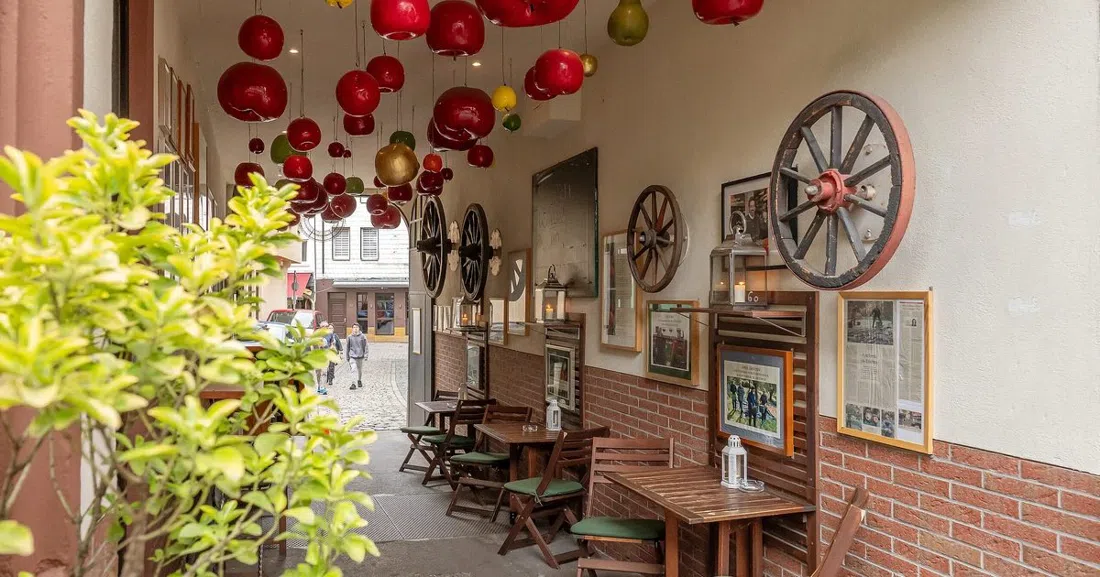
Daheim im Lorsbacher Thal (Alt-Sachsenhausen) has been trading since 1803 and carries what is claimed to be the world's largest apple-wine list. For couples it is simply a very good dinner in a cellar. For a group it is something better: Frank Winkler runs guided apple-wine tastings from ten people upwards, including the barrel cellar tour, priced per head and booked ahead. That is the one post-race activity in this city that functions as an actual event rather than a table reservation with a nicer ceiling. Mains sit around €15 to €25. Check the hours before you plan Sunday evening around it: the doors open at 16:00 on weekdays and 12:00 at weekends.
Getting the legs back on Monday
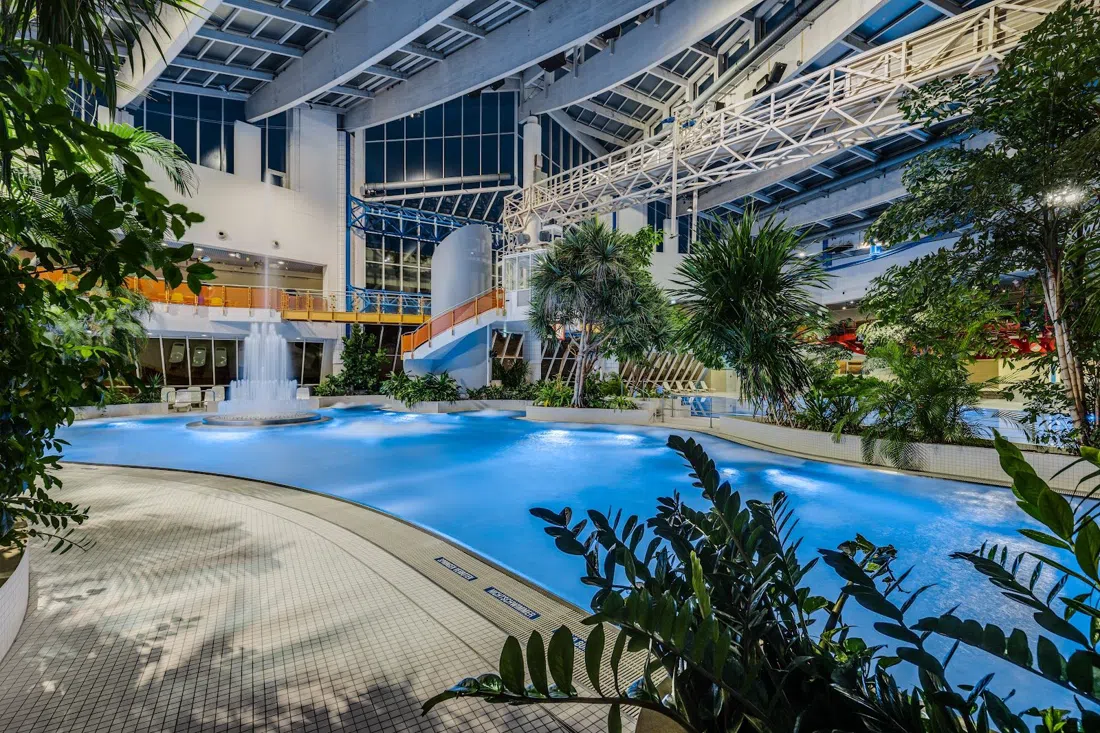
Titus Thermen (NordWestZentrum, on the U1) reopened on 10 August 2026 after a full overhaul, which makes it the working recovery option for the day after. A few hours of pool and sauna costs roughly €15 to €20, walk-in, groups welcome. The sauna floors are textile-free in the German manner, and nobody will make an exception for visitors. Do not plan on the Rebstockbad as an alternative; it is closed for rebuilding until 2027.
If late October does not fit your year
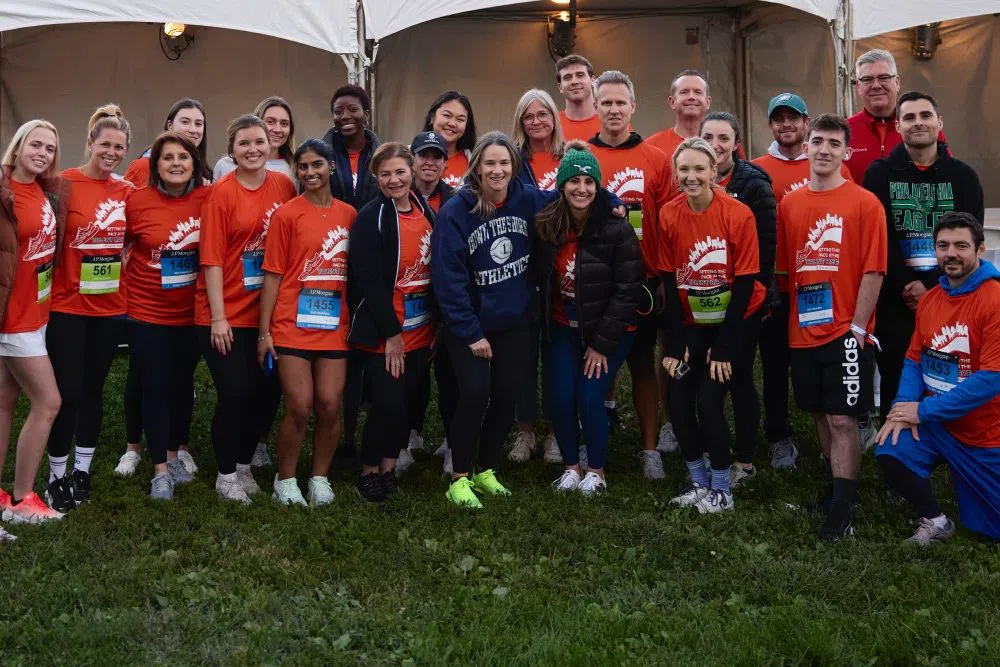
The same flat city hosts two other mass events worth knowing about. The JPMorganChase Corporate Challenge Frankfurt is a 5.6km evening team race. The 2026 edition ran on Wednesday 3 June at 19:00 with around 60,000 runners from some 2,500 firms, at roughly €38 a head. You enter as a team of four or more colleagues, which makes it the most group-shaped race in the calendar and the exact opposite crowd to October's.
The Mainova IRONMAN European Championship Frankfurt is held in late June and still starts with a lake swim outside the city. Entry runs into several hundred euros; watching it from the roadside is free and open. The race doubles as an argument for the marathon: the 2026 edition was cut to a 3.8km swim, 125km bike and 21km run in a heatwave. Late October asks less of your thermoregulation and more of your pacing, which is the trade most runners should want.
Practical notes for race weekend
Transport is the U-Bahn and S-Bahn, and it is quick, but check the U4/U5 works before you rely on the Festhalle/Messe stop, and build in a twenty-minute walking fallback on race morning. Carry cash: taverns and market stalls here still prefer it, and the pre-race Saturday is not the moment to find out. Budget the weekend at roughly €100 to €145 for entry, €15 to €20 for the baths, €4 to €12 for market food, €12 to €25 for tavern meals, and €45 to €90 if you add a guided run, with accommodation on top and booked early. Timing-wise, arrive Friday, shop and eat Friday, jog the river or the parkrun Saturday morning, stay off your feet Saturday afternoon, race Sunday at 10:00, sauna Monday. For everything beyond running, the Frankfurt guide covers the rest of the city.
Questions
When is the Frankfurt Marathon in 2026 and what does entry cost?
The Mainova Frankfurt Marathon is on Sunday 25 October 2026, starting at 10:00. Entry costs roughly €100 to €145 depending on how early you register, and the field sells out, so enter before you book flights or a hotel.
Is the course really flat enough to be worth travelling for?
Yes. Only 27.8 metres separate the lowest point (89.4m) from the highest (117.2m) across the whole loop, so no climb forces a pace change. It is a genuine PB course.
Do spectators need a ticket to watch the finish inside the Festhalle?
No. On marathon day the Festhalle is open free of charge to spectators and supporters. Check the U4/U5 engineering works first: the Festhalle/Messe U-Bahn stop closes for stretches of 2026, so allow time to walk in.
Where should a support crew stand to see their runner more than once?
Eiserner Steg. The pedestrian footbridge lets a crew cross between banks without a road closure in the way, and the course uses both sides of the river. Get there early, because it bottlenecks on race morning.
What is worth doing the day before the race?
An easy jog on the Mainuferweg, which previews the actual course, or the free Nidda parkrun at 09:00 (register online once and bring a printed barcode) taken as a social jog. Shop for dinner at the Kleinmarkthalle, which closes on Sundays, so go on Saturday.
First published on frankfurtholidays.com, the Frankfurt guide.