Kyoto does not put its festivals on for visitors. It runs them because they are owed to someone: a thunder deity that once flattened the harvest, a shrine marking its own founding, the dead who come home for three nights every August and need lighting back out again. Five of these rites carry the Kyoto year, and each belongs to a particular set of streets rather than to the city at large, so timing a trip around one makes you a guest in somebody else's quarter rather than a spectator.
Five dates that carry the Kyoto year
The calendar is mercifully simple, and it rewards anyone willing to plan a trip around a date instead of a season. Aoi Matsuri walks on 15 May, a Friday in 2026. Gion Matsuri occupies the whole of July, with its best evenings concentrated in the middle of the month. The Gozan no Okuribi fires burn on 16 August, which falls on a Sunday in 2026, so expect the valley floor to be fuller than usual. Jidai Matsuri parades on 22 October, a Thursday, and that same evening the torches of Kurama no Hi-matsuri come down a mountain lane an hour north of the city centre.
That October collision is genuine and unavoidable: two unrelated rites that happen to share a date. The parade ends in mid-afternoon in the museum district; the torches begin at 18:00 at the end of a single-track railway. You can do both if you treat the afternoon as a hard stop and accept that the journey home will be the worst part of the day. If a wet forecast threatens, keep the following morning loose, because rain can shuffle an outdoor procession. The Kyoto guide covers where to base yourself and how the districts fit together; this piece is only about the five.
May walks from the palace park out to the Kamo shrines
Aoi Matsuri is the oldest of the five and the least theatrical. There are no drums and no fire, just several hundred people in Heian-period court dress, an ox cart, horses, and hollyhock leaves pinned to everything, moving at walking pace across the city on a morning that is usually too warm for the costumes.
It forms up inside Kyoto Gyoen National Garden (central Kyoto, the broad gravel park surrounding the Imperial Palace enclosure) and departs at 10:30. This is the single best place to watch, and the reason is practical rather than scenic: the park is free, open at any hour, unticketed, and large enough to absorb any number of people. You can stand still and look at the costumes close up, in daylight, before anything starts moving; along the route you get thirty seconds and a stranger's shoulder. It is also the easiest place in Kyoto to hold a group of twenty together. The Palace enclosure itself is a separate proposition handled by the Imperial Household Agency, not something you wander into off the park. If you have an hour spare, the Shusui-tei tea house inside the grounds charges ¥300 and opens Thursday to Saturday, 09:30 to 15:15.

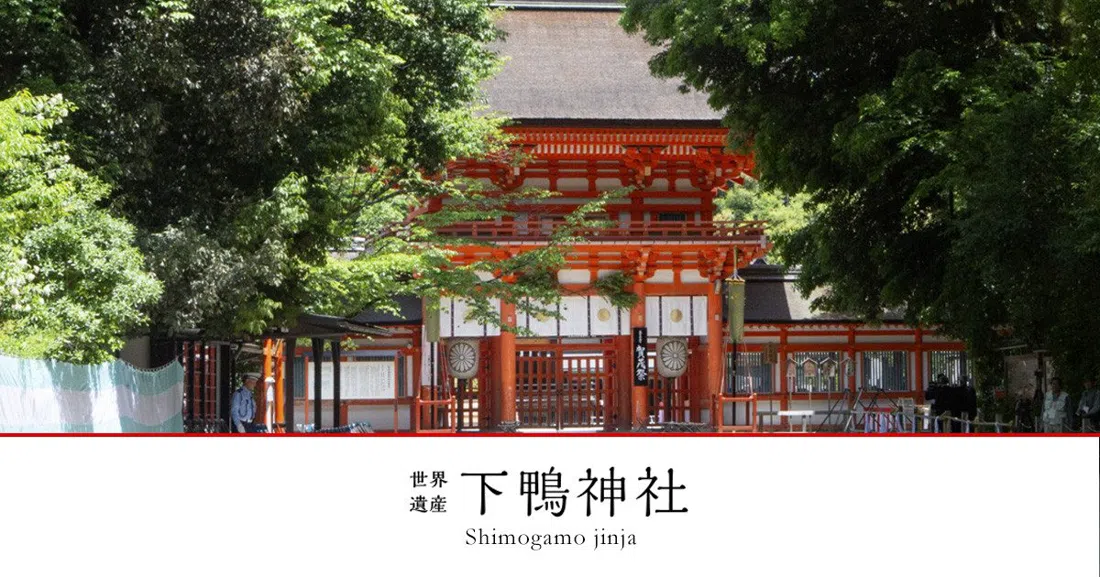
The procession's first act lands at Shimogamo Shrine (Kamo-mioya-jinja) (Shimogamo, inside the Tadasu no Mori woods) at around 11:40, for the Shatō-no-Gi rites. A UNESCO World Heritage site with no closed days, no admission gate and free grounds open 06:30 to 17:00, it handles crowds well, though the Kawai sub-shrine within it shuts earlier at 16:30. Roadside viewing is unreserved, so a large party should split itself along the approach rather than trying to hold one block of pavement. May here is a fortnight rather than a day, which most visitors miss: the yabusame horseback archery runs on the 3rd and Mikage Matsuri on the 12th, both less photographed and considerably easier to stand near than the 15th.
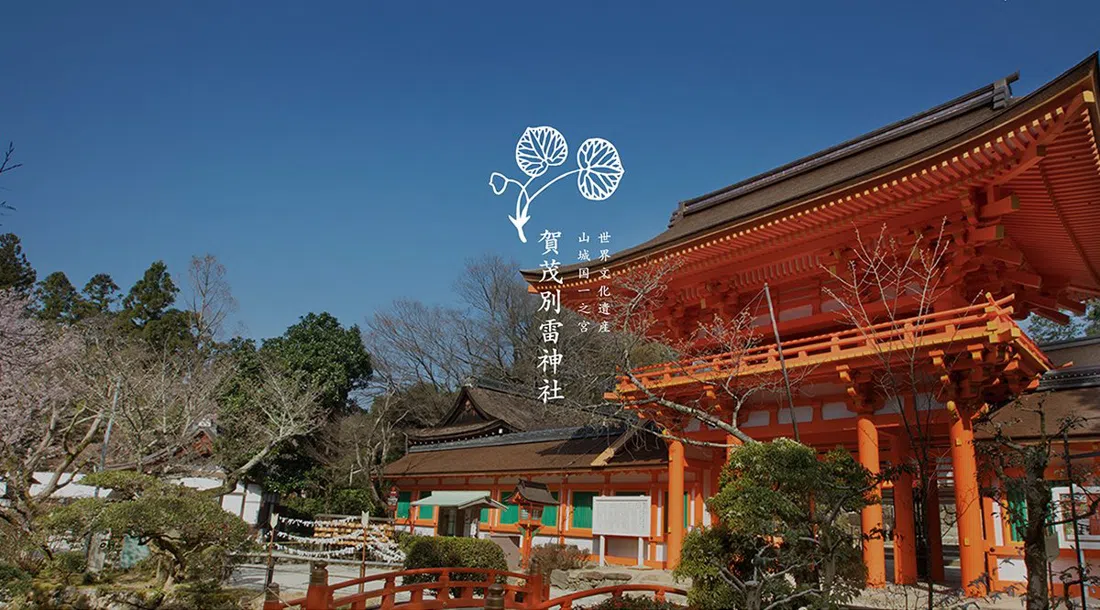
The column finishes around 15:30 at Kamigamo Shrine (Kamo-wakeikazuchi-jinja) (Kamigamo, in the far north of the city), and this is the quieter half of the day: the crowd is dense but calmer than the Shimogamo leg, and the light by then is low and sideways. The grounds are free and unticketed, and the shrine office answers questions on its line from 08:30 to 17:00 if a group needs to check anything in advance. Afterwards, walk out of the gate and along Shake-machi, the lane of surviving Shinto-priest houses set along the stream. It is the oldest festival neighbourhood in Kyoto and almost nobody turns down it. Be clear about what it is, though: the Nishimura House garden is not open to visitors, so this is a walk past old walls and water channels, not a house tour.
July belongs to the merchant blocks west of the river
Gion Matsuri carries the name of the entertainment quarter but is run by the merchant blocks west of the river, by families who have maintained the same float for generations and who open their houses for a few evenings a year. That one fact changes where you spend your July.
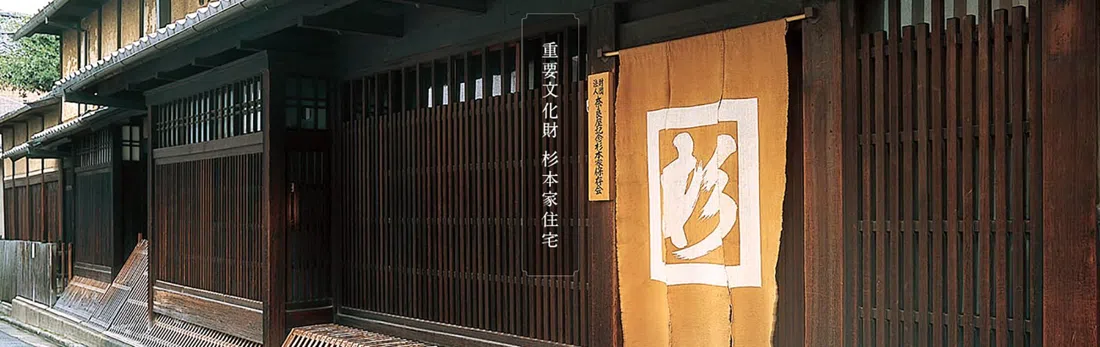
Sugimoto Residence (the hoko-machi, the float blocks of the old merchant quarter) is the way in. It is a wooden townhouse designated an Important Cultural Property, with tatami floors and timed public openings: Friday to Sunday within each season's run, 10:00 to 17:00, last entry 16:00, and a modest admission of roughly ¥1,000 to ¥2,000. The house sits inside the float neighbourhood and takes part in Byobu Matsuri, when families display heirloom screens to the street during the yoiyama evenings. This is the festival seen from inside the household that pays for it. By its nature it is a small-group place: phone or email ahead for anything above about ten people, and go gently on the floors. One honest caveat: the July 2026 opening dates had not been posted when I checked, so confirm on the house's own site before you book flights around it.
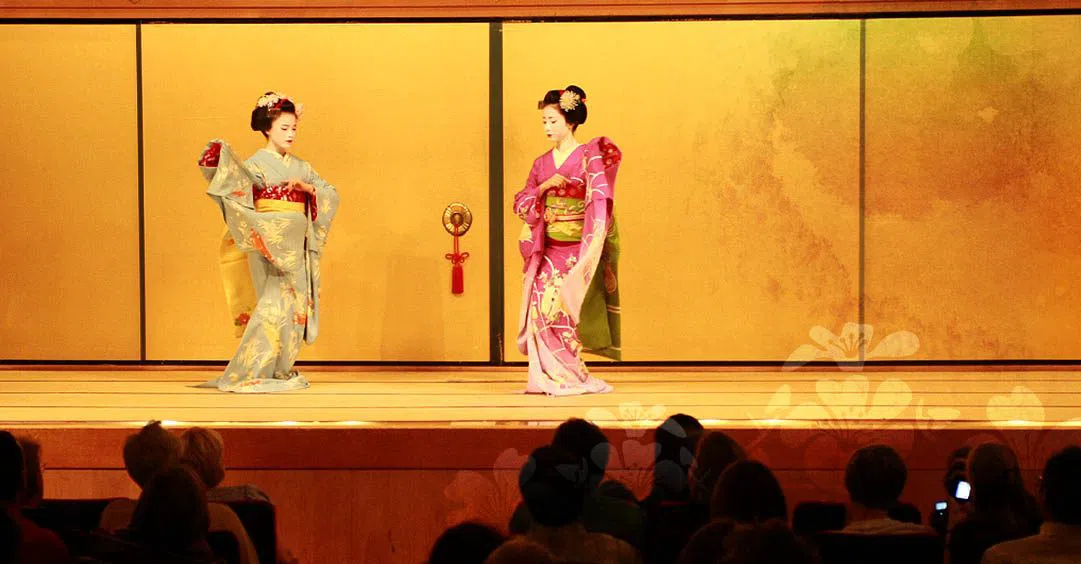
For the Gion district itself, Gion Corner (Yasaka Hall) (Gion, east of the river) does something useful and does not pretend to do more. Shows run at 18:00 and 19:00 daily and last about fifty minutes, with tickets of ¥4,000 to ¥6,000 per adult. It opens daily from mid-March to November, and Fridays to Sundays only from December to mid-March. The format is a sampler (tea, koto, bugaku, kyogen, kyomai) and it is the one reliable way to see maiko dance without an introduction to a teahouse, which is not something a visitor can arrange. Seated and ticketed, it suits groups and is the standard stop for tour parties, which tells you the register. Treat it as the indoor half of a Gion day rather than as a substitute for the festival in the streets.
August lights five fires on the mountains
On the evening of 16 August, five enormous characters and shapes burn on the hills around the city to send the returning dead back. It lasts about half an hour and the valley floor becomes a solid mass of people looking upward.
The better preparation is to go up on any other day. The Daimonji-yama fire beds (eastern hills, trail from behind Ginkaku-ji) are a free public trail, no booking required, about 30 to 45 minutes from the trailhead and roughly 220 metres of climb, fine for a dozen people and less fine in sandals. The hearths are permanent stone beds, and standing among them with the city laid out below makes the whole rite legible in a way that watching the blaze from a riverbank never does. The mountain closes to walkers on and around 16 August while the fire is built and lit, so this is a separate errand from the night itself. Ginkaku-ji charges its own admission if you want the temple too.
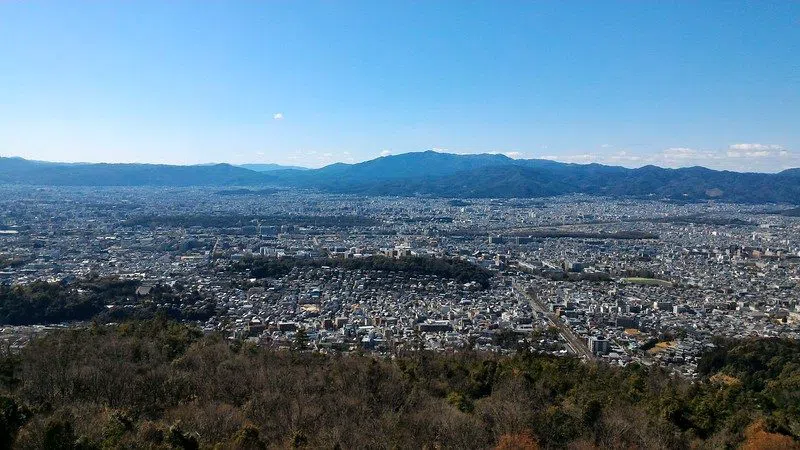
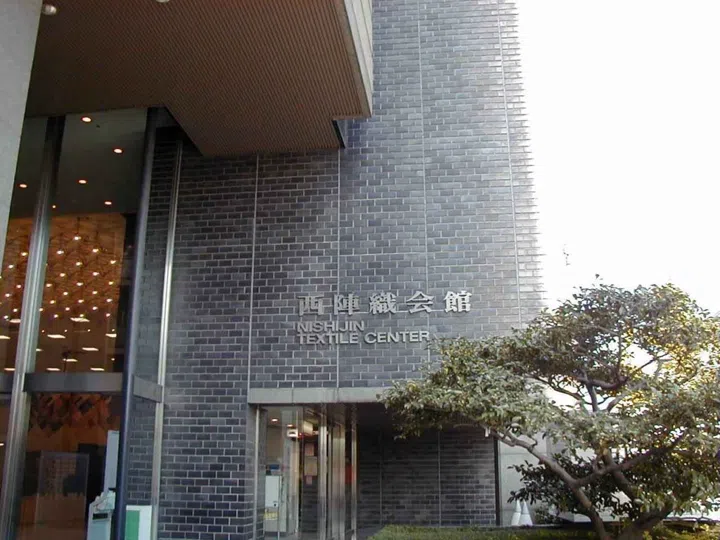
For the night, Funaokayama Park (Nishijin, the old weaving quarter) is the most intelligent choice in the city and the only sensible one for a large party. It is a free, open hilltop park where people spread out across the slope instead of queuing along a river wall, and from one position you see four of the five fires without moving: Daimonji, Myō-Hō, Funagata and Hidari Daimonji, everything but the Toriigata. It sits in a working residential quarter rather than the tourist strip, which also means the walk back is through quiet streets. It is fifteen minutes on foot from Kuramaguchi subway station, or five minutes from the Funaoka-yama bus stop. Go up early with something to sit on; the hill fills from late afternoon, and 2026's Sunday date will not help.
October sends a thousand years past a museum terrace
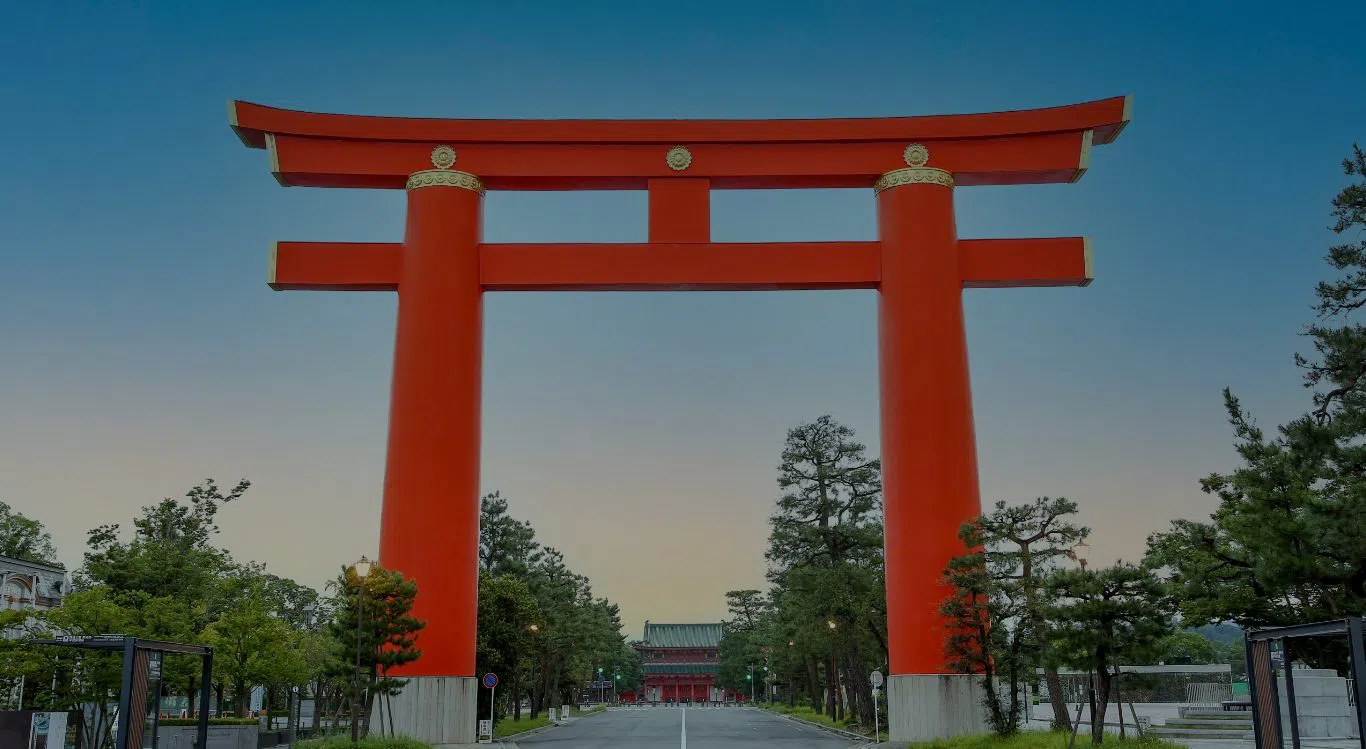
Jidai Matsuri exists for a specific reason: Heian Jingu (Okazaki, the museum district) was founded in 1895, and the festival was invented to honour it. Some two thousand people in period costume walk the city's history backwards, era by era, and the column ends at this shrine at about 14:30.
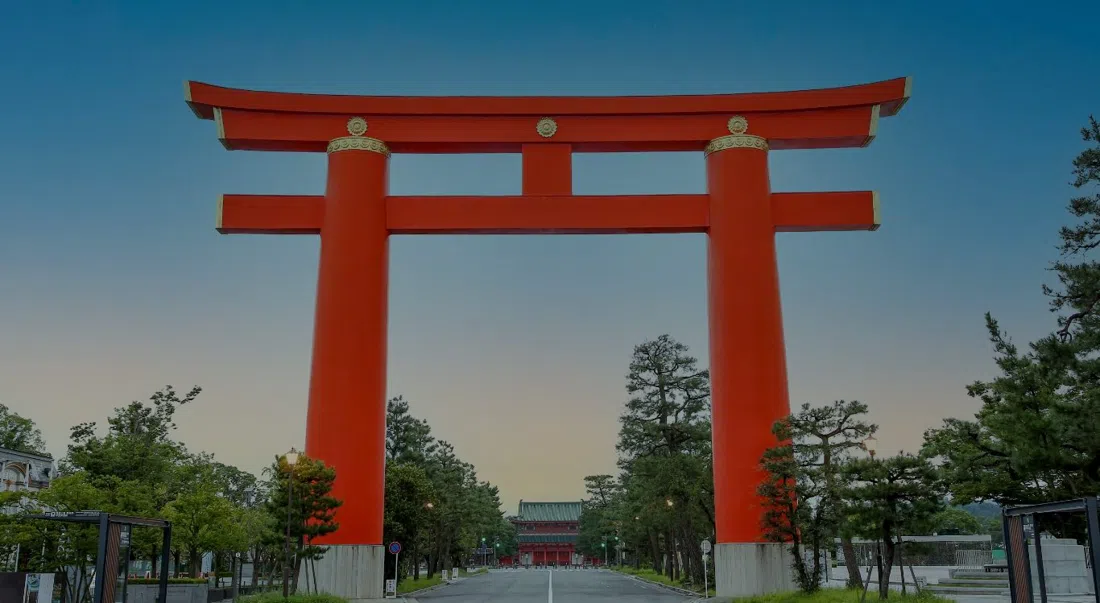
The procession leaves Kyoto Gyoen at noon, so the park gives you the costumes standing still again, but if you only pick one end, pick the shrine end. Standing at the finish means the entire thousand-year parade files past you in correct order, which is the whole point of the thing and is lost if you catch a random slice mid-route. The grounds are free and take unlimited numbers; the Shin-en garden behind costs about ¥600 and has a group rate that handles coach parties. If you want a guaranteed seat, book the paid grandstand tickets well in advance for any group; the free kerbside is first-come and the good edges go early in the morning.
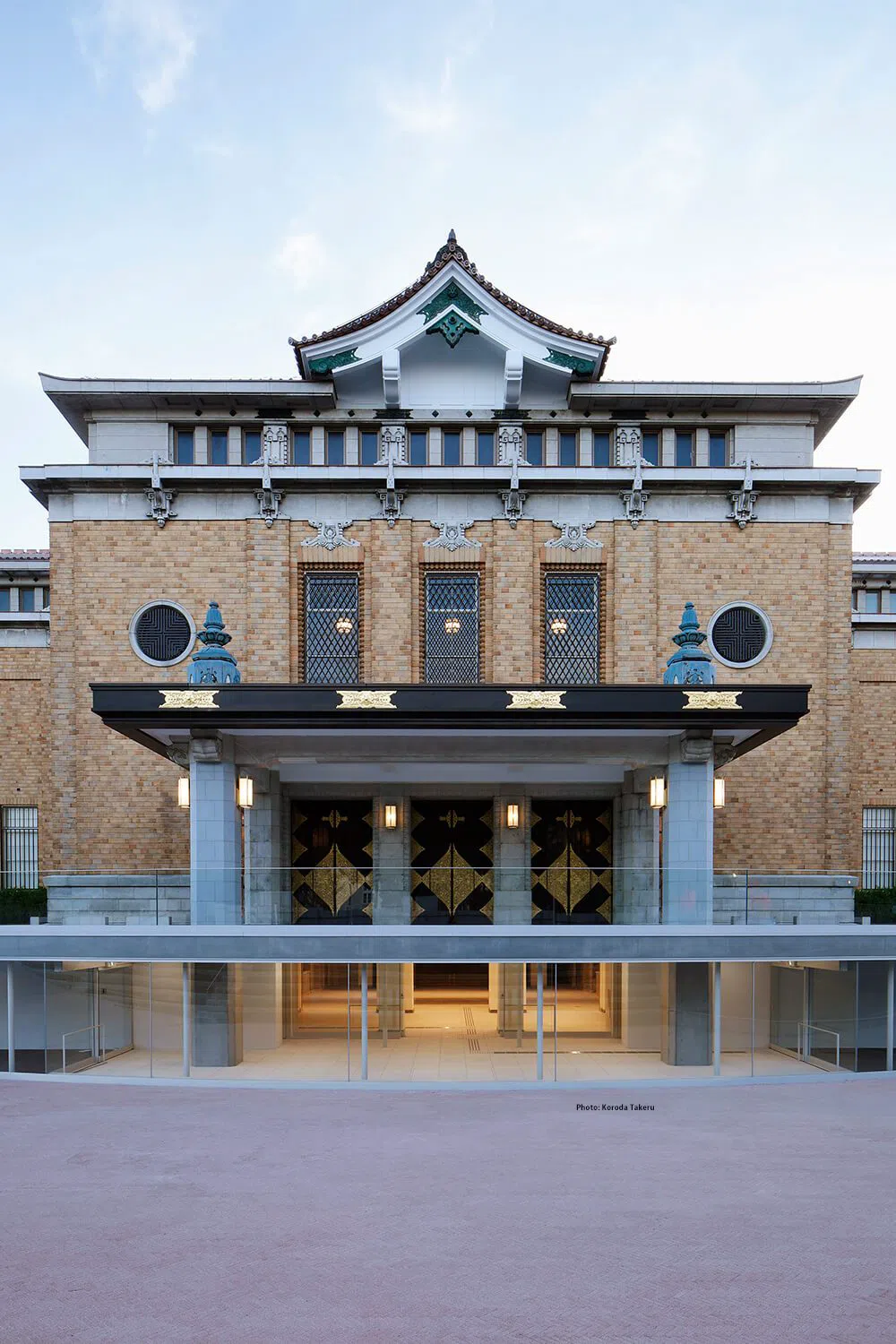
When the pavements are solid, the Kyoto City KYOCERA Museum of Art (Okazaki) is the quiet answer across the road. It is the oldest surviving public art museum in Japan and the anchor of the whole museum district that the parade passes through. Hours are 10:00 to 18:00 with last entry at 17:30, closed Mondays except public holidays, collection entry around ¥730 and an explicit ¥620 rate for parties of twenty or more. Its terrace and the Kyoto Modern Terrace restaurant give you the great torii framed properly and, more importantly on 22 October, somewhere to sit down.
The same evening a mountain lane fills with fire
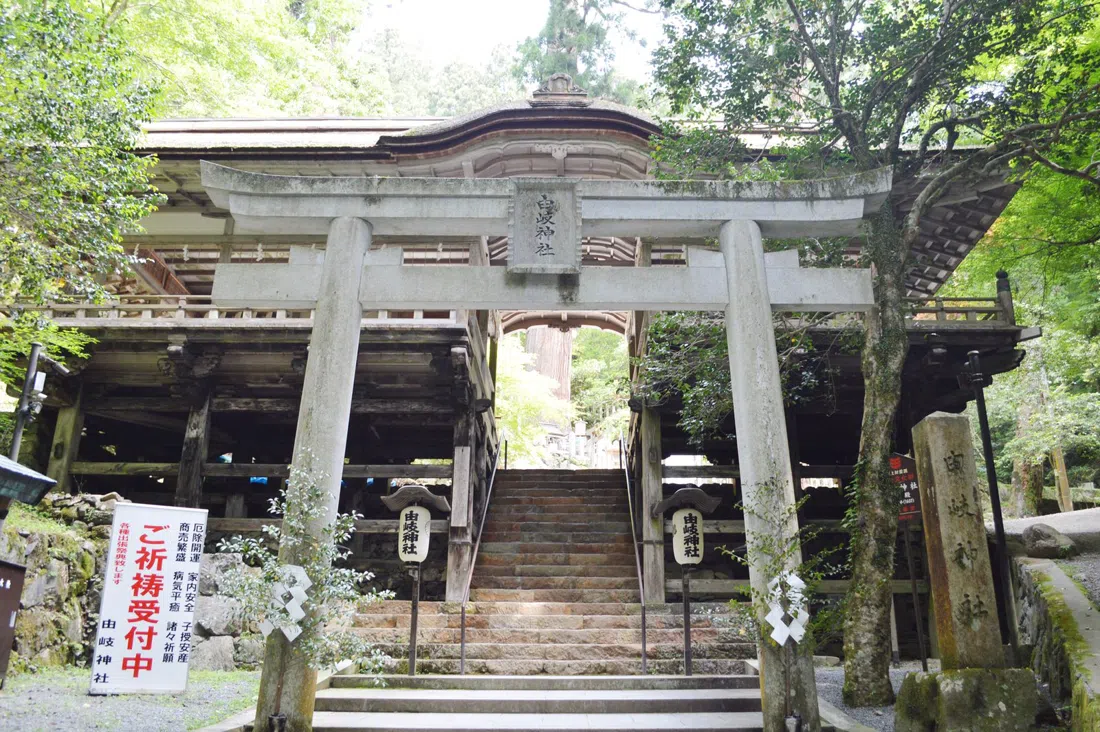
If the parade is Kyoto at its most composed, Kurama no Hi-matsuri is the opposite. It is the rite of Yuki Shrine (Yuki-jinja) (Kurama, on the mountain stairway), re-enacting the torchlit transfer of its deities from the imperial palace in 940 CE, and from 18:00 giant burning torches come down a narrow residential lane past the people watching. It is the most physically alarming of the five and should be approached as such. The site is tiny and on a stairway, so this is a small-group outing only: on the 22nd the lane runs one-way under police control, the shrine office shuts at about 16:30, and the ground above the temple gate is roped off before the mikoshi move, which means a large party will be separated whether it intends to be or not. Watching the festival costs nothing; reaching the shrine itself means the ¥500 Kurama-dera mountain entry.
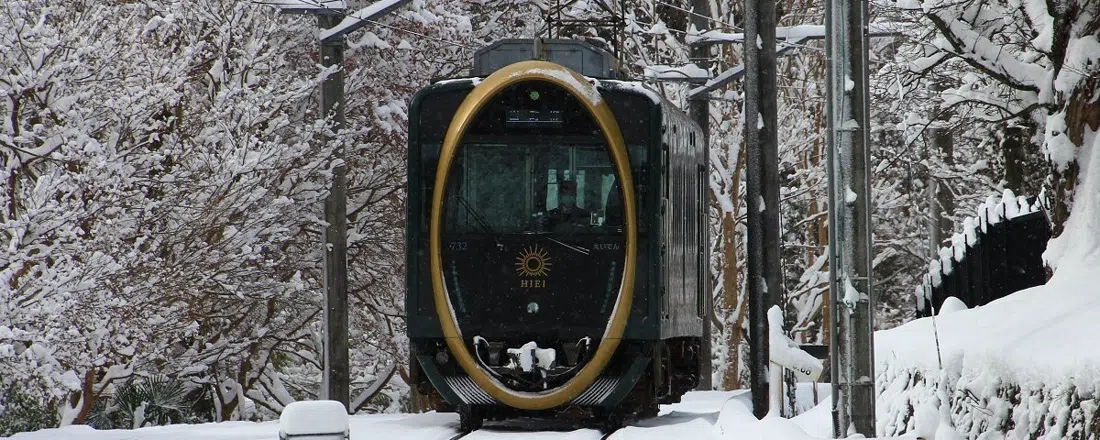
Getting there is part of the festival rather than transport to it. The Eizan Electric Railway (from the Demachiyanagi terminus) runs ¥470 to Kurama in 31 minutes, with no reservations on ordinary services. Off-peak it is a pleasant group journey; on 22 October the trains are severely overloaded in both directions and the last train out is the entire night's logistics problem. Decide your return before you go up, and decide it as a group. The Demachiyanagi end is also the Kamogawa Delta, which is why the Kurama and August fire chapters sit naturally on the same line.
On any ordinary day, continue over the ridge to Kifune Shrine (Kifune-jinja) (Kibune, the far side of the mountain). Head shrine of Japan's water deities, open 06:00 to 20:00 from 1 May to 30 November, free, with no closed days. Its lantern stairway is genuinely narrow, and the shrine asks visitors to arrive by Eizan Railway to Kibuneguchi and Kyoto Bus 33 rather than by car. Take that request seriously, because the valley road cannot absorb traffic. In summer the kawadoko restaurants in the village below set their platforms over the river and will seat groups, which turns the fire-festival mountain into a full and unhurried day.
Money, trains and the shape of the day
None of these five is expensive to attend. Four of the five are free to watch from public ground; the costs are a grandstand seat if you want one, the ¥470 each way to Kurama, the ¥500 mountain entry, a ¥730 museum ticket and whatever you spend on food while standing around. Budget ¥3,000 to ¥5,000 per person for a festival day and you will be comfortable; a Gion Corner ticket roughly doubles that.
Carry cash. Shrine offices, small entries, village restaurants and festival stalls are not reliably card-friendly, and queueing for an ATM in a side street at 17:00 on a festival day is a miserable way to lose an hour. Trains and buses are the only sane way to move on 15 May, 16 August and 22 October. Streets close, buses reroute without much warning, and a taxi will simply sit in the same blockage you are trying to avoid.
Timing matters more than anything else here. Arrive two hours before a procession passes, not twenty minutes; take something to sit on for the hill and the kerb; and pick one end of a route rather than chasing it. Accommodation is the one thing that must be booked far ahead. May and October are the two tightest months in the Kyoto year and the festival dates are the tightest nights within them, so start the Kyoto hotel search months out and stay somewhere on a subway or Eizan line rather than somewhere pretty but stranded. Then put the phone away for the half hour that matters. All five of these rites survived because people kept turning up to them, which is a quieter and better reason to be there than photographs.
Questions
What are the five big festivals in Kyoto and when do they happen?
Aoi Matsuri on 15 May, Gion Matsuri through July with its key evenings mid-month, the Gozan no Okuribi fires on 16 August, then Jidai Matsuri and Kurama no Hi-matsuri sharing 22 October, the parade by day and the torches from 18:00.
Can I see Jidai Matsuri and the Kurama fire festival on the same day?
Yes, but tightly. The parade reaches Heian Jingu at about 14:30 and the Kurama torches start at 18:00, a 31-minute Eizan Railway ride from Demachiyanagi. Trains are severely overloaded in both directions on 22 October, so fix your return plan before you go up.
Where is the best place to watch Aoi Matsuri without a reserved seat?
Kyoto Gyoen National Garden, where the procession forms up and departs at 10:30. It is free and open at any hour, and the grounds are wide enough to stand still and watch the costumes close up before anything moves, which no spot on the route allows.
Where should a group watch the Gozan no Okuribi fires on 16 August?
Funaokayama Park in Nishijin. It is a free open hilltop where people spread out instead of queuing along a riverbank, and four of the five fires are visible from one position: Daimonji, Myō-Hō, Funagata and Hidari Daimonji. Only the Toriigata is hidden. Go up early, since 16 August 2026 falls on a Sunday.
Do I need to book anything in advance for Kyoto's festivals?
Only accommodation, grandstand seats for Jidai Matsuri and visits to small venues. The Sugimoto Residence wants a call or email for parties above about ten people, and its July 2026 dates had not been posted when we checked. Shrine grounds are free and unticketed.
First published on kyotogetaways.com, the Kyoto guide.