New Orleans sits inside a hook of the Mississippi, which is why the oldest streets curve instead of running straight and why a compass will lie to you within three blocks. People here navigate by riverside and lakeside, upriver and downriver, and the moment you borrow that habit the city stops behaving like a maze. Travelling on your own, that is most of the job: always knowing which way the water is, and always knowing how you are getting back.
Learn the water before you learn the streets
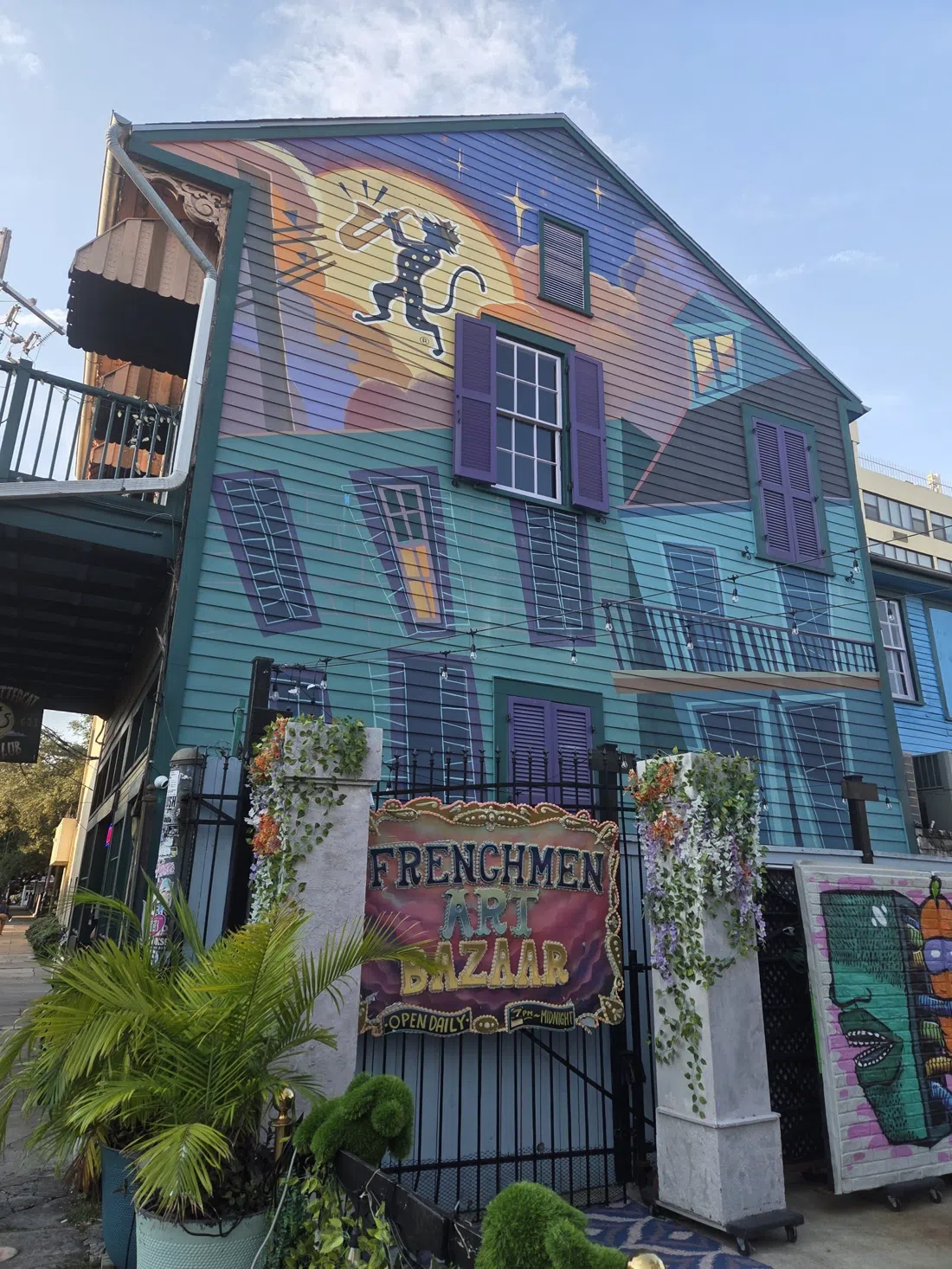
The French Quarter is a small rectangle you can cross end to end in about twenty minutes, bounded upriver by Canal Street and downriver by Esplanade Avenue. Cross Esplanade and you are in the Faubourg Marigny, where Frenchmen Street runs three blocks of music venues at a density no other street in the country matches. That single fact does more for a solo traveller than any itinerary: your evening can be a ten-minute walk from a Quarter hotel, and you can leave any room at any moment without stranding anybody.
The streetcars are the other half of your mental map. The St. Charles line runs upriver through the Garden District and Uptown; the Canal Street line runs from the river out towards Mid-City and the cemeteries; the Riverfront line does short work along the water. They are slow, genuinely slow rather than charmingly slow, so treat them as scenic daytime transport and as a reliable way home before about ten at night, and take a rideshare after that.
One habit worth adopting on day one: pick a single anchor street for each outing and always know how many blocks you are from it. Canal, Decatur, Esplanade, Frenchmen, Magazine, St. Charles. The Quarter's grid is legible, but the streets beyond it bend with the river, and a street you thought ran east will turn under you without warning. For the wider layout of the districts, prices and seasons, the New Orleans guide covers the ground this piece does not.
Jazz rooms that expect people on their own
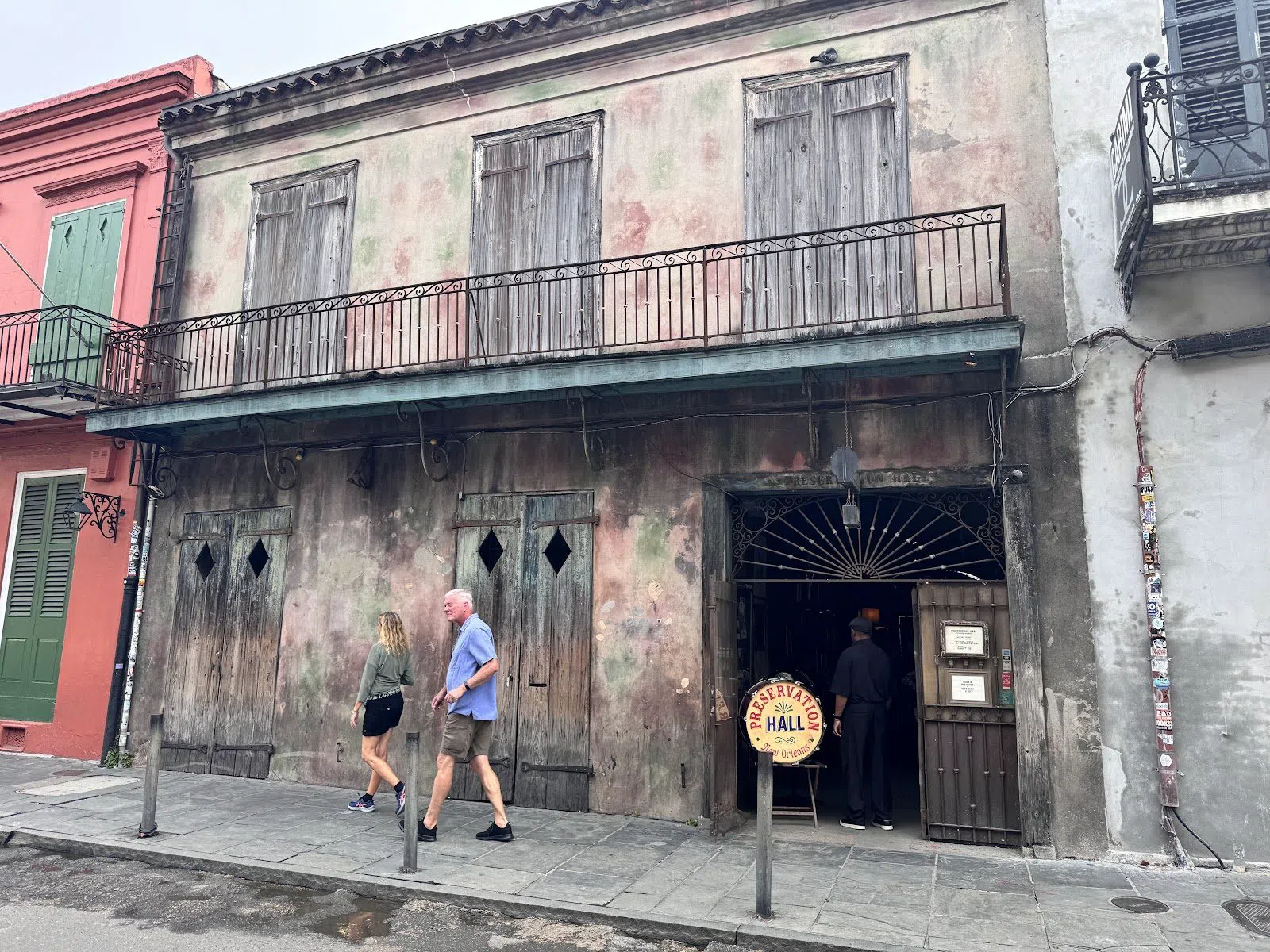
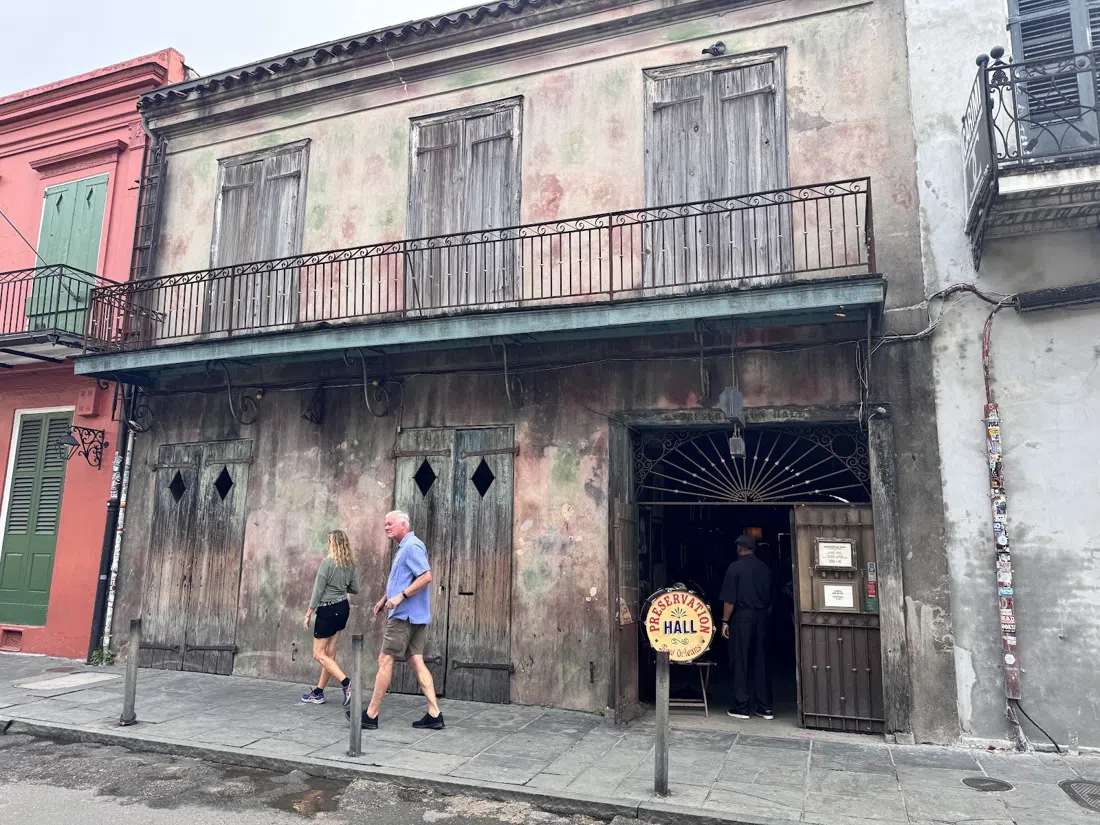
Preservation Hall (French Quarter) is the one to book first, and it suits a single visitor unusually well. Tickets are sold by the set, and the sets are short and early (5:00, 6:15, 7:30 and 8:45pm) in rooms small enough that a party of six gets split across rows anyway. One person slots into whichever gap is left. There is no bar and no service, so nobody is buying you drinks and nobody is talking over the band; you get an hour of traditional jazz and you are back on a lit street well before midnight. Prices are per set and mid-range for what it is.
The Spotted Cat Music Club (Frenchmen Street, Marigny) is the opposite proposition and the lowest-commitment room in the city. There is no cover, no reservations and no door policy: you walk in, from 2pm to 2am, every day. Large groups cannot fit together and are usually broken up, which is why one person always gets in. Arrive before 7pm if you want anywhere to lean, and carry cash: the band works for tips, and you are expected to keep a drink in your hand.
A few doors along, d.b.a. (Frenchmen Street) charges a cover at the door per person on busy nights and nothing earlier in the evening. It has a serious beer and whisky list and a proper bar counter, which makes it the Frenchmen room where a solo drinker can sit down, order something considered and talk to a bartender rather than shout at a stranger. There is no table service to reserve; groups stand. Come before the cover starts and you get the good half of the night for free.
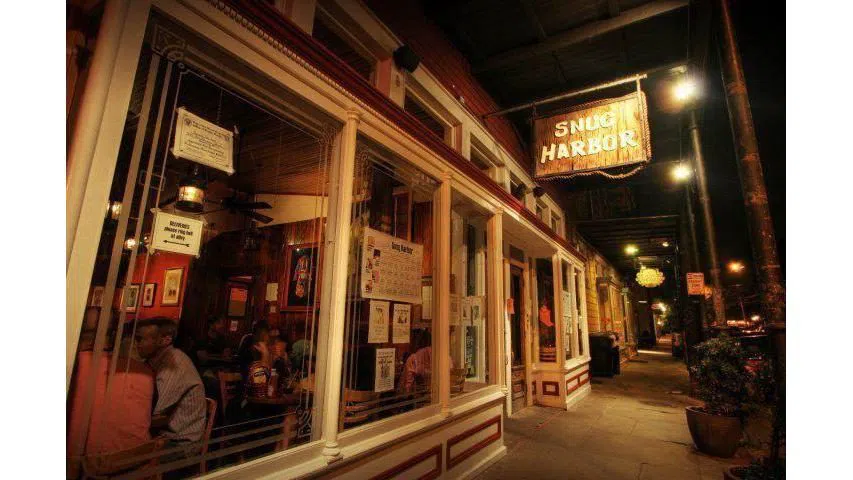
Snug Harbor Jazz Bistro (Frenchmen Street) is the sit-down option. Seating is reserved for the 7:30pm and 9:30pm sets, groups are seated together in the music room, and single seats are the easiest thing on the book, especially for the late set. It is a strict listening room, so nobody talks through the music and nobody expects you to hold a spot. With dining and a ticket it is the priciest evening on this list, and the only Frenchmen venue that works as a full sit-down night rather than a stop on a crawl.
Music worth leaving the Quarter for
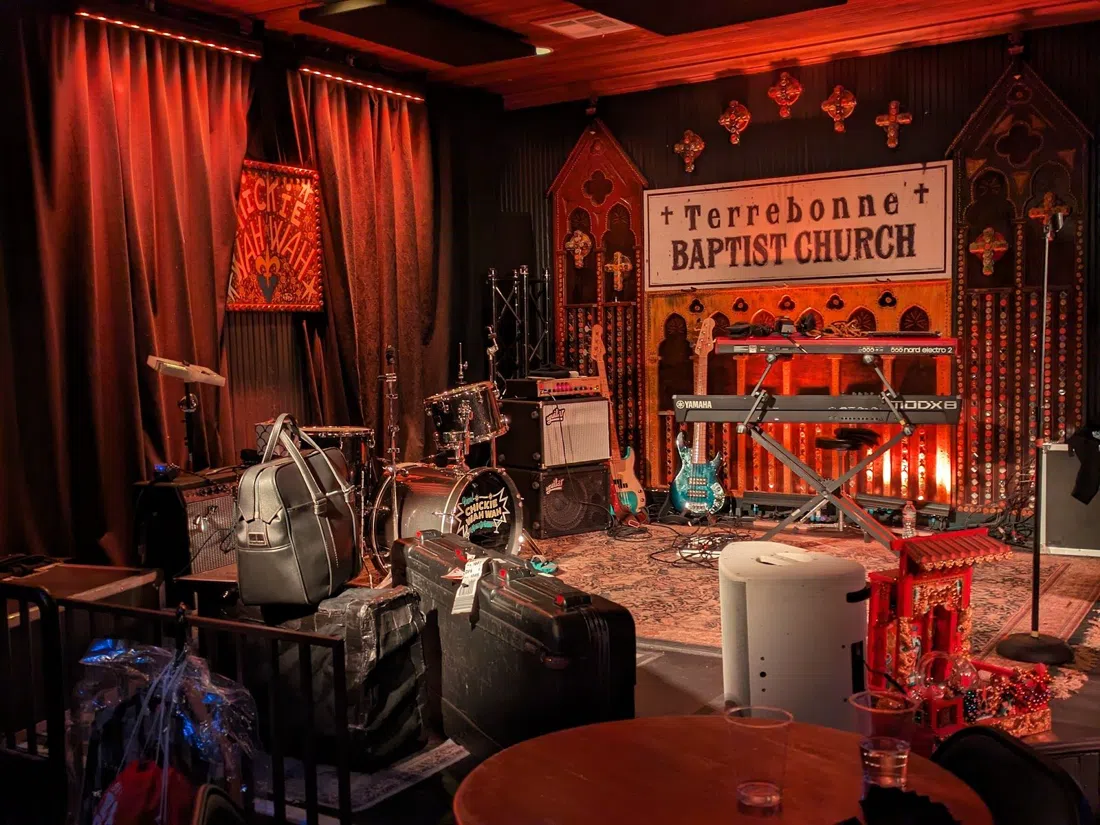
Chickie Wah Wah (Mid-City) is the easiest night out to do alone anywhere in the city, because it solves two problems at once: the room is seated and quiet enough to hear the band, and it sits on the Canal Street streetcar line, so getting there and back needs no planning. It runs 5pm to 2am daily with a modest ticket and barbecue. The room is small, so reserve for anything over four; a single seat is rarely an issue.
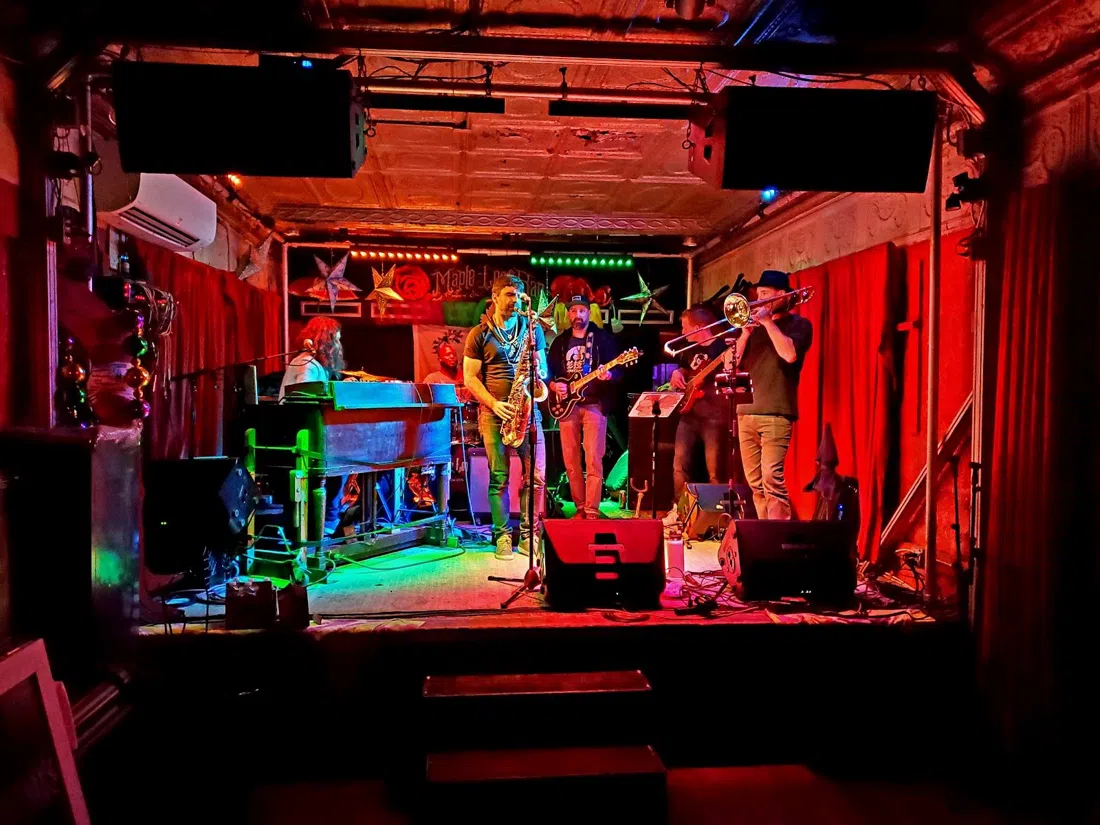
The Maple Leaf Bar (Uptown) is the one that needs thought. Rebirth Brass Band has held the Tuesday residency since 1990, the cover is around $20, and it is first come, first served with very limited seating and no reservations. A single person can slip into gaps a group of five never will. The catch is the clock and the geography: the door is at 10pm, the band starts around 11pm, and you are a long way upriver. Sort your ride back before you go in, not at 1am on the pavement.
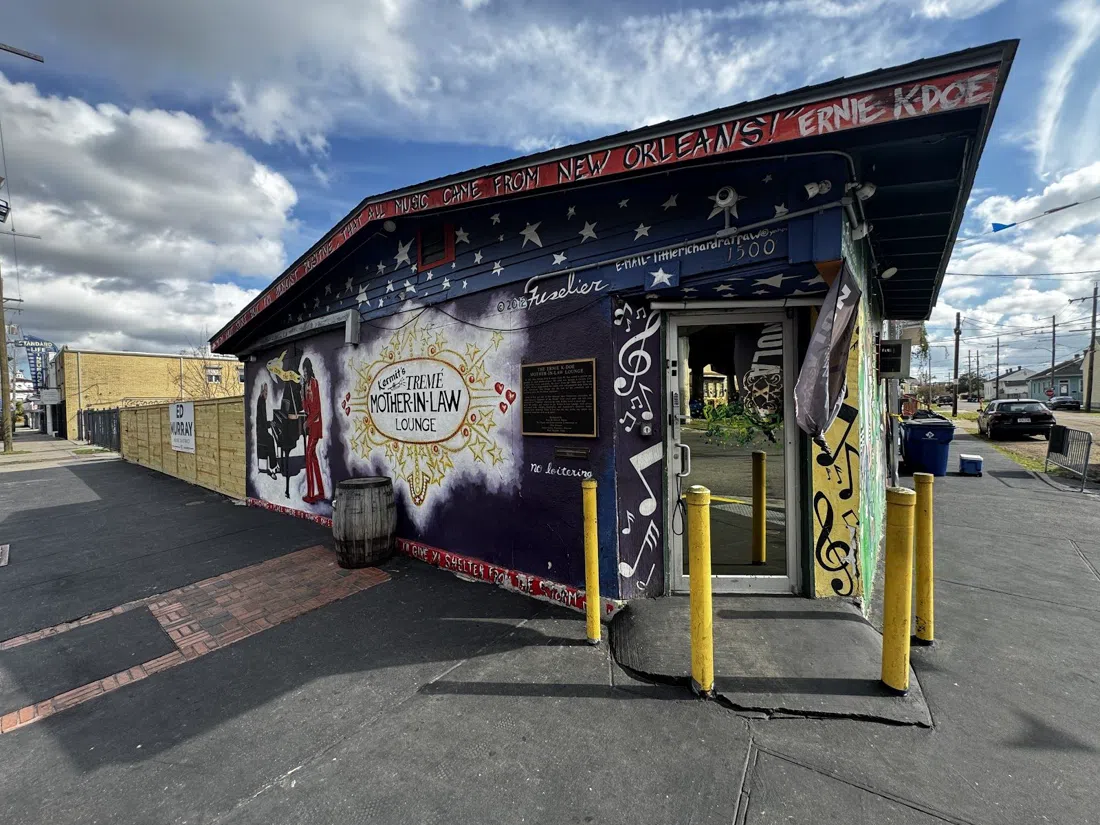
Kermit's Tremé Mother-in-Law Lounge (Tremé) is the most reliable way in this city to end up in conversation as a stranger. Kermit Ruffins plays Saturdays at 6pm, talks to whoever is at the bar, and the room is small, informal and cheap; food is often free or by donation. There are no bookings. Check the days before you go: it closes on Wednesdays and Fridays, and a wasted trip out here is a real one.
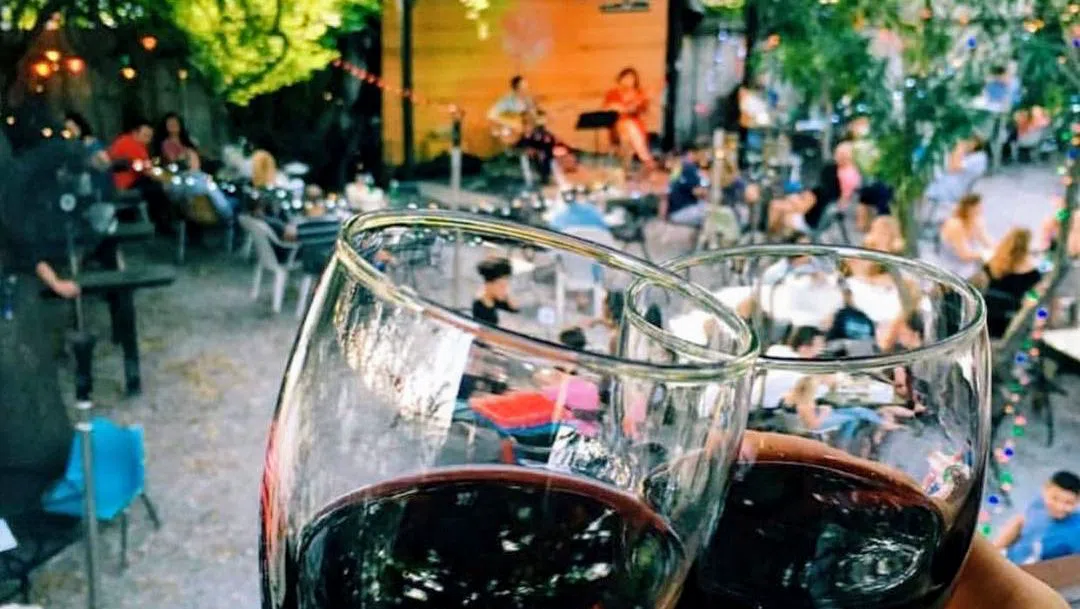
Bacchanal Fine Wine & Spirits (Bywater) is a wine shop with a backyard. You choose a bottle inside, carry it out and find any free chair in the garden, where there is live music nightly and no reservations. Groups are the norm out there, which is the point: shared outdoor seating means a solo arrival ends up at somebody else's table without anyone having to make a thing of it. It opens at 4pm and closes at 10pm most nights, 11pm at weekends, so it is an early-evening plan rather than a late one.
Eating alone without asking for a table for one
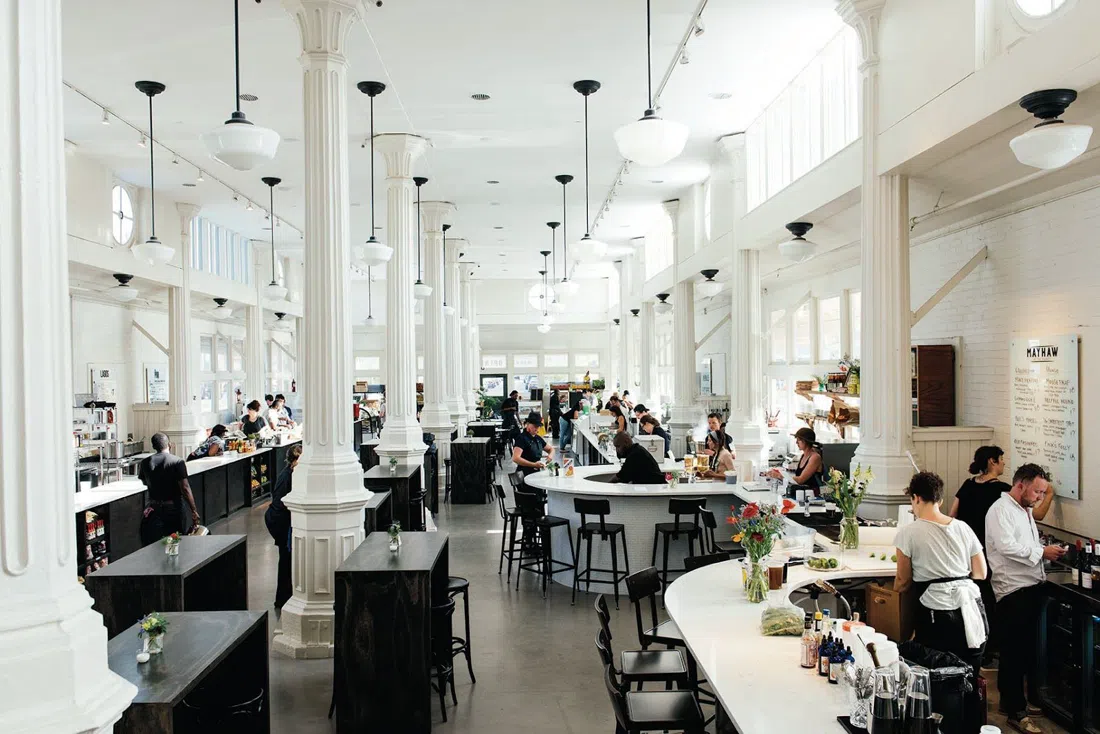
St. Roch Market (St. Roch) removes the problem entirely. It is a communal hall where everyone orders separately at different stalls and shares tables, so a party of nine and a party of one are handled identically. Burmese, Japanese, Egyptian and Italian counters sit under one roof from 7am, which is what you want when you feel like one dish rather than a whole restaurant occasion.
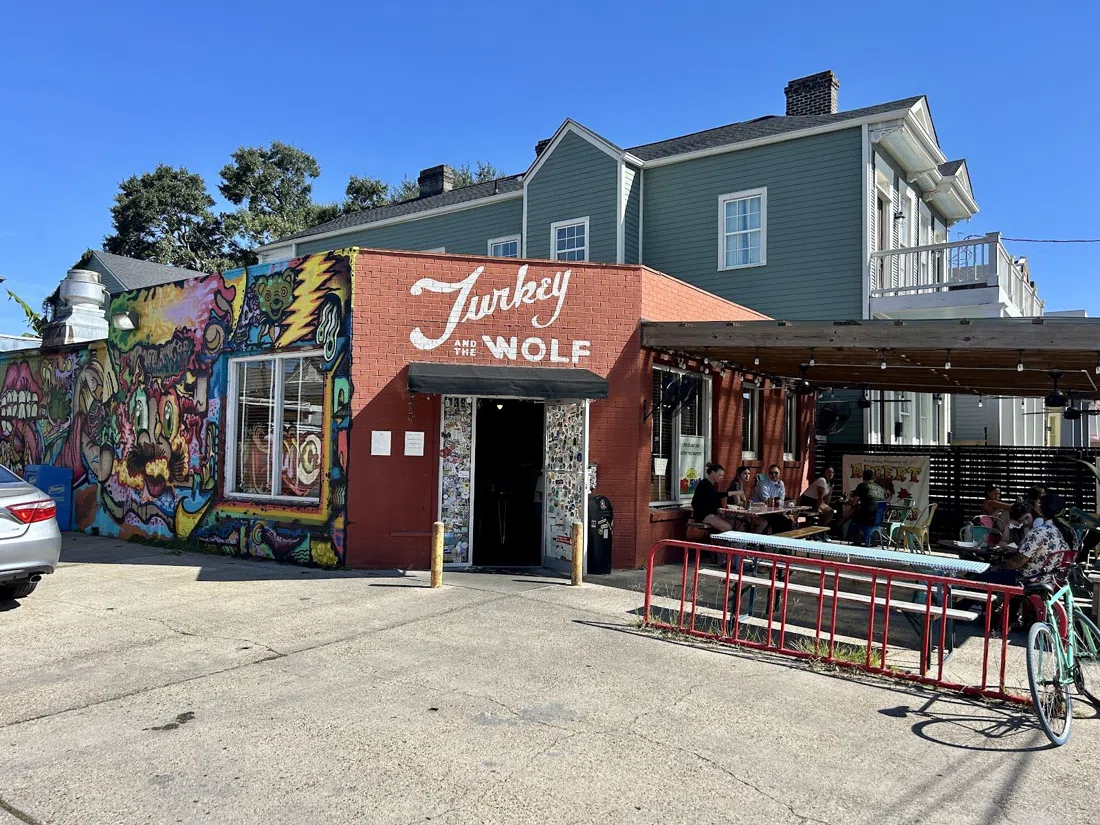
Turkey and the Wolf (Irish Channel) is Michelin-listed and takes no reservations of any size: counter service only, so groups queue like everybody else and single diners get seated fastest. It is lunch-only, 11am to 4pm, Wednesday through Monday, closed Tuesdays. Sandwich prices. The daytime hours make it a good first meal on your own: bright room, no evening pressure, nobody wondering why you are by yourself.
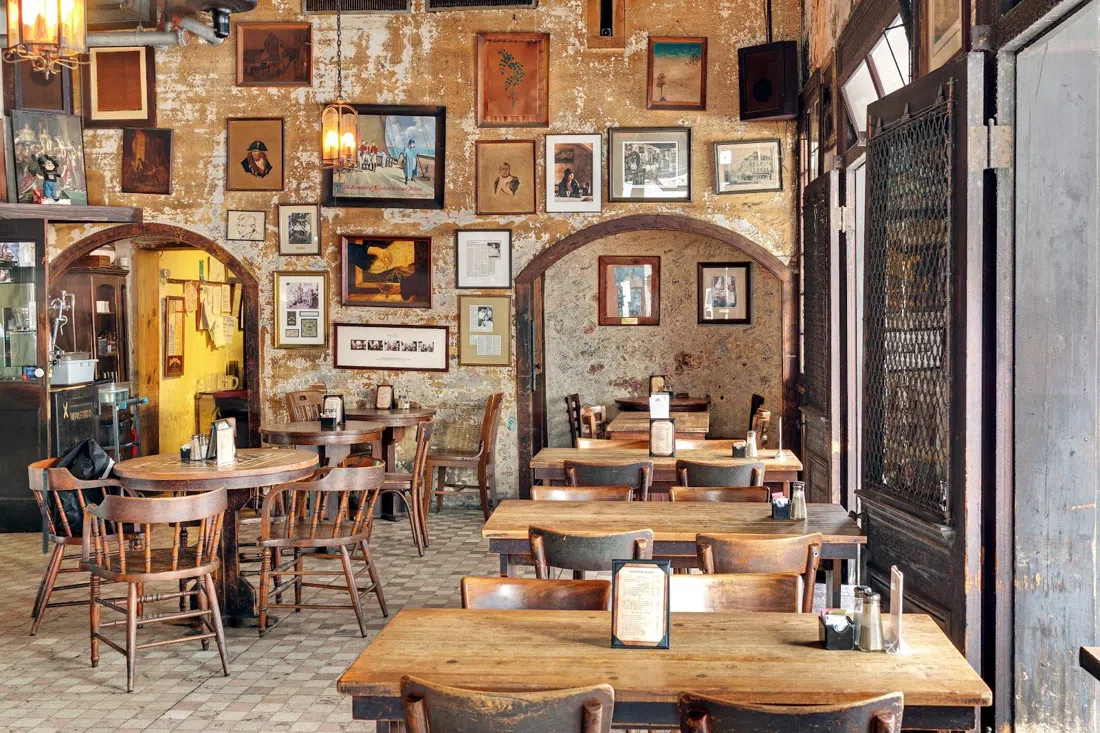
Napoleon House (French Quarter) is the afternoon anchor. Walk-ins only, no reservations, open 11am to 10pm seven days a week; the courtyard swallows groups and the bar counter is where a lone visitor sits. Order a Pimm's Cup and a muffuletta and read something. The building has been standing since the early nineteenth century, and drinking alone at that bar in the middle of the day is an entirely normal thing to do, which is not true of every historic bar in this city.
Daylight, rain and the hours before the music
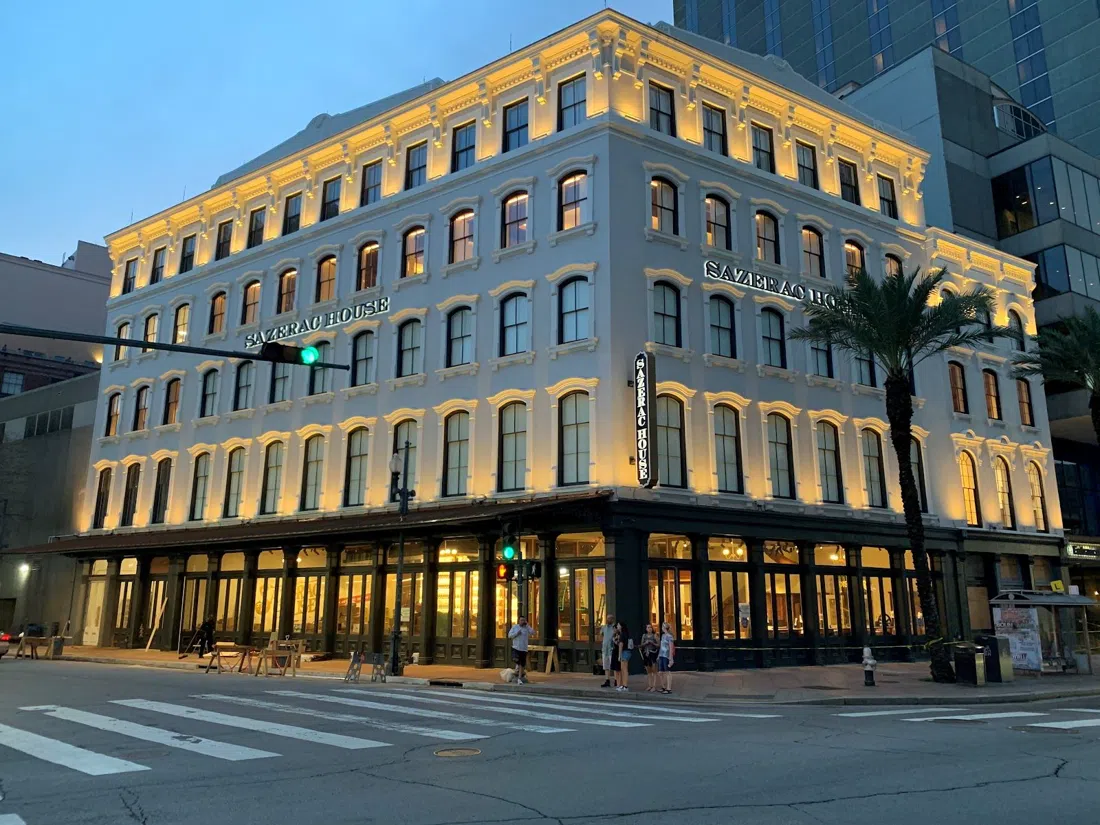
The Sazerac House (French Quarter, on Canal Street) is free, and it is the best-value hour in New Orleans. Three floors on the history of the Sazerac and Peychaud's bitters, complimentary tastings, 21+ only, open 11am to 6pm daily. Tours are timed and run every 20 minutes with limited space, so book ahead: groups must reserve, and single spots are usually available same-day. Do this early in your trip, because it teaches you what to order for the rest of it.
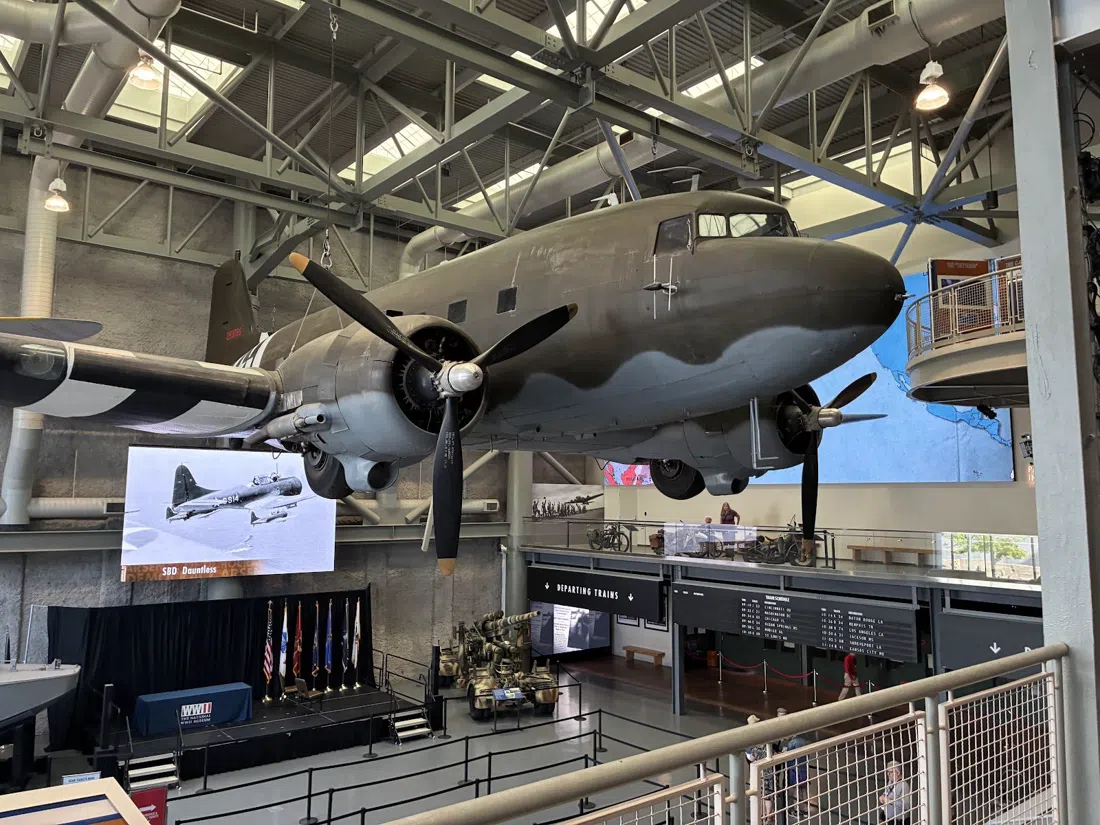
The National WWII Museum (Warehouse District) is the standard answer when the rain comes in, and it is here rather than anywhere else because the landing craft that mattered were designed and built in this city. Open 9am to 5pm daily, general admission is the most expensive ticket in this article, with a $9 film add-on or a $12 combo. The campus is large enough that coach parties disappear into it; on your own you can spend a full day without ever feeling herded.
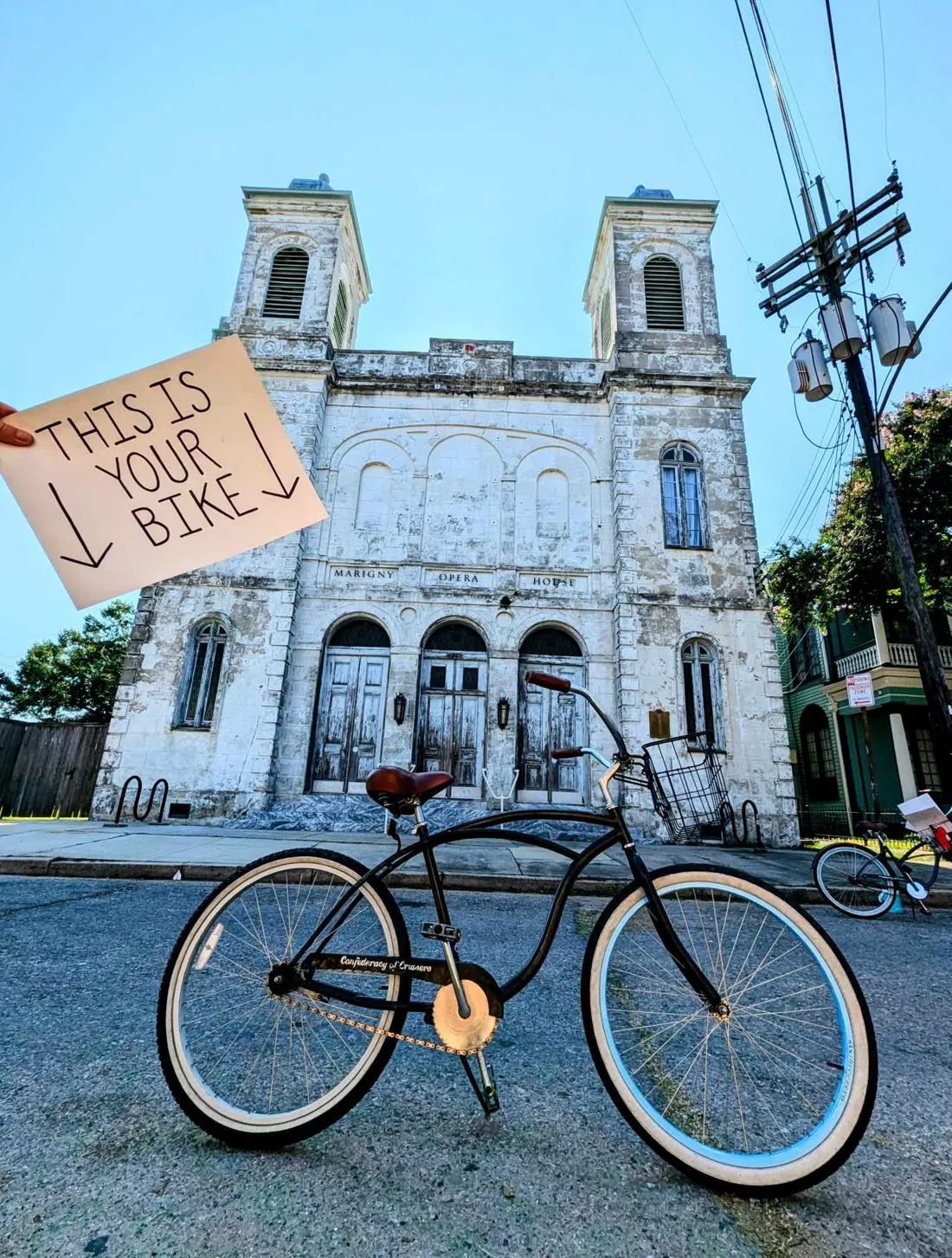
A Street Tour Named Desire / Confederacy of Cruisers (Marigny and the Creole districts) is worth doing on your first full day rather than your last. The name matters when you search: this is the rebranded Confederacy of Cruisers, and searching the old name still gets you there. Tours are reservation-only, small, roughly three hours and $55 to $99 per person; solo riders join scheduled departures alongside other travellers. The route is flat and runs through the Creole neighbourhoods, and it is the fastest way to learn which streets connect to which. That is the knowledge that stops you getting turned around at night.
Kayak-iti-Yat (Bayou St John, Mid-City) puts you on water inside the city rather than on a coach out to a swamp. Reservation only, six days a week year-round, closed Tuesdays; small guided groups, no experience needed, and you are back in town for the afternoon. Bayou St John was the portage route that explains why the city was founded where it was, which makes it a more useful half-day than it first sounds.

A bed that comes with other people
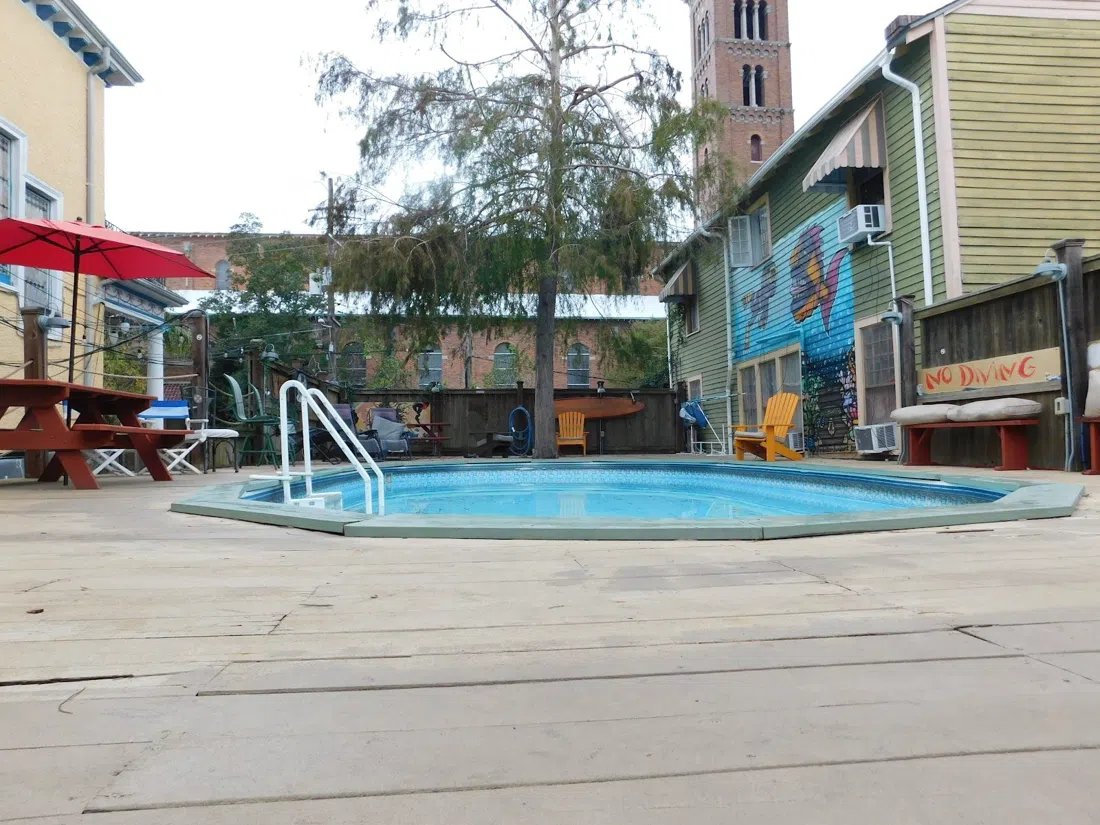
India House Hostel (Mid-City) is the practical fix for arriving alone and knowing nobody. It has male, female and mixed dorms plus private rooms, beds from around $29, and it sits on the Canal Street streetcar line minutes from the Quarter, the same line as Chickie Wah Wah, which makes a music night trivially easy. The weekly courtyard events and local bands are open to all guests, and that courtyard does more social work in an evening than a week of trying to talk to strangers in bars.
If you would rather have a door that locks and a room to retreat to, stay in the Quarter or just upriver of it and walk everything; compare rates and locations through the New Orleans hotel search. The trade-off is straightforward: the hostel gives you people, the hotel gives you quiet, and both put you inside walking distance of most of this article.
Practicalities worth sorting before you land
Streetcar and bus fares are cheap, and the fareboxes do not give change, so keep small bills or use the transit app. After about ten at night, use rideshare rather than the streetcar, particularly coming back from Uptown or the Bywater. The Quarter-to-Frenchmen walk down Decatur and across Esplanade is short and busy well into the night; the walk out to Bacchanal or St. Roch is longer, darker and better done by car after sunset.
Carry cash. The no-cover rooms run on tips to the band, Kermit's food is often donation-based, and a $20 cover at a door is easier in notes than in a queue with a card reader.
Music here starts earlier than you expect. Preservation Hall's first set is at 5pm, Kermit plays at 6pm on Saturdays, and Bacchanal shuts at 10pm on weeknights. Only the Maple Leaf really demands a late night. Watch the closures too: Turkey and the Wolf and Kayak-iti-Yat are shut on Tuesdays, Kermit's on Wednesdays and Fridays, and Tuesday is the one night Rebirth plays Uptown.
A day at the free and cheap end (Sazerac House, a sandwich counter, St. Roch Market, the Spotted Cat with tips) runs about $60 to $80. Add a ticketed set, a tour and a proper seated dinner and you are nearer $200. Book Preservation Hall, Snug Harbor, the Sazerac House tour and the bike or kayak tour in advance; everything else on this list you can walk into, which is the advantage of arriving as one person.
Questions
Can I walk between the French Quarter and Frenchmen Street on my own at night?
Yes. It is a short, busy walk down Decatur and across Esplanade Avenue, and it stays populated well into the early hours. The longer, darker walks need more thought: out to Bacchanal in the Bywater or St. Roch Market, and anything Uptown around the Maple Leaf Bar. For those, take a rideshare after dark and arrange the return before you go in.
Where can I go alone and actually end up talking to people?
Bacchanal is the easiest, because shared garden tables and no reservations mean solo arrivals end up sitting with other people by default. Kermit's Tremé Mother-in-Law Lounge on a Saturday at 6pm is the most reliable, since Kermit Ruffins talks to whoever is at the bar. The bar counter at d.b.a. works if you would rather talk to one bartender than a table, and India House Hostel's courtyard events do the job without you having to try.
What do I need to book in advance?
Reservation-only: Preservation Hall (ticketed per set), Snug Harbor (reserved seating for the 7:30 and 9:30pm sets), the free Sazerac House tour (timed, every 20 minutes, limited space) and both tour operators, A Street Tour Named Desire and Kayak-iti-Yat. Single spots are usually the easiest to get. The Spotted Cat, d.b.a., the Maple Leaf, Napoleon House and Turkey and the Wolf are all walk-in.
Which nights are the ones to plan around?
Tuesday is Rebirth Brass Band at the Maple Leaf Bar, with a 10pm door and an 11pm start, though Turkey and the Wolf and Kayak-iti-Yat are both closed that day. Saturday at 6pm is Kermit Ruffins in Tremé, but the lounge closes Wednesdays and Fridays. Everything else on this list runs daily or near enough.
How much cash should I carry, and what does a day cost?
Carry notes: the no-cover rooms run on tips to the band, food at Kermit's is often free or by donation, and the Maple Leaf's roughly $20 cover is collected at the door. A cheap day (Sazerac House, a sandwich counter, St. Roch Market and the Spotted Cat) comes to about $60 to $80. A ticketed set, a $55 to $99 tour and a seated dinner at Snug Harbor puts you closer to $200.
First published on neworleansguides.com, the New Orleans guide.