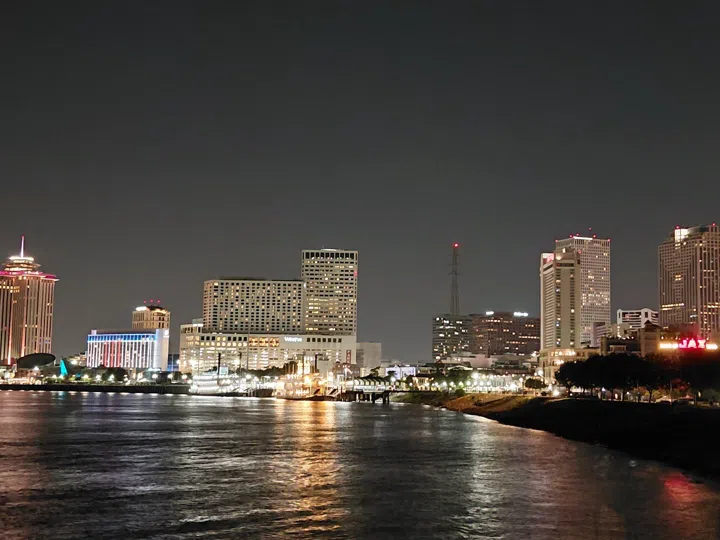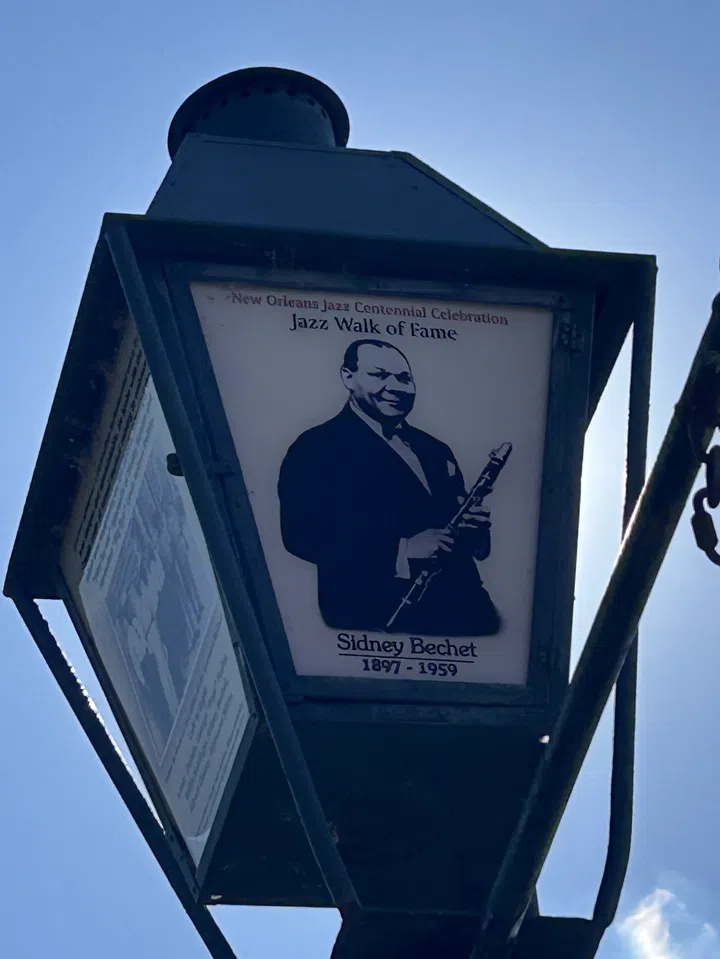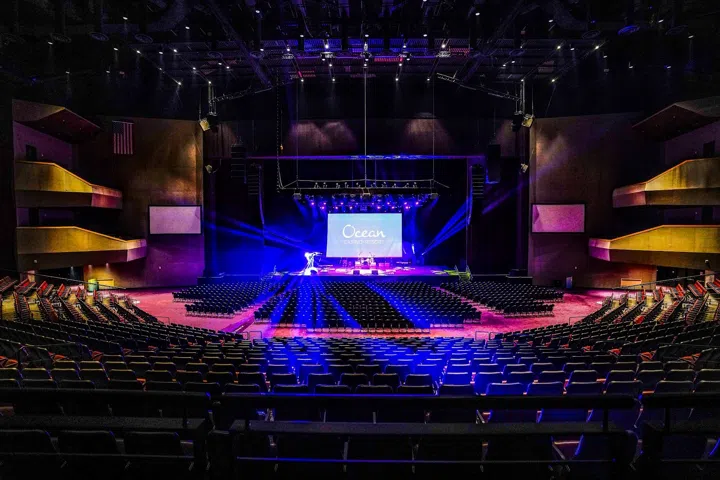
Lafayette Square sits four blocks from the edge of the French Quarter, a rectangle of live oaks and worn grass wedged between the federal courthouse and the office towers of the Central Business District. For three days each October two stages face each other across it, close enough that you can hear both from the middle of the lawn, and the smoke off the food vendors drifts down Camp Street until the whole block smells like a pit yard. Nothing about the weekend is complicated, but several things will catch you out, and almost all of them are questions of timing.
Three days on the grass at 602 St. Charles
Crescent City Blues & BBQ Festival (Lafayette Square, Central Business District) is free, and free in the uncomplicated sense: no ticket, no wristband, no bag drop queue at a gate. You walk on from St. Charles Avenue or from Camp Street and you are in, which also means a group of any size can turn up together without anyone coordinating a booking. Friday 9 October 2026 is a short evening, 5.30 to 8.30pm. Saturday 10 and Sunday 11 October are full days, 11am to 8.30pm each.
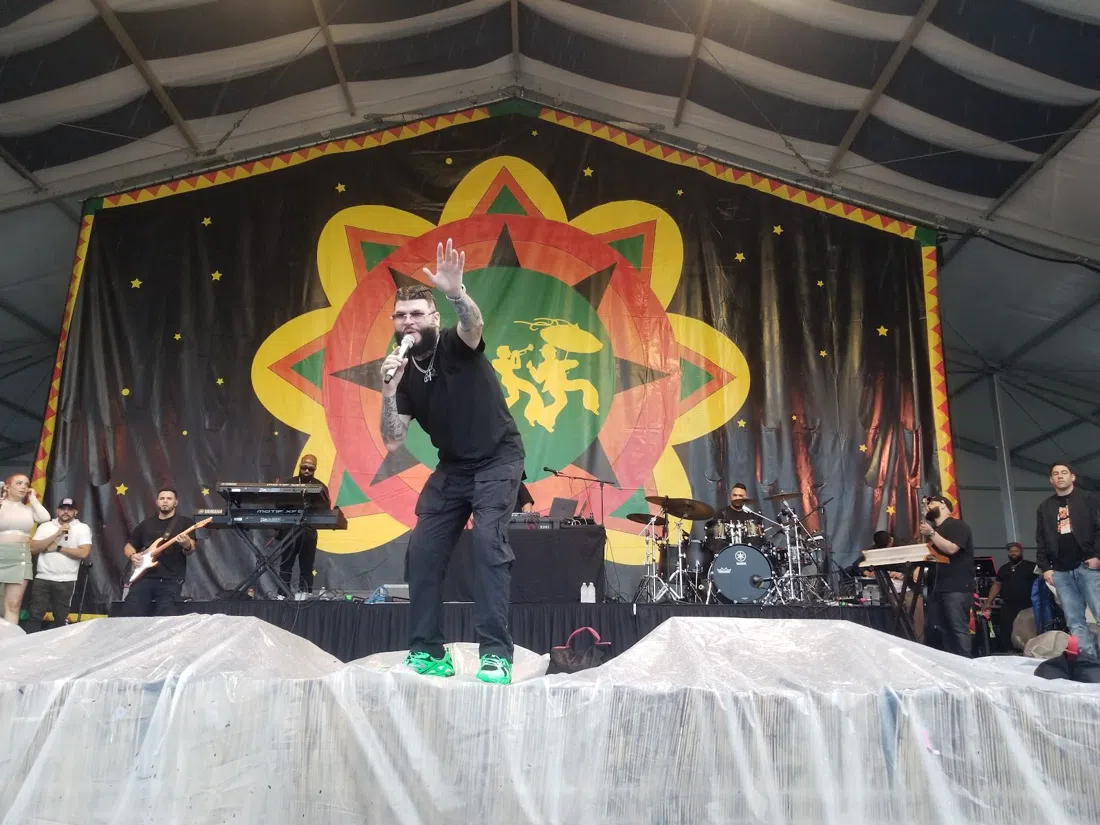
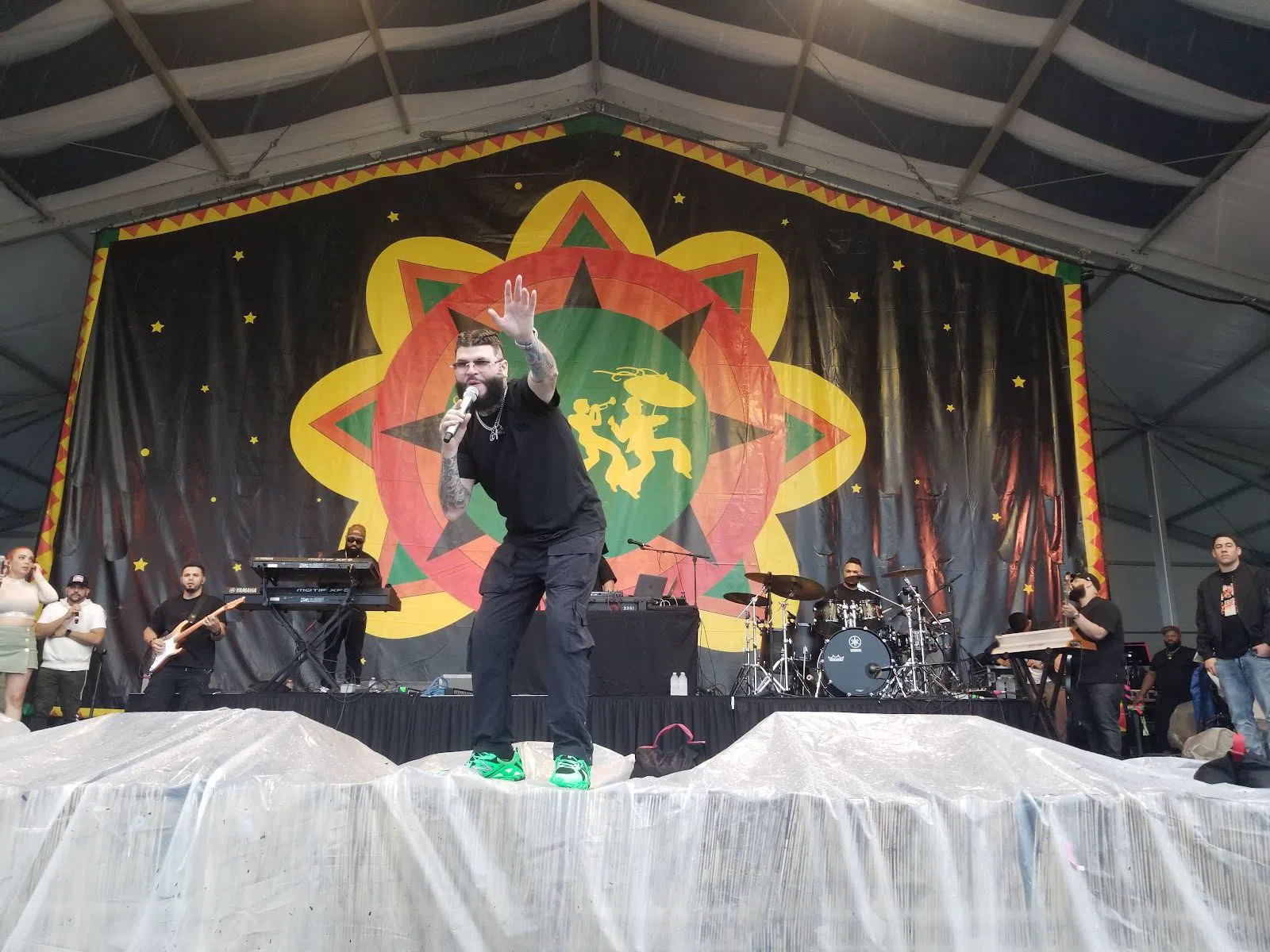
Two stages carry the weekend, named for the streets they back onto (the Camp Street stage and the St. Charles Ave. stage), and they alternate, so there is rarely a gap with nothing playing. The 2026 bill runs Booker T. Jones and Samantha Fish alongside Ruthie Foster, Cedric Burnside, Little Freddie King and George Porter Jr., which is a genuinely wide read of what the word blues covers here: organ-led soul at one end, raw hill-country guitar in the middle, and at the other end the funk bass that this city has never played as an import. Burnside and Little Freddie King are reason enough to arrive in the morning rather than drifting in for the headliner.
Two site rules matter. There is a 75-foot no-chairs perimeter at both stages, so the ground closest to the music is standing only and your chairs and blanket go behind that line. On Saturday that back-of-perimeter grass is claimed early, and a group of eight should send someone ahead by mid-morning rather than negotiating for space at four in the afternoon. And no coolers, no outside food or drink, and no recording of sets, the last of which is enforced more seriously than visitors expect. Vendor plates run roughly $12 to $20, which is honest festival pricing rather than a captive-audience markup.
The VIP three-day experience is around $315 and buys up-front seating and a private lounge. For two people spending one afternoon on the lawn it is money you do not need to spend. For a group of six who want a fixed base, somewhere to sit down between sets and a bathroom that is not a queue, it stops looking extravagant somewhere on the second day.
Eating inside the walking radius
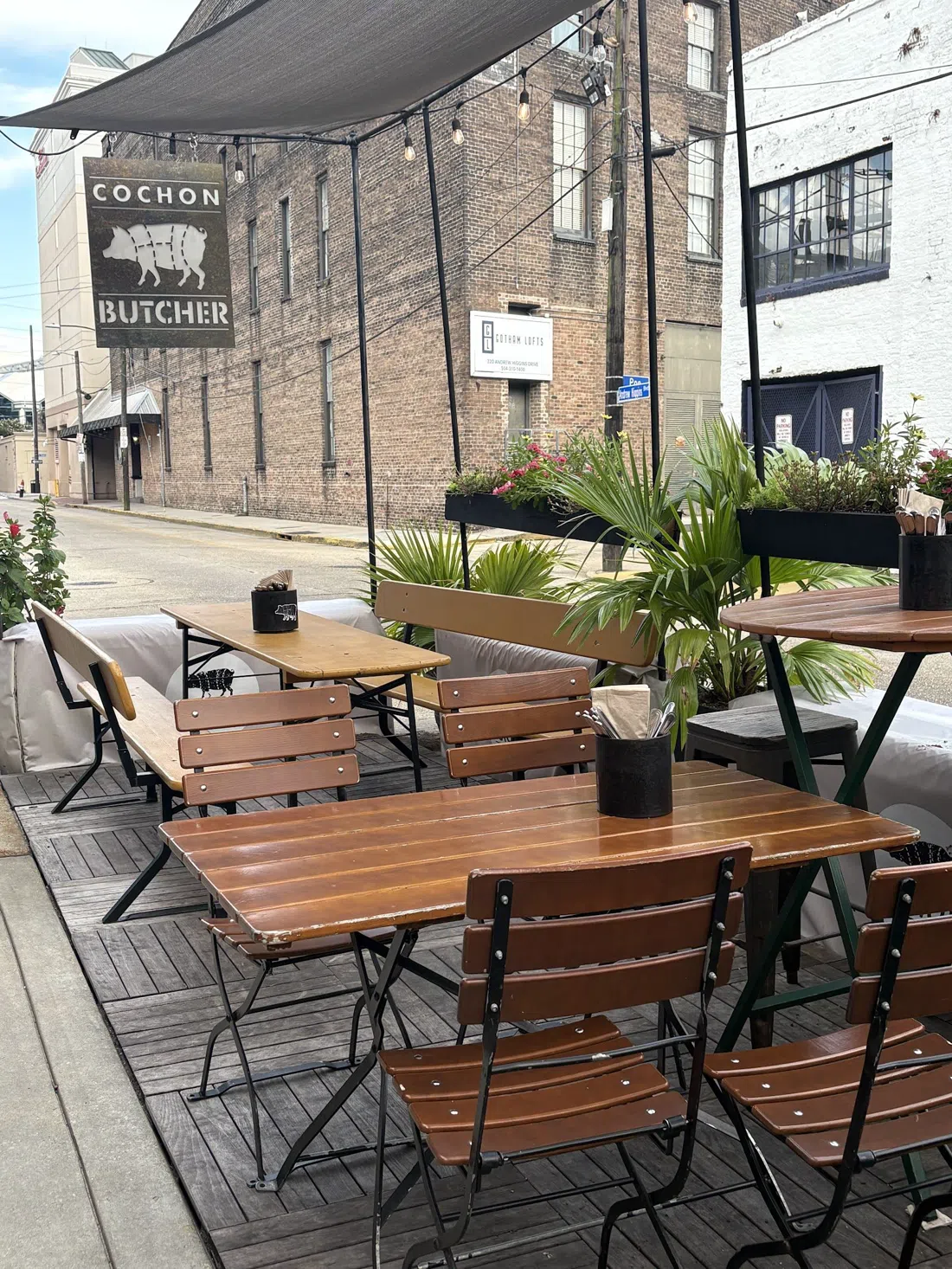
Cochon Butcher (Warehouse District) is a six-minute walk from the square and the smartest thing you can eat before the stages open. It is a butcher shop with a sandwich counter attached, MICHELIN Guide-listed, and the house-cured pork is what you come for. It is not barbecue, which matters when you are about to spend three days eating smoke. Sandwiches land around $15 to $22. It is walk-in only with no reservations at lunch or dinner, which works fine for four to six people and becomes genuinely awkward at a dozen during the midday rush. A large group should either go early, go late, or send two people to collect an order and eat it on the grass.
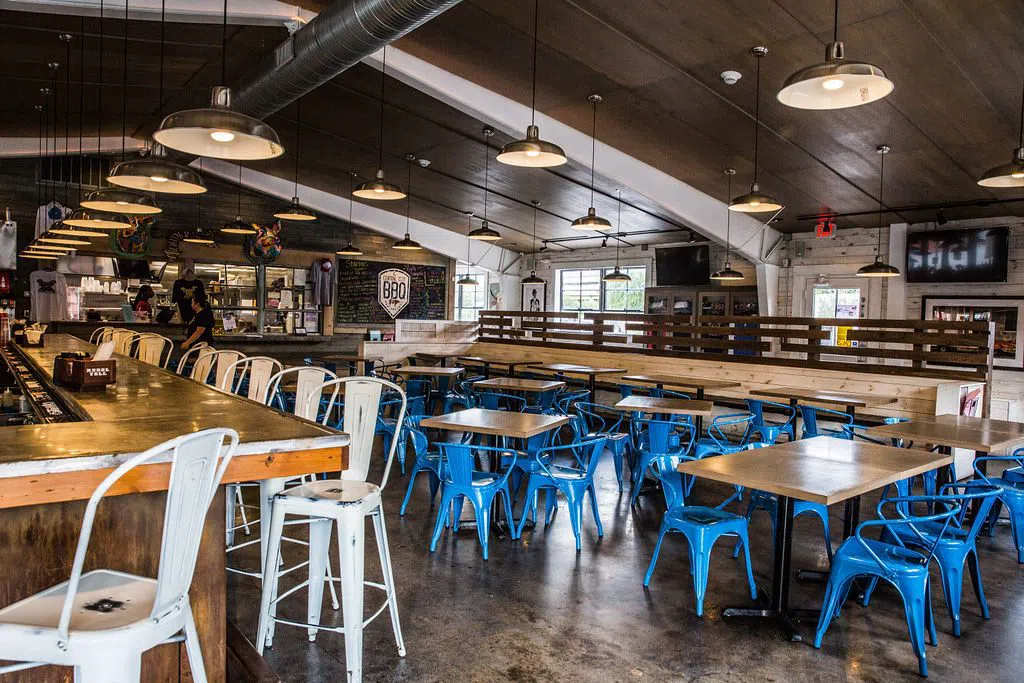
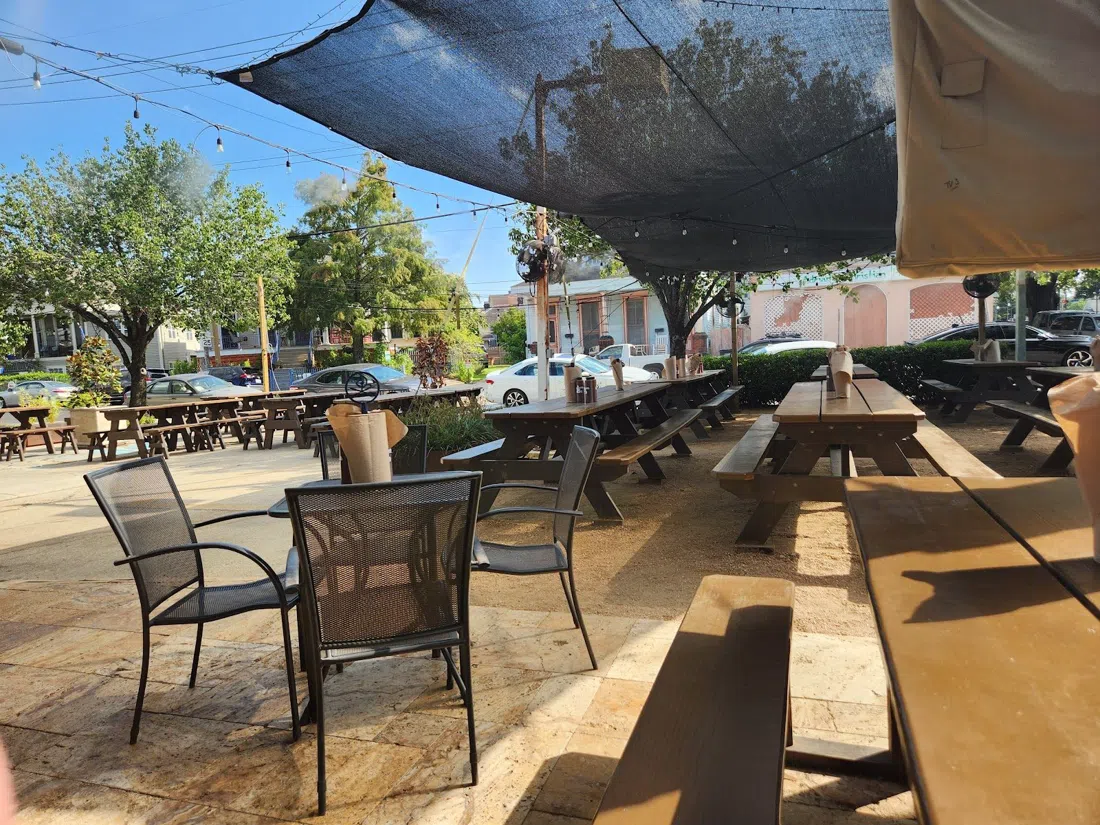
Central City BBQ (Central City) is the closest serious wood-fired pit to the square and the one restaurant in walking distance that matches the festival's own brief rather than sitting next to it. Everything is cooked over wood, the service is at a counter, and the outdoor yard is large enough to absorb a festival crowd without anyone waiting for a table. There is live music at weekends and a 40,000 square foot event space if a group wants to book something private. Plates run roughly $16 to $26. No reservations are needed for walk-in tables, which is the right policy for a weekend when nobody's plans survive contact with a set list.
Barbecue worth leaving the square for
Blue Oak BBQ (Mid-City) began as a pop-up and grew into a Mid-City restaurant, and it is the single most useful name in town for anyone trying to put barbecue and a blues set in the same evening, because the same kitchen runs the food inside Chickie Wah Wah. You order at a counter, sit at communal tables, and pay roughly $16 to $28 a plate. Open daily 11am to 9pm. Comfortable for a group outside the lunch rush, and set up for catering if you want volume delivered somewhere.
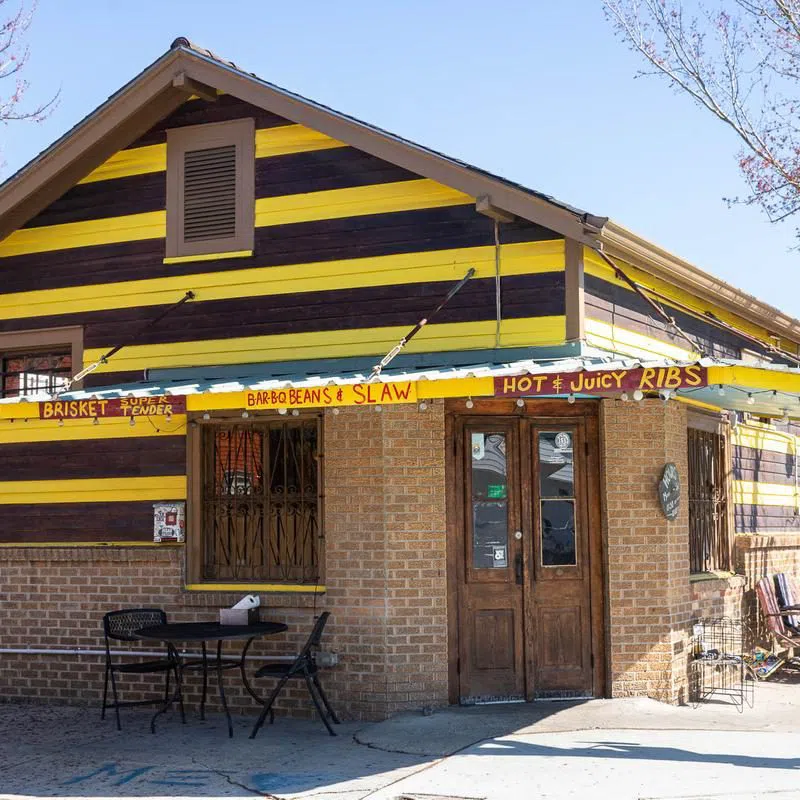
The Joint (Bywater) is the neighbourhood standard for brisket, ribs and house-made sausage, and worth the streetcar-plus-walk downriver if you want to see how the city eats barbecue when there is no festival attached. Plates are roughly $14 to $25. The room is small and you order at the counter, so six people is realistic and anything larger should take the courtyard or get it to go. The Joint is shut on Sundays, which lands squarely on the festival's biggest day. More than one visitor has built a Sunday lunch plan around it and arrived at a locked door.
When the stages shut at 8.30
The festival ends early by this city's standards, and the evening it hands you is the reason to stay in walking distance rather than book somewhere quiet.
The Howlin' Wolf (Warehouse District) is the nearest real club to the square, close enough that you can leave the lawn at 8.30 and be inside before the support act finishes. Shows are ticketed and mostly general admission standing, roughly $15 to $40, so a group should buy in advance and walk in together. There are two rooms, which means a smaller show is usually running alongside the main one and you are not stuck with a single bill.
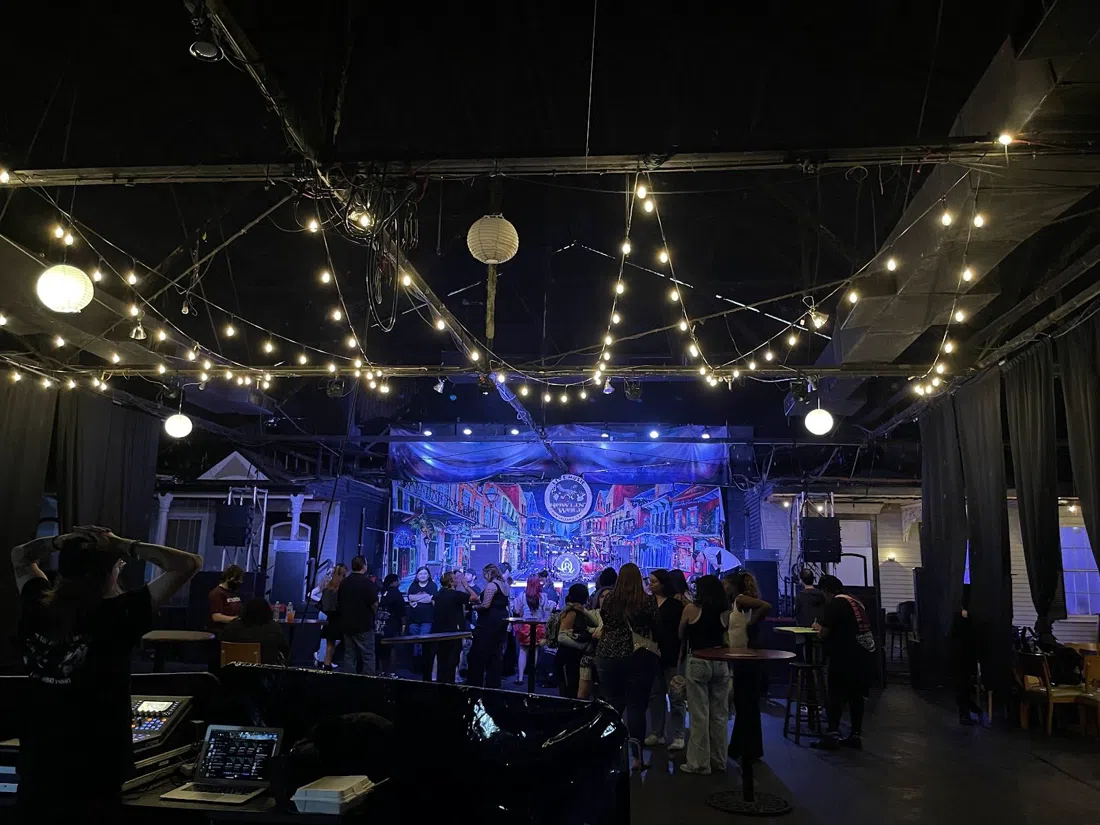
Downriver, d.b.a. (Frenchmen Street, Marigny) has been open since 2000 and under new ownership since late 2023, and it keeps a beer and spirits list serious enough to be worth reading rather than skimming. Nightly acts, a door cover of roughly $10 to $20, standing room, and an outdoor stage that buys you space when the inside is full. Frenchmen fills fast after 9pm on a festival weekend, so arrive before that or accept the pavement.
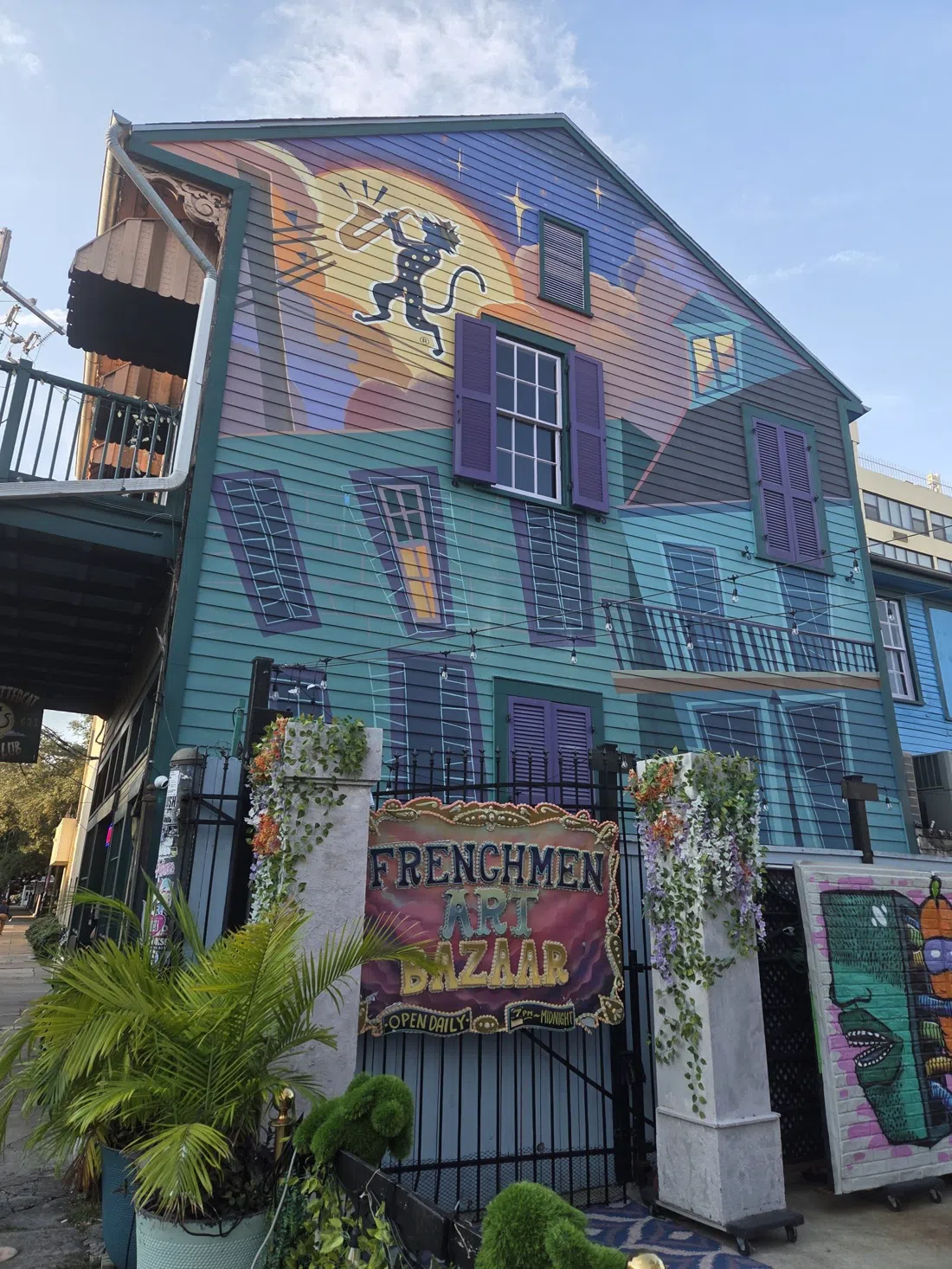
The Spotted Cat Music Club (Frenchmen Street, Marigny) is open 2pm to 2am daily with three or four bands a day, no door cover but a drink minimum, and drinks around $8 to $14. Set times shift without notice, which is part of the deal. There is almost no seating, so treat it as somewhere to drift through in twos and threes. It fills Friday afternoon well before the 5.30 start, and it is a poor place to land a group of ten.
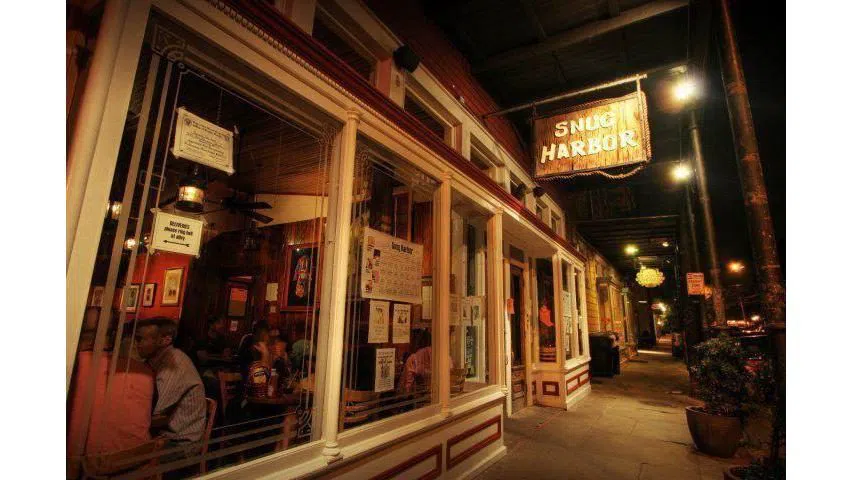
Snug Harbor Jazz Bistro (Frenchmen Street, Marigny) is the room on Frenchmen where you sit down and listen instead of talking over the band. Seating is assigned, there are two shows nightly at 7.30 and 9.30pm, and tickets run roughly $30 to $45 plus dinner. The 9.30 show is the one that works on a festival day; the 7.30 collides with the last hour on the lawn. Reserve ahead, and expect a large group to be split between the balcony and the floor rather than seated as one table.
Rooms built for hearing a guitar
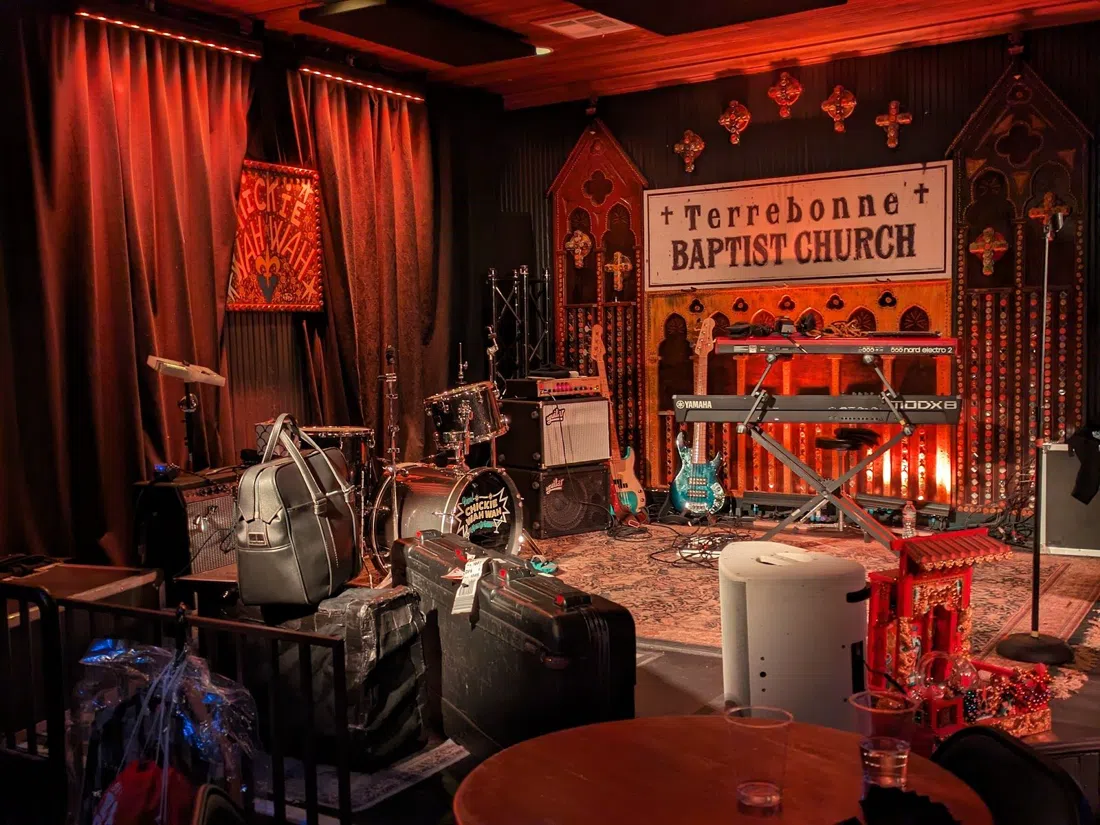
Chickie Wah Wah (Mid-City) is the best room in the city for actually hearing a blues guitarist rather than shouting near one. It is small and table-seated, open daily 5pm to 2am, tickets roughly $15 to $30, and the Blue Oak kitchen is inside, which gives you the festival's own combination, barbecue and a blues set, in a single room. Book ahead for anything over four people, because the capacity is genuinely limited and the tables go.
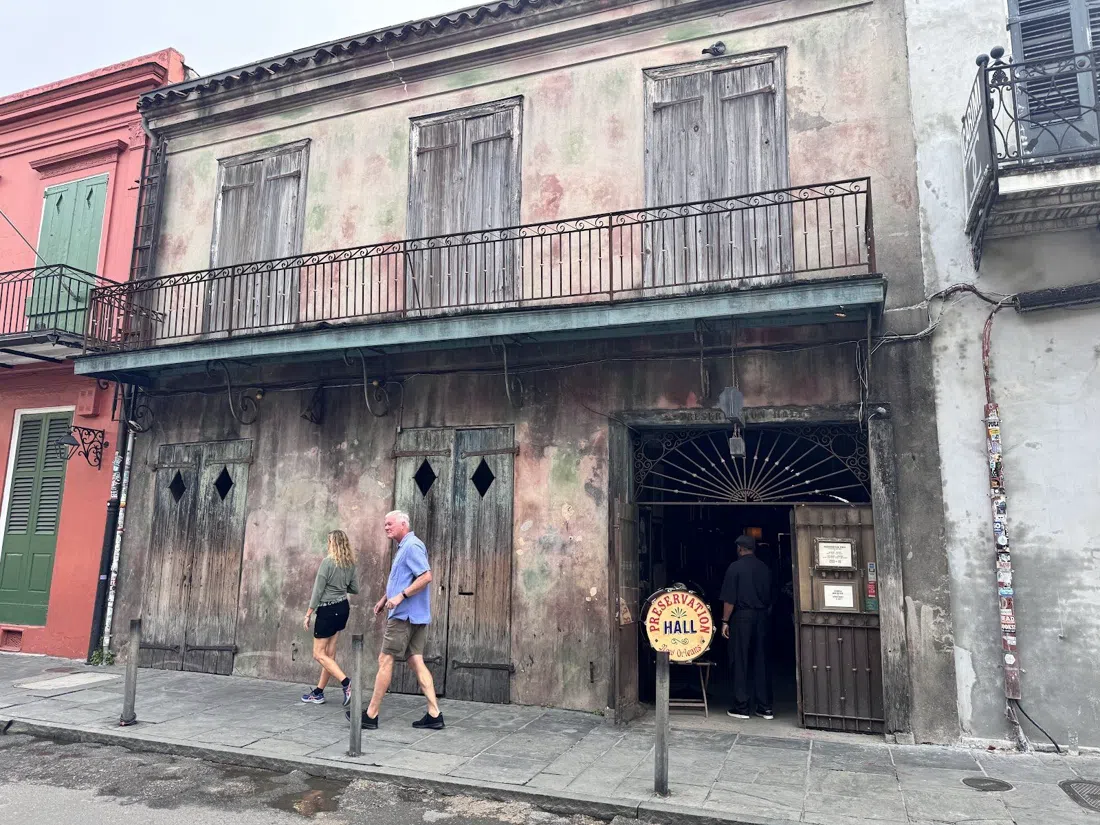
Preservation Hall (French Quarter) is not blues, and it is here on purpose. It is the acoustic root the rest of the weekend grew out of, played the way it was before amplification changed the argument. Sets are 45 minutes, several times nightly, which slots neatly around festival hours. All ages, no age limit, no outside food or drink, and limited capacity, so a group must buy the same show in advance rather than turning up and hoping. General admission is around $15 to $20 at the door, and reserved Big Shot seating around $35 to $50. The discomfort is intentional: hard benches, no bar, no air conditioning worth the name. People who know that in advance love it; people who do not spend 45 minutes shifting on a bench.
Uptown, where the buildings carry the history
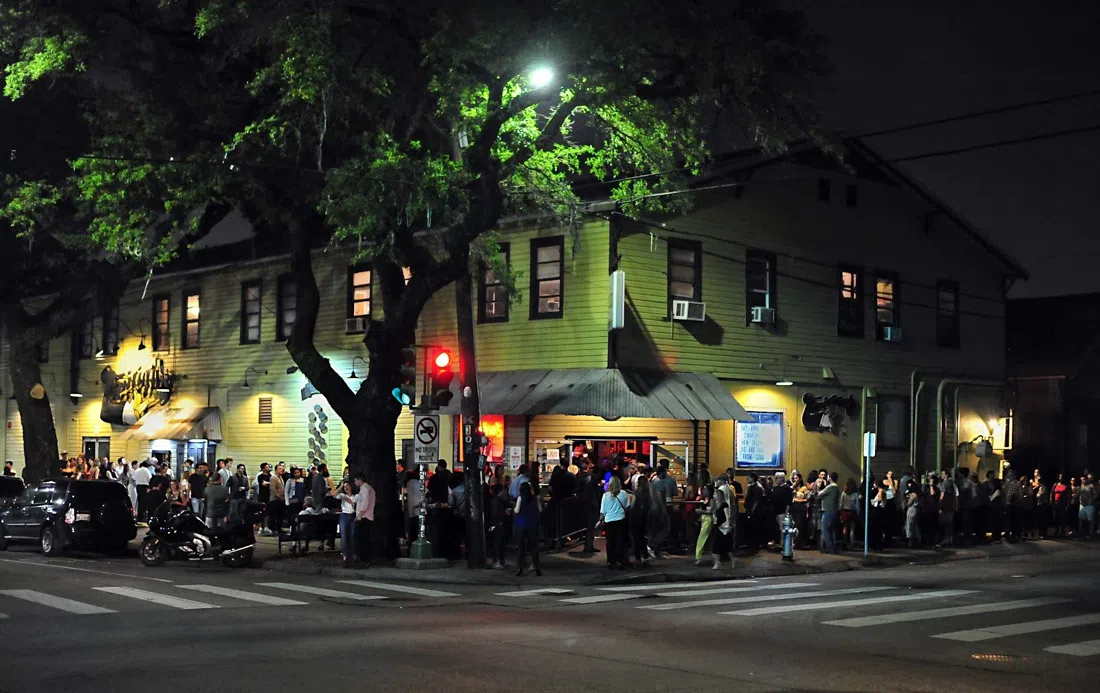
Tipitina's (Uptown) has been open since 1977 and takes its name from the Professor Longhair song. The hall was started by people who wanted somewhere for him to play in his last years, so the name is not a marketing gesture. It is the one uptown room where the building's history and whatever is on stage tonight are the same story. Ticketed, general admission, standing, roughly $20 to $45. Easy for a group if you buy ahead, and the balcony is where you park anyone who wants to sit.
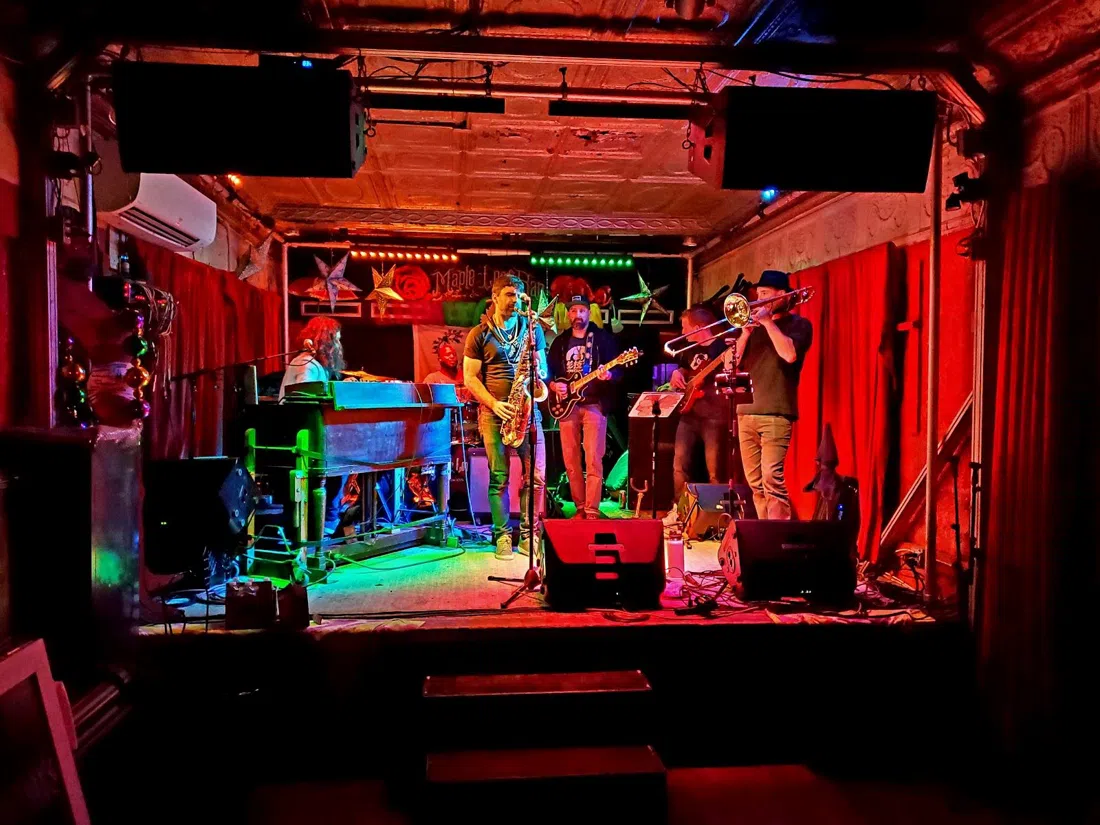
Maple Leaf Bar (Carrollton, Uptown) has hosted the Rebirth Brass Band's Tuesday residency since 1990, which makes Tuesday 13 October 2026, the Tuesday straight after the festival weekend, one of the few genuinely fixed points on the city's calendar. The door is cash-friendly, cover runs roughly $18 to $25, and it is first come, first served with very limited seating. Shows start late, 10 or 11pm. It is small, it gets hot, and you will stand for all of it. Tell anyone in your group expecting a table now, not at the door.
Tremé and the one shop that matters
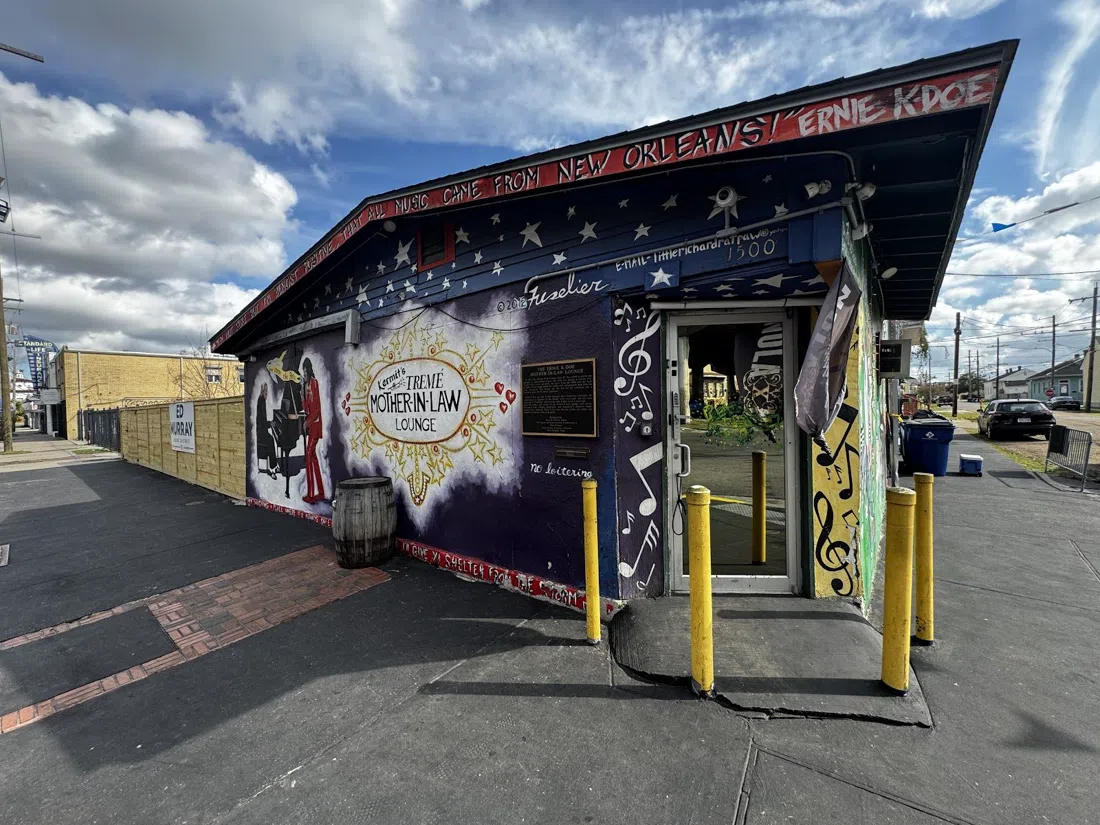
Kermit's Tremé Mother-in-Law Lounge (Tremé) is Ernie K-Doe's old bar, revived by Kermit Ruffins in 2014, and Ruffins cooks there himself. Entry is often free with a tip bucket, food runs roughly $10 to $18, and groups are welcome in a way that most small rooms cannot manage. The schedule is the trap, so write it down: closed Wednesdays and Fridays, with Ruffins himself playing Mondays and Saturdays. The Friday closure lands on the festival's opening night, which catches visitors out constantly. Go Saturday late, or Monday.
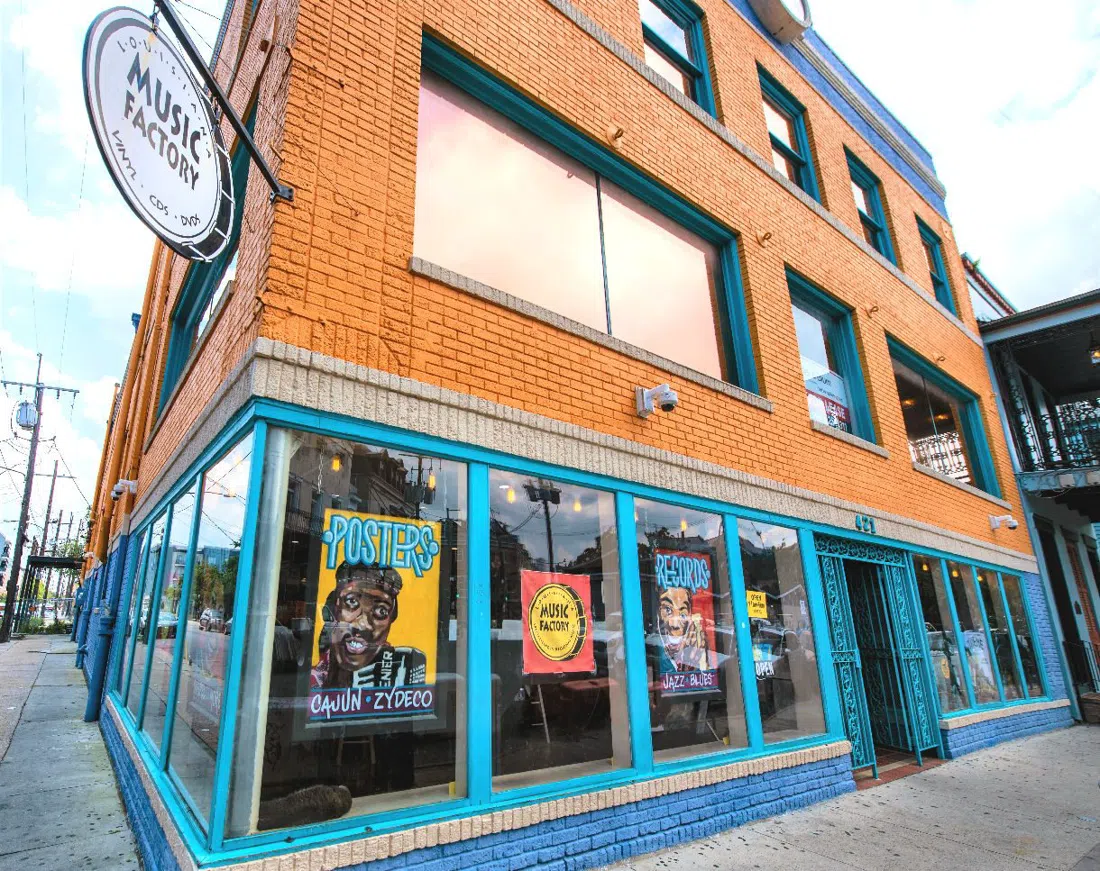
Louisiana Music Factory (Frenchmen Street, Marigny) runs the merchandise tent at the festival itself, so anything that stops you dead on the Camp Street stage can be bought on site or at the Frenchmen shop the same afternoon. Open 11am to 6pm daily, walk-in, no door policy, records roughly $15 to $40. The aisles are tight, so a group of eight should go in shifts.
The Sunday clash that decides your booking order
The Caesars Superdome (Central Business District) hosts the Saints against the Vikings at noon on Sunday 11 October 2026, the festival's final day. You may have no interest at all in the game, and it will still shape your weekend, because downtown rooms for those nights go early and go expensive. Book lodging before you book anything else, and start with a New Orleans hotel search rather than assuming a walk-up rate will appear.
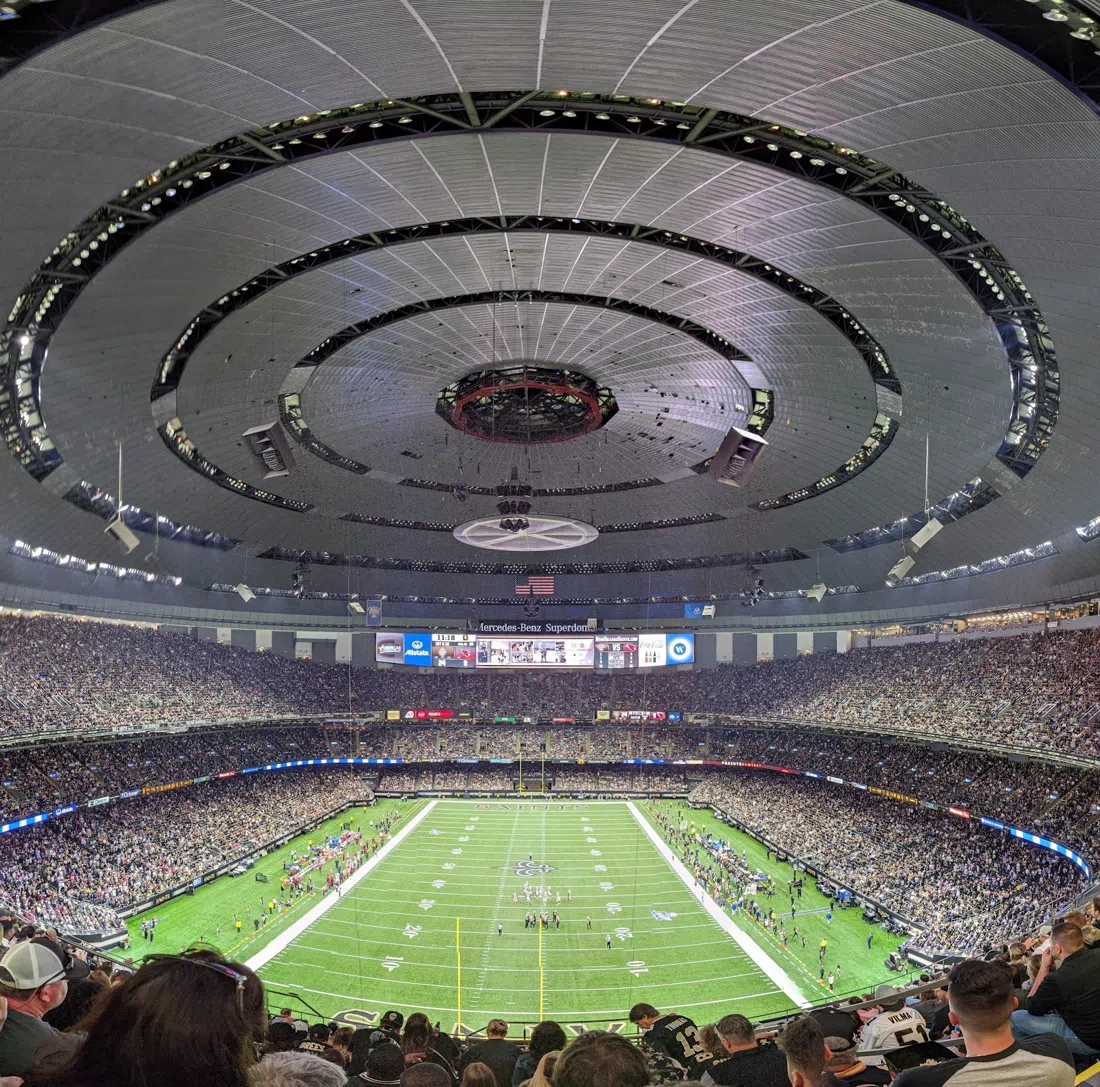
On the day itself, kickoff at noon and festival gates at 11am put two crowds on the same few blocks, and the stadium is about a fifteen-minute walk from the square. Get to the lawn before eleven if you want a spot behind the perimeter, and plan Sunday lunch somewhere that is actually open, remembering that The Joint is not.
Practical notes
The St. Charles streetcar passes the square, which makes it the spine of the whole weekend: uptown to Tipitina's and Maple Leaf in one direction, and a short walk from the Quarter in the other. The Canal line gets you to Mid-City for Blue Oak and Chickie Wah Wah; Rampart-St Claude covers Tremé and Frenchmen. Fares are a couple of dollars and a day pass pays for itself by the third ride. Everything in the Warehouse District, including Cochon Butcher and The Howlin' Wolf, is on foot from the grass. Rideshare prices spike hard at 8.30pm when the site empties, so walk the first ten minutes and call from a quieter block.
Carry cash. Maple Leaf's door prefers it, the Spotted Cat runs on a drink minimum, Preservation Hall sells general admission at the door, and Kermit's works on a tip bucket. Cards are fine at the restaurants and the festival vendors.
A workable shape for the weekend: Friday afternoon on Frenchmen, the lawn from 5.30, a club at nine. Saturday on the grass from opening, an early plate at Central City BBQ, and Kermit's or Tipitina's late. Sunday on the lawn again, out ahead of the stadium crowd, and Snug Harbor's 9.30 show to finish sitting down. If you are staying into the week, Tuesday at Maple Leaf is the reward for not flying home Monday.
Budget roughly: nothing for entry, $12 to $20 a plate on site, $15 to $28 for a proper barbecue meal, $15 to $45 for a club ticket, and $30 to $45 plus dinner for the one seated concert. Three days of music for the price of two nights out, which is why this weekend is worth building a trip around. For orientation beyond the festival, the wider New Orleans guide covers the districts these venues sit in.
Questions
Is Crescent City Blues & BBQ Festival free to attend?
Yes. There is no ticket and no door policy: you walk onto Lafayette Square from St. Charles Avenue or Camp Street, and a group of any size can turn up together. The only paid option is the VIP three-day experience at around $315, which adds up-front seating and a private lounge. Food plates from the on-site vendors run roughly $12 to $20.
What are the 2026 dates and set times?
Friday 9 October 2026 runs 5.30 to 8.30pm, and Saturday 10 and Sunday 11 October run 11am to 8.30pm, all at 602 St. Charles Ave. The two stages, Camp Street and St. Charles Ave., alternate sets, so something is almost always playing. The 2026 bill includes Booker T. Jones, Samantha Fish, Ruthie Foster, Cedric Burnside, Little Freddie King and George Porter Jr.
Can I bring a chair, a cooler or my own drinks?
Chairs are allowed, but not near the stages: both have a 75-foot no-chairs perimeter, so seating starts behind that line and the closest ground is standing only. The festival does not allow coolers, outside food or drink, or recording of the sets. If you are a group, claim your lawn spot on Saturday morning.
Where should I eat barbecue near the festival site?
Central City BBQ is the closest serious all-wood pit, with counter service and a yard big enough for a festival crowd, at roughly $16 to $26 a plate. Cochon Butcher is a six-minute walk and MICHELIN Guide-listed, though it serves cured pork rather than barbecue and takes walk-ins only. Blue Oak BBQ in Mid-City and The Joint in the Bywater are both worth the streetcar, though The Joint closes on Sundays.
Why are hotels so expensive that weekend?
The Saints host the Vikings at Caesars Superdome at noon on Sunday 11 October 2026, the festival's final day, so two large crowds share the same downtown blocks. Rooms for those nights sell early and at a premium, so book lodging before you plan anything else, and expect the walk between the square and the stadium to be busy from late morning on Sunday.
First published on neworleansguides.com, the New Orleans guide.