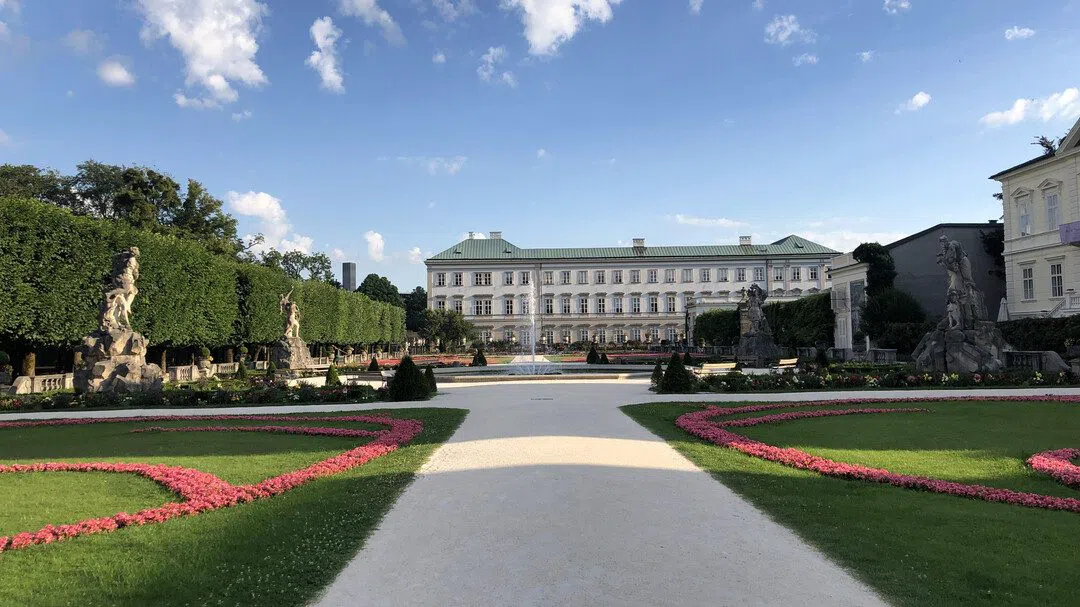
The low October sun comes in sideways across the Mirabell parterre, catching the last of the bedding and laying the clipped hedges down in long bars of shadow, and for roughly an hour after the gates open you can have the whole thing to yourself. By ten the coaches are drawn up on Mirabellplatz and the staircase where the Von Trapp children ran their scales is three deep in people politely waiting their turn. Both versions of this garden are real, and the only thing standing between them is what time you set an alarm.
What the gardens actually give you in an hour
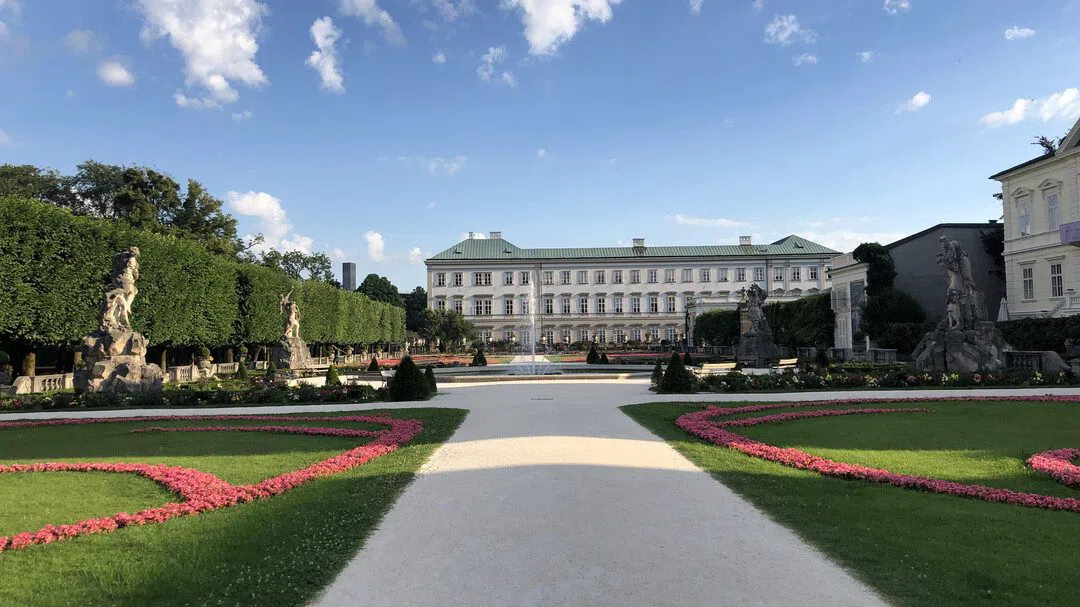
Mirabellgarten (Neustadt, the right bank) is a free, unticketed public park, open from roughly 06:00 or 07:00 until dusk, and from October it runs on winter hours. In practice the gate closes earlier than your instincts expect, so an after-work stroll in late October is a short one. Walk in from Mirabellplatz and the garden lays itself out in one view: the long axis of the parterre, the Pegasus fountain on its raised terrace, and beyond it the fortress on its hill, framed exactly as the baroque designers intended. That single sightline is the reason the place earns its reputation, and it is also why the garden feels smaller than its fame suggests. You can see the main event in ten minutes.
Give it an hour and you get the rest. The staircase on the Schwarzstraße side is the pinch point, the one everybody comes for, and the one place in the gardens where you will queue for a photograph without anyone calling it a queue. The Rosengarten im Mirabellgarten (the walled rose section) is new again: it was rebuilt from September 2025 at a cost of around €500,000, with roughly 4,100 new plants and proper wheelchair access, and it came back into service for the 2026 season. The month matters, though. October roses are the tail end rather than the peak, so what you are admiring is the structure and the replanting rather than a wall of bloom. The paths are narrow, so it works as a photo stop for two and bottlenecks badly for twenty.
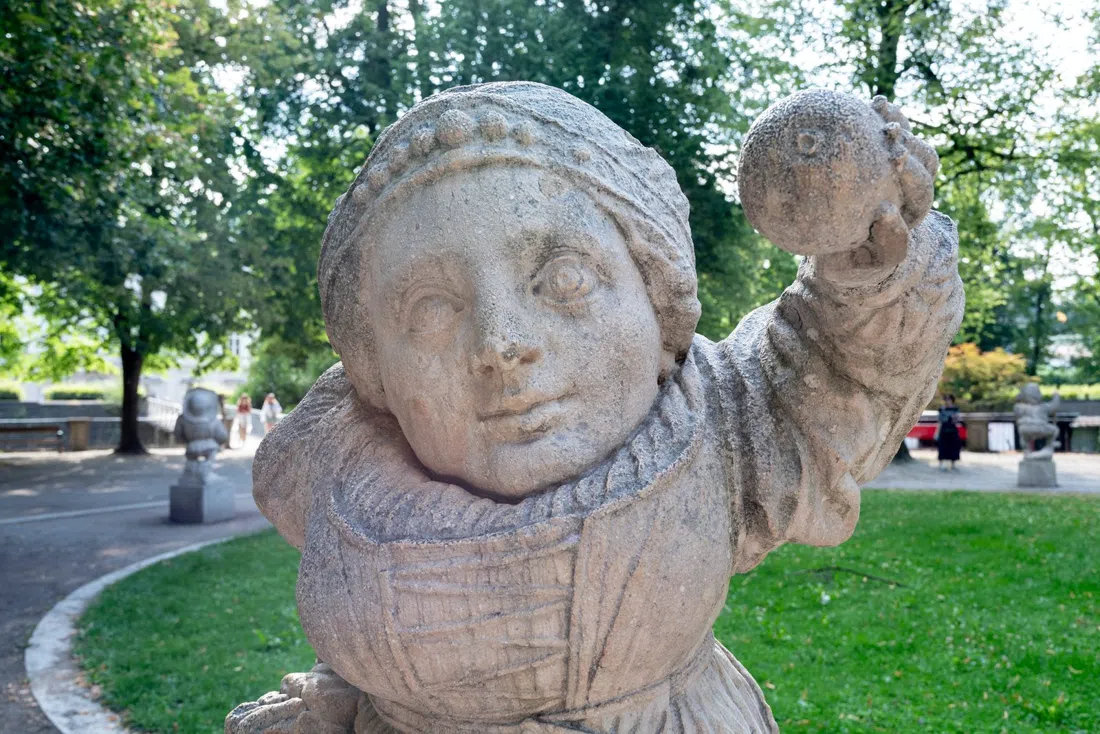
The Zwergerlgarten (the dwarf garden, on the raised western terrace) is the part people remember longest. It is Europe's oldest dwarf garden, with 17 of the original 28 marble figures surviving, each one a caricature of a court character, and they are far stranger and funnier than a brochure suggests. It is a small walled space that comfortably holds a handful of people; a full coach party fills it completely. The city lists it as year-round, but the tourist board flags winter closure for parts of the garden, so October is a reliable yes and January is a maybe, which is another argument for coming now.
The quietest corner, and the one most visitors walk past, is the Heckentheater (the hedge theatre, at the garden's western edge). It is one of the oldest hedge theatres north of the Alps, its seating reworked to historic form in 2024, and it closes off over the winter, so an October visit catches the last of its season. When the Pegasus steps are shoulder to shoulder, this is where to stand for ten minutes and remember you are in a garden rather than a photo set. For the wider city context around it, the Salzburg guide covers how the right bank fits together with the old town across the river.
Getting inside the Marble Hall without being turned away
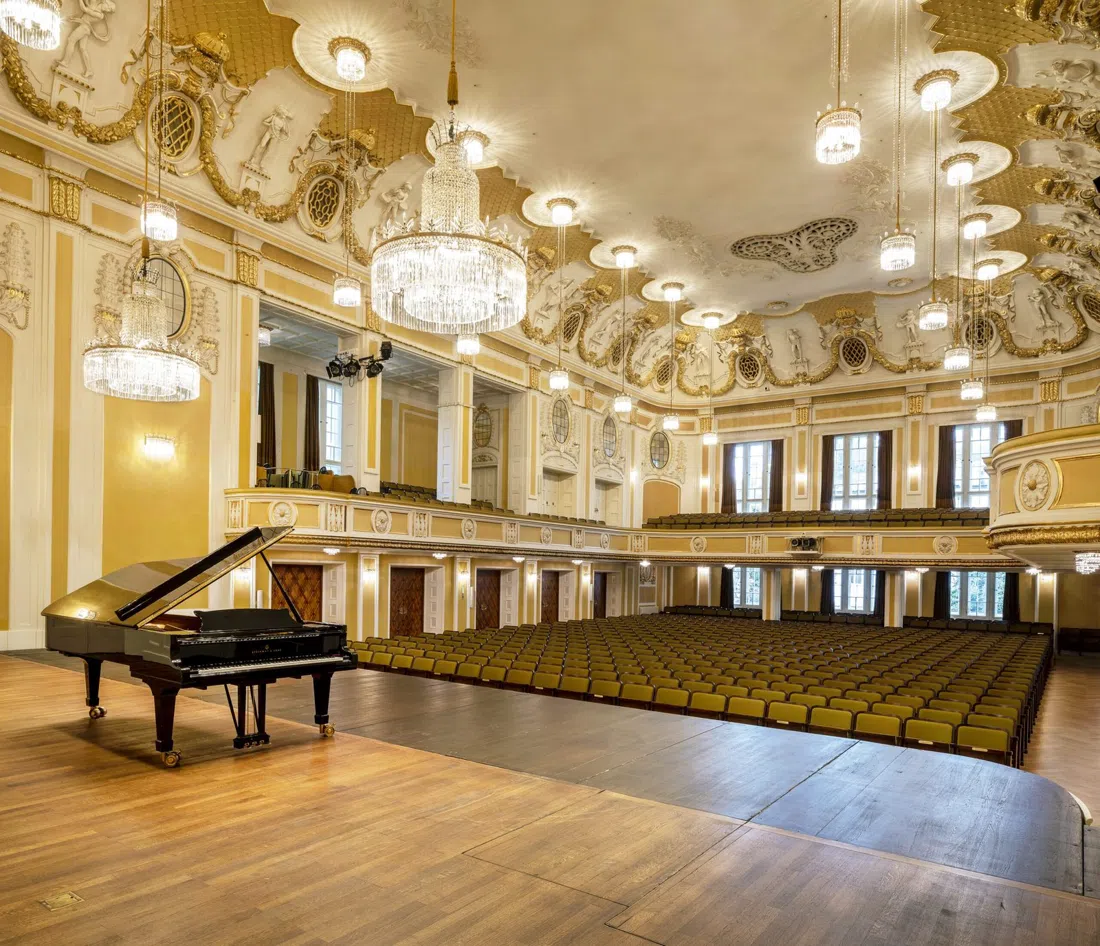
The palace itself is a working municipal building, not a museum, and this is the fact that trips up more visitors to Mirabell than anything else. The Marmorsaal, Schloss Mirabell (the Marble Hall, on the first floor of the palace) can be viewed free of charge during public hours: Monday, Wednesday and Thursday 08:00 to 16:00, Tuesday and Friday 13:00 to 16:00, closed on Sundays and public holidays. Note the national holiday on 26 October when planning a late-month trip.
That is the schedule. The hall is also the city's register office and reception room, and it shuts with no notice at all when a wedding or an official function is on. Nobody will have warned you, there is no live status board, and if you have travelled across a continent for this room you will be standing on the staircase reading a printed sign. Treat the free daytime viewing as a bonus you might collect rather than an appointment you have made, and go early in the window. Mornings on the Monday, Wednesday and Thursday pattern are your best odds, because afternoons are when the receptions tend to land.
When you do get in, it takes five minutes. It is one white-and-pink marble room, stucco and gilt, with the kind of acoustic you can hear the moment the door closes behind you, and the knowledge that a seven-year-old Mozart played in it does more work on you than any label. Daytime viewing is walk-in for anyone, groups included; it is a 100-plus-seat concert room, so there is no door policy to negotiate.
The evening concert is the only guaranteed way in
If being inside the Marble Hall matters to you, buy a concert ticket and stop gambling. Salzburger Schlosskonzerte, run by the Salzburger Konzertgesellschaft, is the long-standing series staged in the hall itself, with 20:00 starts, doors 30 minutes beforehand, and concerts on most dates right through October 2026. Seats come in two categories at roughly €40 to €55, with 10 percent off for Salzburg Card holders, and the office takes calls on +43 662 904700, Monday to Saturday 10:00 to 13:00. Dinner-and-concert packages exist too, with the meal at 18:00 and the concert at 20:00, and they cost appreciably more.
This is chamber format: Mozart, Haydn and their contemporaries played by small ensembles rather than an orchestra, which is the honest match for a room that seats a hundred-odd people and would be overwhelmed by anything larger. The reward is proximity. You are close enough to watch bow changes, in the room this music was written for, which no larger hall can replicate. If you want symphonic scale, book elsewhere and enjoy this for what it is.
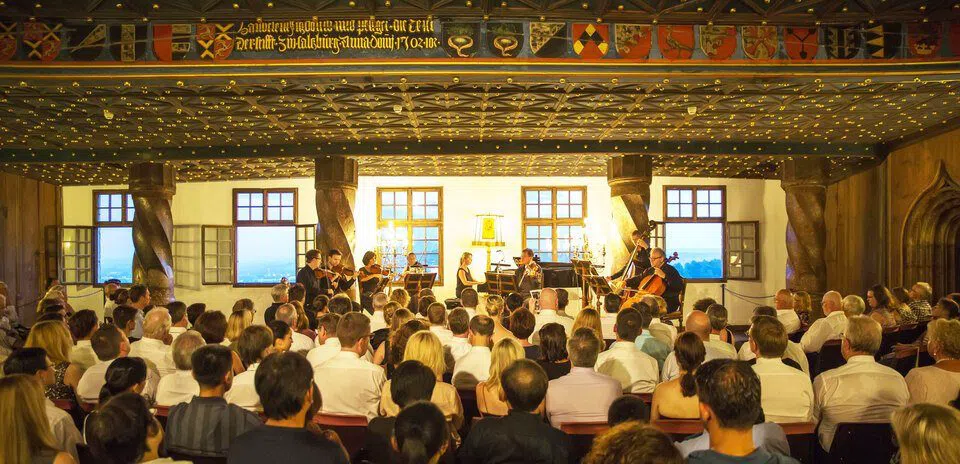
If the dates you want are gone, the sensible fallback is Salzburger Festungskonzerte in the Goldener Saal up at Festung Hohensalzburg (the fortress, above the old town). Same Mozart-and-contemporaries format, same 20:00 start, running to the end of October 2026, from roughly €35 to €45, with group and banquet offers on +43 (0)662 825858. It is a higher, colder, more theatrical room reached by funicular, so budget both the extra fare and a good twenty minutes more than you think, and bring a layer. October evenings on that rock are not October evenings in the garden.
Three minutes of walking buys a different kind of music
The streets immediately around the gardens hold more serious music per square metre than anywhere else in the city, which makes Mirabell an unusually good base for an October music day rather than a single stop.
Stiftung Mozarteum Salzburg (Schwarzstraße, three minutes from the garden gate) is the grown-up alternative to a palace recital, with the Großer Saal and the smaller Wiener Saal, and tickets sold through its own shop at ticket.mozarteum.at. Prices run roughly €15 to €75 depending on the concert. October 2026 brings the LatinoMozart strand in the Wiener Saal from 8 to 10 October, a Christiane Karg Meisterkonzert in the Großer Saal on 10 October, and a 12:30 organ recital on 20 October. That midday recital is the cheapest way into the building and a very good hour if the weather has turned.
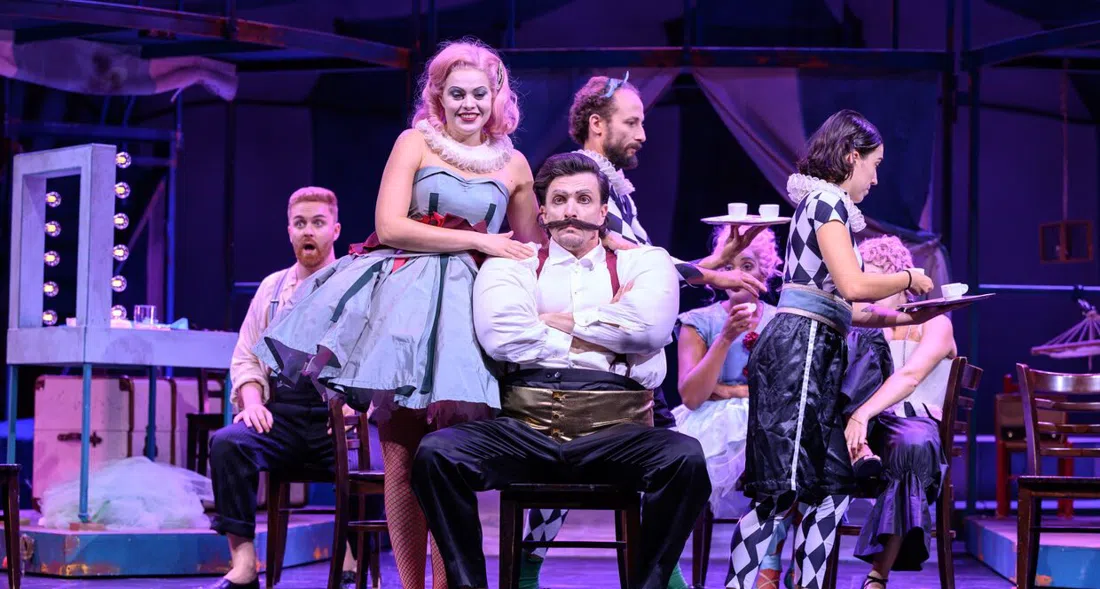
Salzburger Landestheater sits directly across from the gardens and is the full-scale option if a chamber programme feels thin. October 2026 has Rossini's The Italian Girl in Algiers on 4, 7, 13 and 16 October, with drama and dance alongside it, at roughly €15 to €70 by seat.
For anyone travelling with children, Salzburger Marionettentheater (Schwarzstraße) is the most family-proof music ticket near the gardens, UNESCO-recognised and far less twee than the concept sounds. The Sound of Music plays in English with subtitles, running about 1 hour 45 minutes, on 9 and 10 October 2026, with a short version of The Magic Flute on 10 October, and then the new biennial PUPPETS! festival takes over the house from 22 to 26 October. The one-hour afternoon short programmes cost less than full evening shows. Access needs a word in advance: there are steps, and the side entrance with a mobile ramp is only available if arranged beforehand. Disability-pass discounts apply.
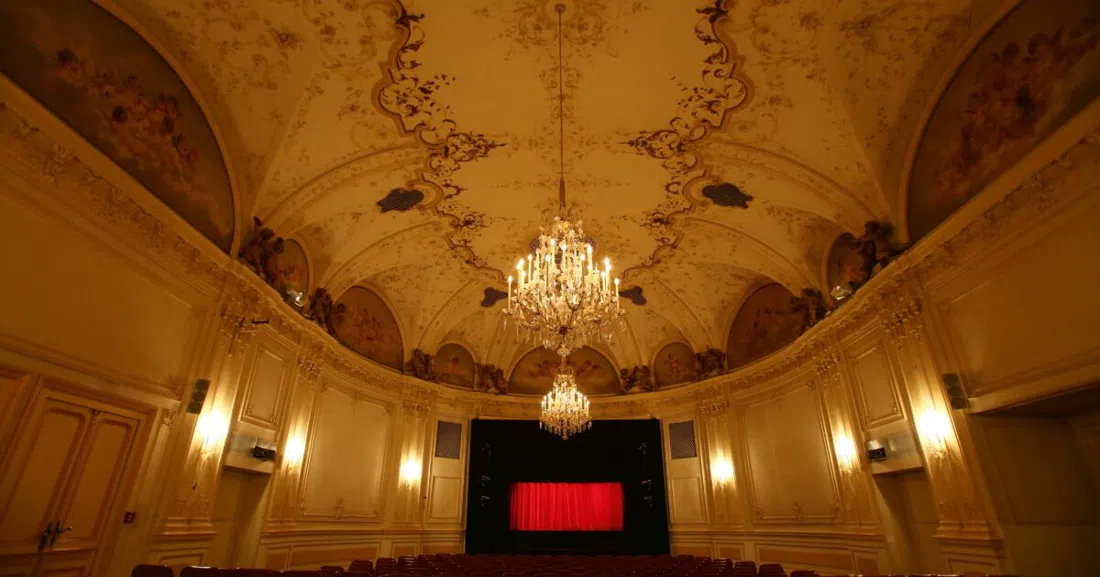
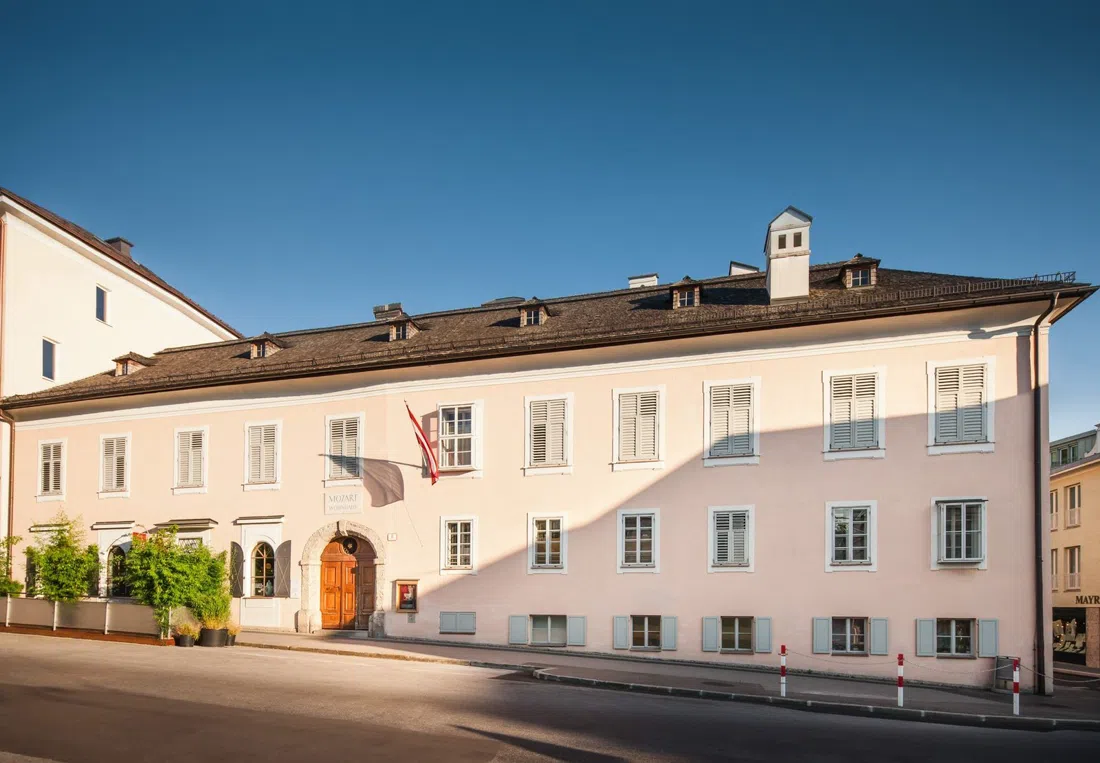
The indoor half of a music day is Mozart-Wohnhaus (Makartplatz, two minutes away), the family's later apartment, open daily 09:00 to 17:30 with last entry at 17:00 through 2026, which slots in neatly before a 20:00 concert without any rushing. Entry is €18 for adults, €25 combined with Mozart's Birthplace across the river, and €4.50 or €6 for children. Buy only through the Foundation's own webshop; it states plainly that third-party tickets are refused at the door.
Guided routes that start on Mirabellplatz
Two long-running operators leave from the square at the garden's edge, and both include the gardens in the route, which is why the place functions as the city's unofficial film-and-music departure point.
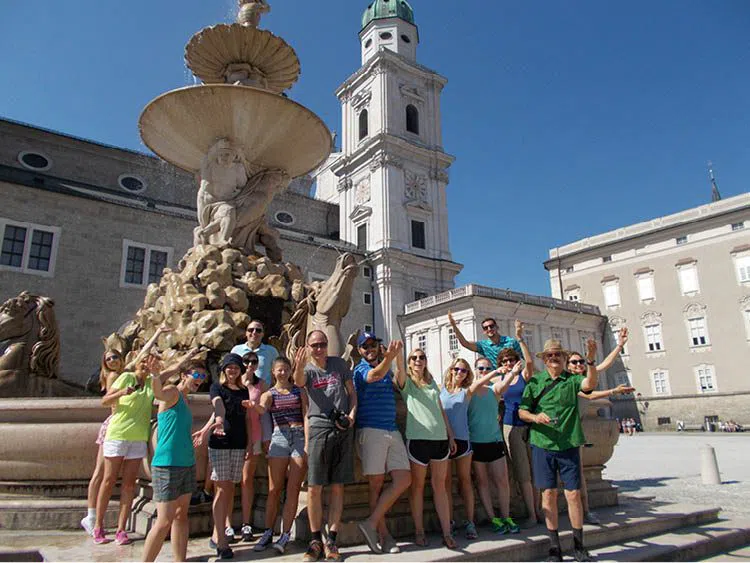
Panorama Tours runs the original Sound of Music coach tour, departing Mirabellplatz itself daily at 09:15 and 14:00, four hours, in English, from €70 per adult, with the Pegasus fountain stop in the gardens included. It has been running from Salzburg since the 1960s, it is built for groups, a private option exists, you are asked to arrive 15 minutes before departure, and cancellation is free up to 24 hours ahead. Demand here is steady rather than panicky: the bookable tours at Mirabell carry 8,582 traveller reviews between them, the top tour is rated 4.7 out of 5 from 6,761 reviews, and departures run seven days a week. That volume is the reason to reserve a specific departure online rather than turning up and hoping, particularly for the 09:15, which pairs best with an early garden walk.

Fräulein Maria's Bicycle Tours is the better-value and, for most fit adults, the better experience: one departure a day at 09:30, about 3.5 hours, groups riding together from Mirabellplatz, bike included, and pitched by the operator as cheaper than the coach tours. The route takes in the gardens, the Horse Pond, St Peter's cemetery, Nonnberg Abbey, Leopoldskron and Frohnburg, which is a genuinely good shape for a first day in the city. The season runs from early April to the end of October, so an October ride is the last of the year, and with a single daily departure in the shoulder season you should book ahead rather than drift down to the square.
When the rain comes in
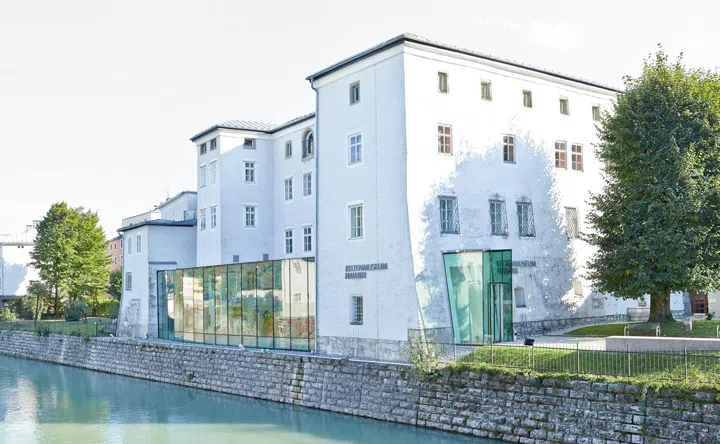
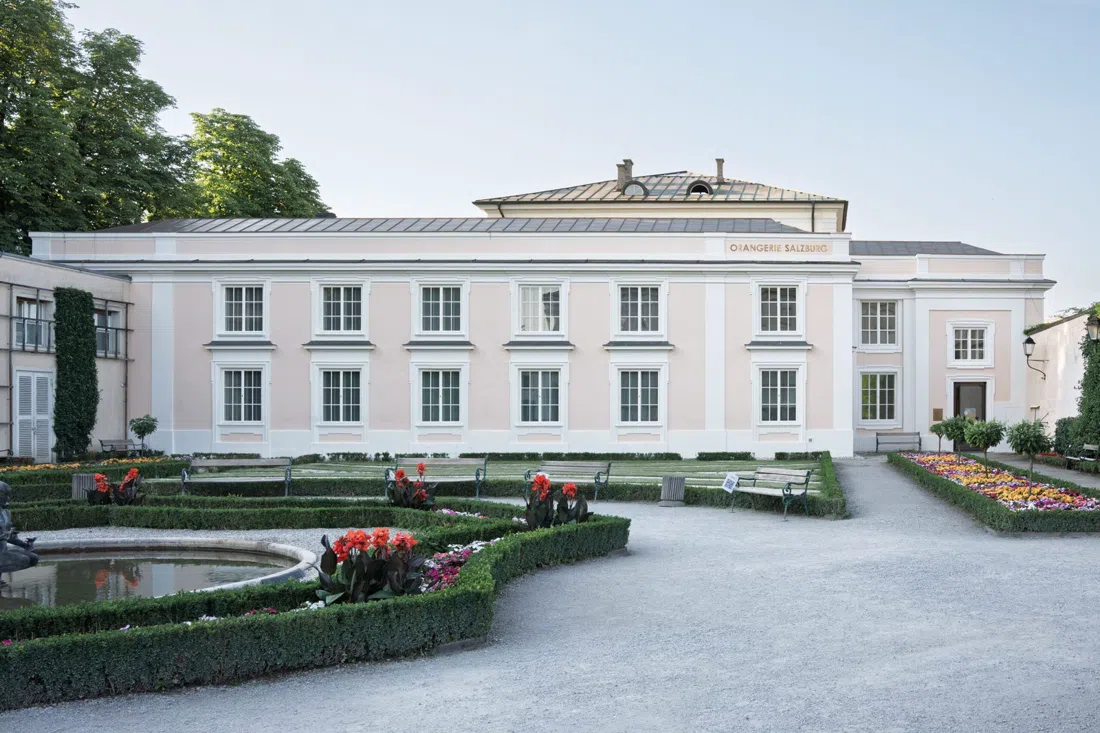
October in Salzburg does grey afternoons properly, and the gardens have exactly one indoor paid door. Orangerie Salzburg – Panorama | Welterbe occupies the former Baroque Museum building inside the gardens, empty since 2012 and reopened after a rebuild of around €4.7 million as the city's World Heritage centre. Admission is €8 for adults, €4.80 reduced and €16 for a family; private guided tours cost €65 for up to 20 people for 40 minutes, age 6 and up, plus admission. It is fully barrier-free, with a platform lift up to the panorama. Access is currently via a side entrance in the gardens, because the orangery garden itself is being redesigned, which is worth knowing before you circle the building looking for a front door.
Coffee first, the view from above afterwards
Café Bazar (Schwarzstraße, 90 seconds from the garden) has been open since 1882 and keeps hours that suit this plan exactly, Monday to Saturday 07:30 to 19:30 and Sunday 09:00 to 18:00, so it covers both the pre-dawn garden visit and the awkward gap before an evening concert. Reckon on €5 to €15 for coffee and cake. It is a walk-in café with no hostility to groups, but the river terrace fills fast and anything over a handful of people should reserve.

At the other end of the day, IMLAUER Sky Bar & Restaurant (Rainerstraße, five minutes from Mirabellplatz) is the only place that shows you the geometry of the baroque parterre from above instead of standing inside it, which is worth one drink even if rooftop bars are not your thing. Open daily 09:00 to 01:00 with the kitchen from 11:30 to 22:30, drinks €6 to €15 and more for restaurant mains. Terrace seating is limited, so reserve for a group.

Best time to go in October
First light to about 09:00 on a weekday is the only reliably empty slot for the gardens, and it is the single most useful sentence in this guide. The staircase and the Pegasus terrace are the pinch points all day, coaches and school parties arrive from mid-morning onwards, and no amount of patience makes the crowd thin again before dusk.
Build the day backwards from the Marble Hall. If free daytime viewing is the goal, pick a Monday, Wednesday or Thursday and go in the morning window; a Tuesday or Friday gives you only 13:00 to 16:00, and a Sunday gives you nothing. Keep the wedding risk in mind whatever you choose. A clean October shape looks like this: gardens at first light, breakfast at the café on Schwarzstraße, the Marble Hall at 08:30 if the city is letting people in, the bicycle tour at 09:30 or the coach at 09:15, the Mozart apartment or the World Heritage centre in the afternoon, a rooftop drink at six, and a 20:00 concert in the hall you looked into that morning.
Late October tightens things. The gardens are on winter hours, so the light goes early; the hedge theatre closes off for the season; parts of the dwarf garden may begin shutting; the roses are past their best; and the bicycle tours stop at the end of the month. Against that, the crowds are visibly lighter than in summer, the autumn colour along the Salzach is at its best, and the concert series is running on most dates.
Is it worth it
Yes, with one condition: treat the gardens as free and brief, and pay for the music. Mirabellgarten does not reward a long visit on its own merits; it is a superb twenty-minute composition that most people stretch to an hour because of a film. The Marble Hall, by contrast, is worth real effort, and the honest way to guarantee it is a concert seat rather than a daytime gamble.
It suits couples and solo travellers best in the first hour of daylight. It suits families better with a puppet-theatre matinee attached. It suits groups fine in the open garden and badly in the dwarf garden and the rose paths, which jam with more than a dozen people. The one group it does not suit is anyone expecting a palace interior tour. There isn't one, and no ticket anywhere creates it.
Practical notes
Getting there is trivial. Mirabellplatz is a ten-minute walk from the old town across the Makartsteg footbridge, about ten minutes on foot from the main station, and served directly by city buses and trolleybuses if the weather has turned. Nothing about the gardens requires a vehicle, and parking near the square is not worth the money.
Cards are accepted nearly everywhere, including theatre box offices, but carry €30 or so in cash for small cafés, market stalls and the funicular queue. The Salzburg Card is worth checking against your plan: it takes 10 percent off the palace concert seats. Book concert tickets, the bicycle tour and any guided coach departure before you arrive rather than on the day, because October runs single daily departures and the chamber hall is small.
A realistic one-day budget for two people: nothing for the gardens, €8 each if you use the World Heritage centre, €18 each for the Mozart apartment, €40 to €55 each for a Marble Hall concert, and €30 to €40 for coffee and a rooftop drink, so call it €200 to €250 for the pair with no corners cut. For somewhere to sleep within walking distance of all of it, the right-bank streets around Mirabell are the most convenient base in the city; compare rates with a Salzburg hotel search and favour anything within ten minutes of Mirabellplatz so the dawn garden walk is a matter of stepping outside rather than a journey.
Questions
Can you go inside Mirabell Palace, or only the gardens?
You can see one room, the Marble Hall, and only at set times: free walk-in viewing Monday, Wednesday and Thursday 08:00 to 16:00, Tuesday and Friday 13:00 to 16:00, closed Sundays and public holidays. There is no full palace interior tour, because the rest of the building is council offices. The hall also closes without notice when a wedding or official reception is on, so an evening concert ticket is the only way to be certain of getting in.
Is Mirabell Gardens free to visit?
Yes. The gardens, the Pegasus fountain, the rose garden, the dwarf garden and the hedge theatre are all free and unticketed, open from roughly 06:00 or 07:00 until dusk; winter hours start in October, so the close comes earlier. The only paid attraction inside the grounds is the World Heritage centre in the former orangery building, which costs €8 for adults, €4.80 reduced and €16 for a family.
Where are the Do-Re-Mi steps and when are they empty?
The steps are the staircase at the Schwarzstraße end of the gardens, on the way out towards the river, and they are the most crowded spot in the whole garden. The first hour after the gates open on a weekday is the only reliably empty slot. From mid-morning, coach groups and school parties arrive steadily and you will be waiting your turn for a photograph.
Do I need to book a concert in the Marble Hall in advance?
Book ahead. The hall holds only a hundred-odd people, concerts start at 20:00 with doors 30 minutes before, and seats are roughly €40 to €55 in two categories, with 10 percent off for Salzburg Card holders. The series runs on most dates through October 2026. If your date has gone, the fortress concert series has the same chamber format at 20:00 from roughly €35 to €45, plus funicular time and fare.
How long do you need at Mirabell, and is a guided tour worth it?
An hour covers the gardens properly, including the dwarf garden and the hedge theatre, plus five minutes for the Marble Hall if it is open. A guided option is worth it only if you want the wider film and music route rather than the gardens alone. Tours leave from Mirabellplatz itself: the coach version runs four hours, seven days a week, from €70 per adult, and the bicycle tour leaves once a day at 09:30 and stops for the season at the end of October.
First published on salzburgcitybreaks.com, the Salzburg guide.